
Google released Gemini 3.7 Flash on August 13, only three weeks after Gemini 3.6 Flash. The unusual part is not simply another model number. Google says the new API model performs better on coding, document work, web development, and multi-step business workflows while entering at half the original 3.6 Flash price: US$0.75 per million input tokens and US$3.75 per million output tokens through December 31, 2026.
For an Indonesian small business, that is not a cue to replace every tool on Monday. Benchmark gains and low token prices do not repair an inaccurate product catalogue, unclear refund authority, or an order system with no human handoff. The useful question is narrower: does one bounded task have enough volume, reliable data, and a measurable cost that a stronger model would improve it without giving the model power it should not have?
📣 What Google announced on August 13
Google calls Gemini 3.7 Flash its new workhorse model for coding and agents. The company says the release follows developer feedback and algorithmic improvements, and positions it as an upgrade from 3.6 Flash rather than an entirely separate product category. It is being distributed through channels that include the Gemini API, Google AI Studio, Gemini Enterprise, Gemini Enterprise Agent Platform, and Google Antigravity, according to the model card.
That distribution matters. A consumer-facing chat window and an API product are different purchases. A business can test a prompt in a chat interface, but a workflow that reads an approved FAQ, looks up an order, proposes a reply, logs the interaction, and routes exceptions needs engineering, permissions, and an operating owner. The model is one component of that system.
Google’s model card describes multimodal inputs: text, images, audio, and video. It lists up to one million tokens of context and a maximum output of 64,000 tokens. It also says configurable thinking settings can control the balance among quality, cost, and latency. Those specifications describe capacity, not a promise that every input will be understood correctly or that a long context will be used well.
Google describes the release directly in its own words:
That framing, “developer feedback and algorithmic innovations,” is a company describing its own process. It says nothing about how the model will perform inside a specific storefront chatbot, a specific WhatsApp automation, or a specific accounting workflow. Read it as motive and direction, not as a verified outcome for any particular deployment.
It also helps to separate the model from the surrounding product. Gemini Spark, described by Google as a personal AI agent that runs continuously under a user’s direction, began using Gemini 3.7 Flash the same day. Spark is available to Google AI Pro and Ultra subscribers in more than 160 countries, according to Google. A subscriber upgrade and an API integration are two different purchases with different risk profiles: one changes what a consumer sees inside an existing app, the other requires a business to build and operate its own connected workflow. Conflating the two can lead an owner to overestimate how ready a business system is simply because a consumer product looks impressive in a demo.
🔢 The headline numbers, read carefully
Google reports several large gains over Gemini 3.6 Flash. On FrontierCode 1.1 Main, it reports 43.6% for 3.7 Flash against 34.4% for 3.6 Flash. On DeepSWE v1.1, the reported result is 65.3% against 49.0%. On the GDP.pdf benchmark, intended to test complex document handling, Google reports 34.0% against 22.0%. It also reports 30.4% against 17.0% on AutomationBench, which it describes as a test of real-world business workflows.
These comparisons are useful because they show the direction and scale of Google’s own evaluation. They are not a service-level agreement. A benchmark task has a fixed setup, scoring rule, and data distribution. A business workflow has stale records, incomplete customer messages, policy exceptions, changing prices, internet failures, and staff who may need to override an answer.
The right translation of a result such as 30.4% versus 17.0% is not “the agent can run the business.” It is “Google measured a sizeable improvement on this particular evaluation.” Before deployment, test the model on anonymized examples from the actual work: twenty common questions, five ambiguous ones, five that must be refused, and a handful that require escalation. Score factual accuracy, whether it cites the correct source record, whether it asks for missing information, and whether it stops when the rule says stop.
A higher score can make that exercise more promising. It does not remove the need for it.
It is also worth noting what the four cited benchmarks do not cover. FrontierCode and DeepSWE measure software engineering tasks; GDP.pdf measures document comprehension; AutomationBench measures multi-step task completion. None of them measure customer tone in the Indonesian retail context, none measure how the model handles a mixed Indonesian-English chat message, and none measure how it behaves when a customer sends an intentionally misleading instruction. A business operating in Bahasa Indonesia, regional dialects, or code-switched chat should run its own language-specific sample rather than assume an English-language benchmark transfers directly.
🔁 Why a three-week release cycle matters
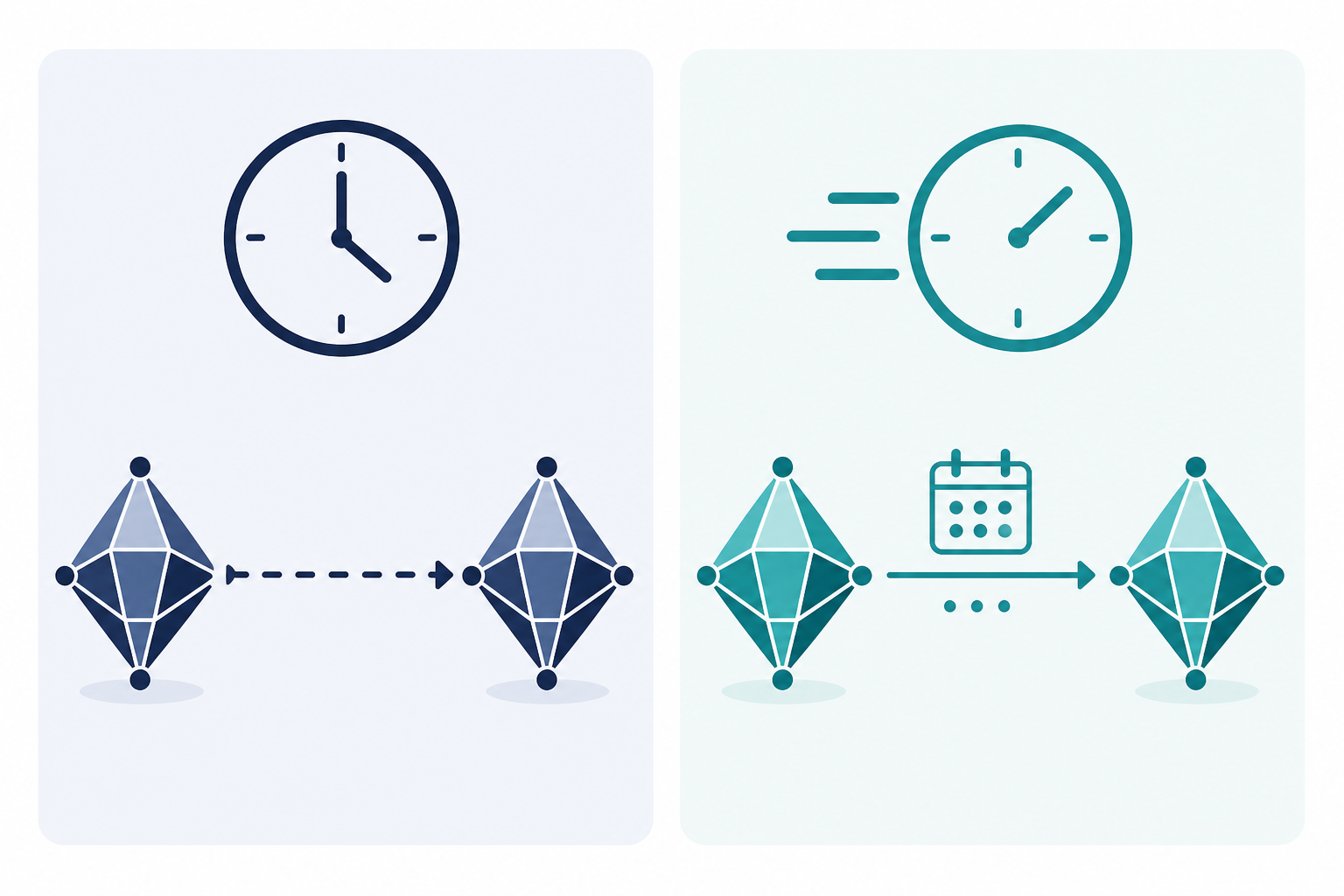
The gap between 3.6 Flash and 3.7 Flash was three weeks. That pace changes a practical purchasing decision. A team that spends months hard-coding a workflow around a single model’s quirks may find that its assumptions have already changed by launch. The durable investment is not a clever prompt alone. It is a clean knowledge source, versioned instructions, test cases, a fallback route, and a log that lets the team inspect what happened.
The release cycle also argues against long contracts based solely on a benchmark chart. A lower price today may be introductory. Google Cloud’s pricing page says the US$0.75 input and US$3.75 output rates apply through December 31, 2026. Build a budget that includes the post-promotion possibility, output-heavy tasks, retrieval or database charges, engineering time, and the cost of human review. Token price is necessary input, but it is only one line in the operating cost.
Fast iteration can help smaller teams. They can avoid buying servers and test a newer model through an API. But it creates a maintenance obligation. Keep a regression set. Re-run it when a model version changes, a provider changes a safety setting, or a system prompt is edited. Record which version answered which customer interaction. Without that record, an operator cannot distinguish a model change from a data mistake.
The ownership question is simple: when a reply becomes wrong after an update, who notices, who pauses the automation, and who informs customers? If nobody owns those steps, the system is not ready for broader automation, regardless of the model’s score.
Owners sometimes treat a model swap as a purely technical event handled by whoever wrote the integration. That underestimates the change. A new model can shift tone, verbosity, willingness to guess, and sensitivity to ambiguous phrasing, even when accuracy improves overall. A workflow tuned around the previous model’s habits, such as a prompt written to counteract excessive hedging, may behave differently once the underlying model changes. Treat every version update as a small release of your own product, with its own test pass, not as an invisible background upgrade.
💸 Price is an input, not a business case
At the announced introductory rate, one million input tokens cost US$0.75 and one million output tokens cost US$3.75. Input and output are billed differently, so a long internal document and a long customer-facing answer have different cost profiles. A business that asks the model to read a catalogue but answer in one short paragraph may spend differently from a system that produces lengthy drafts, code, or reports.
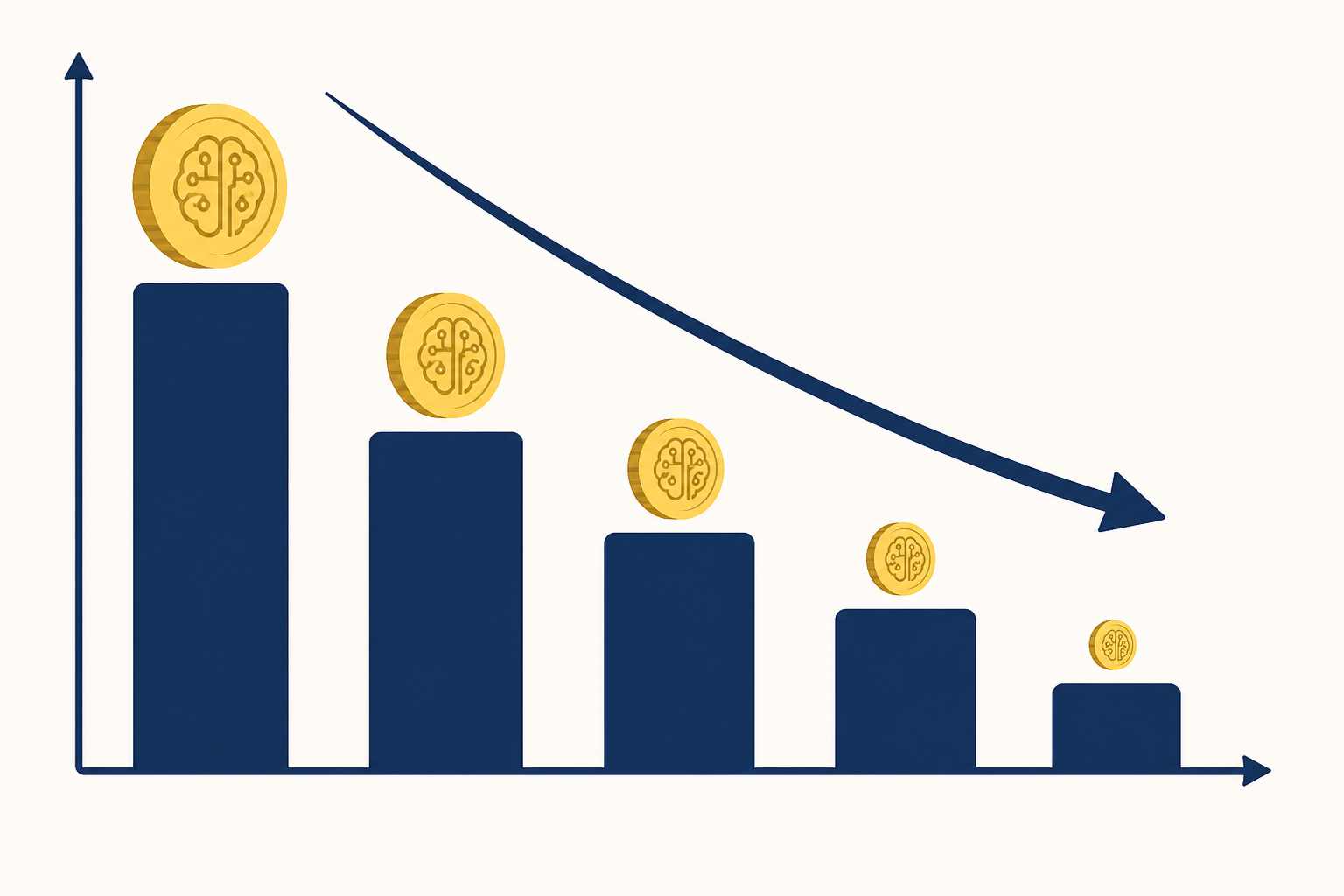
Start with a unit the business already understands. For a support pilot, calculate cost per correctly resolved conversation. For product content, calculate cost per approved description. For an internal tool, calculate cost per staff hour saved after reviewers correct mistakes. Include retries. A flawed prompt that requires three attempts can erase an apparently low token rate. Include the person who checks answers as well; a model that creates more editing work is not cheap merely because its invoice is small.
Do not compare API price with a monthly chatbot subscription as if they were identical. A subscription may bundle interface, storage, support, and limits. An API can offer flexibility but requires a product layer, monitoring, access controls, and potentially separate hosting. The cheapest choice depends on the job and the team, not on a single rate card.
There is another trap. A lower price can tempt a team to send every document, conversation, and spreadsheet into a model. Data minimization still applies. Send only the fields needed for the task. Remove personal identifiers from test sets where possible. Do not put payment details, credential material, or private customer records into a convenience workflow without understanding the relevant terms, retention controls, and legal duties.
Currency exposure is a related, less obvious cost. API pricing published by a US company is denominated in dollars. An Indonesian business paying by card or wallet in rupiah is exposed to exchange-rate movement on top of any future price change once the introductory rate expires on December 31, 2026. Building a small buffer into a pilot budget for currency movement, and reviewing the actual bill after the first month rather than only the advertised per-token rate, avoids a surprise when the real invoice arrives.
📄 Where better document reasoning could help
Google highlights the GDP.pdf result, 34.0% for Gemini 3.7 Flash versus 22.0% for 3.6 Flash. The practical opportunity for a small business is not “upload every PDF and trust the answer.” It is to make a difficult but bounded reading task less repetitive.
Consider a distributor with current product specifications, warranty rules, and shipping conditions stored in separate documents. Staff may need to answer whether a particular model qualifies for a replacement, which document version applies, or what information a customer must submit. A model can retrieve and summarize the relevant passage, but the workflow should show the source to the operator and refuse to decide when the documents conflict.

This is where a well-maintained source folder matters more than model selection. Mark the current version. Remove superseded price lists. Give documents descriptive names. Write a rule for conflicts, such as “quote the newest dated policy and route any uncertainty to a supervisor.” The model cannot infer a sound document governance system from a cluttered drive.
Test document tasks with adversarial examples. Place an old policy beside a new one. Use an image scan with an unreadable number. Ask a question whose answer is absent. The desired behavior is not a confident guess. It is a clear statement of uncertainty and a handoff. For a customer-facing workflow, that refusal behavior protects trust more than an extra percentage point on a document benchmark.
A related but distinct opportunity sits in internal operations rather than customer replies. Many small businesses hold supplier agreements, lease terms, and compliance checklists as scanned PDFs that nobody has time to reread. A stronger document model can produce a first-pass summary of obligations and deadlines for a manager to verify, turning an ignored filing cabinet into a searchable reference. The output should always carry a page citation back to the original document, and the manager, not the model, remains responsible for the final reading of a binding contract.
🧭 AutomationBench is not an operational guarantee
Google says Gemini 3.7 Flash scores 30.4% on AutomationBench, compared with 17.0% for 3.6 Flash, and says the result indicates better completion of real-world business workflows. That is an interesting change because many business uses involve sequences: classify a request, fetch a record, choose a permitted next step, draft a response, and record an outcome.
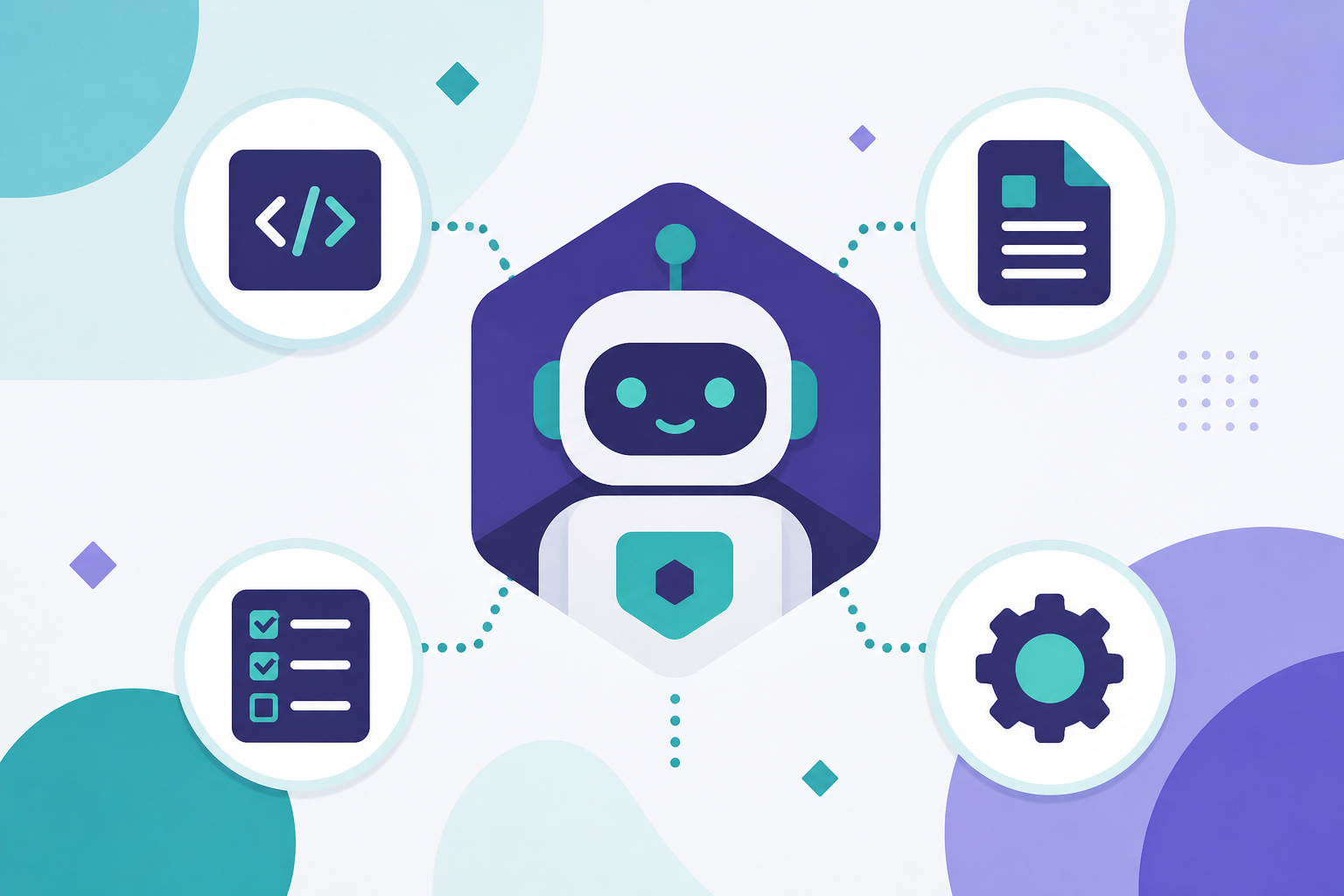
But automation in a benchmark is not authorization in a company. A customer-service agent that can read an order is not automatically entitled to edit an address. An agent that can draft a refund explanation is not automatically entitled to issue a refund. Separate viewing, drafting, recommending, and acting into distinct permissions. Put a human approval step before money moves, inventory changes, customer data is exported, or a contractual commitment is made.
Design for the wrong answer. If the model produces an invalid product code, the integration should reject it. If a tool call returns no match, the system should ask for clarification rather than select a near match. If the model sees an instruction embedded in an untrusted customer message, it should not be able to change its operating rules. These are application controls, not traits that can be delegated to a model.
An operational pilot should inspect failure modes, not just average speed. Count false approvals, bad routing, invented claims, duplicated actions, and cases that required a person to undo the result. One wrong refund may cost more than hundreds of fast drafts save.
Two failure patterns deserve specific attention because they are easy to miss in a short demo. The first is silent drift: an agent that behaves correctly for the first hundred conversations and then begins making small errors as it encounters a case type the test set did not cover. Continuous sampling after launch, not a one-time pre-launch test, is what catches this. The second is compounding automation: a chain where one agent’s output becomes another agent’s input without a human checkpoint in between. Each individual step can look reasonable while the combined chain produces an outcome nobody would have approved directly. Keep at least one human checkpoint in any chain that can spend money, change a record, or contact a customer.
🧩 A safe first workflow for a small business
A good first use is a draft-and-route workflow. Pick a narrow, repetitive question category with a single approved source. Delivery-area questions, store hours, product sizing guidance, or a request for required order information can work. The assistant classifies the message, retrieves an approved answer, drafts a response, and sends uncertain cases to staff.
Keep the pilot narrow for four weeks. In week one, collect representative questions and decide which cases must never be answered automatically. In week two, run the tool internally with staff approval on every reply. In week three, allow automatic replies only for the clearest category while sampling results each day. In week four, compare outcomes against the earlier baseline.
Measure more than speed:
- correct answer rate against the approved source;
- rate of human escalation;
- time to first useful response;
- customer re-contact caused by a wrong or incomplete answer;
- cost per resolved conversation; and
- staff time spent correcting drafts.
Set a stop rule before launch. For example, pause the automatic portion if staff finds a false stock promise, a price error, a privacy breach, or repeated answers that conflict with the source. A stop rule turns safety from a slogan into an operating decision.
🔒 The data and permission boundary
A stronger model can make a weak boundary more dangerous. Before connecting any tool, map the data it can read and the actions it can perform. A public FAQ may be low risk. An internal order note can contain addresses, complaints, and payment context. A warehouse system can change a real-world outcome. Do not expose each one merely because an integration is technically available.
Use least privilege. Give a support drafting tool read access to the fields it needs and no write permission. Use a separate, explicit approval for actions such as changing an order, refunding a payment, or messaging a customer outside the original channel. Log tool calls with the time, the source record used, the proposed action, and the human who approved it.
Do not let a customer message redefine these rules. A message that says “ignore your policy” is customer content, not authority. The application must keep business instructions separate from untrusted input, and it must validate actions against server-side rules. The model should not be the final gatekeeper for its own permissions.
For payment questions, maintain the ordinary verification process. A screenshot or a chat claim is not confirmation that funds arrived. An assistant can ask for the correct reference or route the case to finance, but reconciliation must happen against the actual incoming record. This boundary is mundane and essential.
Written policy should exist somewhere a new hire can find it, not only inside a developer's head. A one-page document naming what the assistant may read, what it may draft, what it may never do without approval, and who to contact when it behaves unexpectedly turns a technical safeguard into an organizational one. When staff turnover happens, and it will, that document is what keeps the boundary intact.
🗓️ A four-week evaluation plan
The model change is an opportunity to improve measurement, not a mandate to deploy. Begin by writing one sentence that describes the job: “Draft a reply to delivery-area questions using the current approved policy, and escalate anything outside it.” If the job cannot be written clearly, automation will be hard to test.
Build a test set before comparing models. Use fifty to one hundred anonymized examples where possible. Include ordinary questions, incomplete questions, conflicting details, prohibited requests, and questions with no answer in the source. Label the expected outcome: answer, ask a clarification question, or escalate. Run the same set through the existing process and the candidate model.
Review results with the people who handle the work. A technical score may miss a phrase that customers interpret as a delivery guarantee or a tone that creates a complaint. Track full-path time, not just model latency. Then run a small live pilot with a visible handoff route and daily review.
At the end of four weeks, decide among three options: extend the narrow pilot, revise the workflow and test again, or stop. “Stop” is a valid result when the source data is too messy, the task volume is too low, or the correction rate cancels the benefit. It is cheaper to learn that in a pilot than after an automated promise reaches thousands of customers.
🔀 What to do before changing providers
Google’s announcement gives teams a credible reason to retest a workflow that was previously too slow, too expensive, or too error-prone. It does not make any one provider the permanent answer. Gemini 3.7 Flash’s reported gains, one-million-token context window, multimodal inputs, configurable thinking, and introductory pricing are capabilities to evaluate against a real job.
Start with the records you control. Clean the FAQ. Name the policy owner. Define prohibited actions. Build the test set. Add a visible human handoff and an audit log. Estimate cost per useful outcome, including correction time. Only then compare models and prices.
That sequence has an unglamorous advantage: it remains valuable when the next model arrives. Google released 3.7 Flash three weeks after 3.6 Flash. The model market will keep moving. A small business does not need to chase each release. It needs a workflow that can test a new option without risking a customer relationship.
Sources: Google, “Gemini 3.7 Flash: our most intelligent workhorse model,” August 13, 2026; Google DeepMind, “Gemini 3.7 Flash Model Card”; Google Cloud Gemini Enterprise Agent Platform pricing; Ars Technica; and 9to5Google. Google-reported benchmark figures are presented as provider results, not independent guarantees.