Meta has put a new argument into the AI-agent race: not every capable assistant has to live in someone else’s cloud. On August 10, Meta Superintelligence Labs released Muse Glimmer, a 30-billion-parameter open-weight model aimed at always-on local agent workflows. The important word is not “30 billion.” It is “local.”
For a small business, the pitch is easy to understand. A tool that helps sort product photos, draft replies, prepare catalogue descriptions, or inspect a website could potentially work closer to the files and systems it needs—rather than sending every step through a remote API. But the launch is not a permission slip to install an autonomous bot and walk away. It is a new option that changes the trade-offs among privacy, cost, speed, maintenance, and control.
The context matters too. Muse Glimmer arrives in the middle of an unusually active week for AI news—an Anthropic default-mode change, a $500 billion Nvidia financing push, and a sweeping essay from Meta’s own CEO about who should control advanced AI. None of that noise changes the operational questions a small business actually needs answered before adopting any new AI tool, local or hosted.
Meta says Muse Glimmer is designed for consumer hardware, with open weights under Apache 2.0. The model card is available on Hugging Face; Meta’s accompanying philosophy essay argues that advanced AI should be broadly distributed. Those are real developments. The claims about performance, hardware fit, and safety should still be treated as vendor claims until a business tests them against its own data and workflow.
🧭 What Meta released
Muse Glimmer is presented as a multimodal, open-weight agent model. “Open-weight” does not mean that every part of the training process is public, nor does it mean the software is ready-made for a business. It means developers can obtain the published model weights and run or adapt them within the release terms.
Meta’s official research announcement describes it as a 30-billion-parameter model optimized for always-on local workflows on consumer hardware. The model card lists Meta Superintelligence Lab as author and Apache 2.0 as the licence. That matters because a business can evaluate the model without tying every request to one hosted provider’s price sheet.
The use case is broader than chat. An agent may read a document, call a permitted tool, make a structured draft, and recover from a failed step. That can be valuable for internal work. It also means the operating boundary matters more than it did when the only output was a paragraph in a chat window. A team should decide, before any pilot starts, exactly which outcomes the agent is allowed to produce and which ones remain a human’s call.
💻 Local does not mean “runs on any laptop”
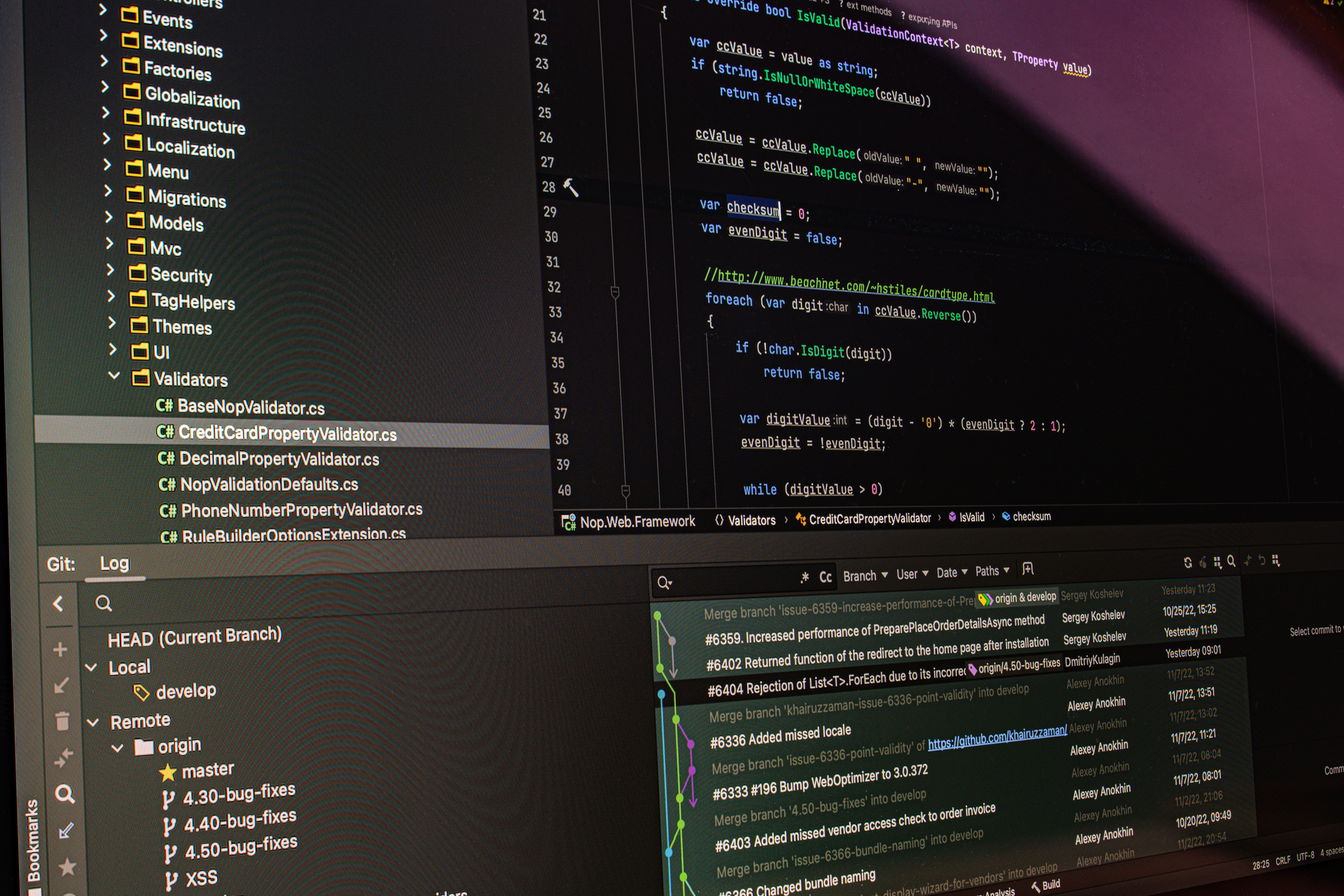
The headline “runs locally” needs a sober reading. A 30B model is not lightweight software. Meta and outside coverage point to quantized versions intended to fit on capable consumer GPUs or high-memory Macs. Quantization reduces the memory footprint by representing model weights with fewer bits, but it can affect quality and does not erase the requirements for memory, storage, cooling, power, or technical support.
Before treating it as a business purchase, ask five concrete questions:
- Which exact hardware and quantized build will be used?
- What response time is acceptable for the real task?
- Will the model see personal, customer, financial, or confidential information?
- Who patches the runtime and reviews logs?
- What happens when the local machine is offline, full, stolen, or unavailable?
A web studio may find a local coding assistant useful on a developer workstation. A shop may prefer a managed service for a simple content workflow because maintaining the hardware costs more than the API bill. “Local” is a deployment choice, not a universal upgrade.
🔓 Why the open-weight licence changes the conversation
Apache 2.0 is a permissive software licence that generally allows use, modification, and distribution subject to its terms. It is not a promise that every downstream component, dataset, integration, or output is risk-free. A business still needs to read the model’s licence, the runtime’s licence, and the terms for any tools it connects.
The more practical advantage is optionality. A team can compare hosted and self-hosted setups, change providers, impose its own retention period, and decide where prompts are processed. For an agency handling client materials, that may be more valuable than a headline benchmark.
But optionality comes with responsibility. When a cloud provider operates a managed AI service, some infrastructure work is outsourced. With a local model, the business becomes responsible for access, backups, update cadence, monitoring, and misuse controls. That responsibility cannot be solved by choosing an open licence.
🛡️ Privacy is a system design problem
Keeping inference on a local device can reduce one category of exposure: sending prompts and files to an external model API. It does not automatically make the workflow private. The model host, browser extensions, plug-ins, tool servers, shared drives, telemetry, backups, and staff permissions can all expose information.

Start with data classification, not a model demo. Separate public product copy from customer identities, payment records, health information, and credentials. Give the agent the least access it needs. If it only needs to draft a product description, do not connect it to an inbox, accounting tool, or customer database.
A sensible first deployment uses non-sensitive or redacted material. Keep a human review point before anything is sent to customers, published, deleted, purchased, or changed in a live system. Record which version of the model and tools were used so an error can be reproduced.
🧰 The agent boundary is the product
The most valuable part of an AI agent is often not the model; it is the workflow around the model. A clear boundary has four parts:
- Outcome: “Prepare a draft of ten product descriptions from this approved spreadsheet.”
- Allowed inputs: One folder or database view, not the whole company drive.
- Allowed actions: Draft, tag, or flag; do not publish, spend, or delete.
- Approval gate: A named person reviews the result before the external action.
This model works whether the AI is local or hosted. It also makes pilots easier to measure. A business can compare a manual baseline with the AI-assisted workflow: time spent, edits required, error rate, and customer impact. If a task needs too much correction, automation is not yet saving time.
🏪 Where a small business can start
The best pilots are repetitive, reversible, and easy to review. They do not need access to a customer’s full history or authority to act. Examples include:
- Drafting first-pass catalogue descriptions from approved product attributes.
- Turning an internal FAQ into several channel-specific drafts for review.
- Summarising a non-confidential meeting transcript into action items.
- Checking a staging website for broken links and inconsistent headings.
- Extracting structured fields from supplier documents after redacting sensitive details.

Do not begin with refund decisions, tax filing, hiring decisions, price changes, payment initiation, or unsupervised customer promises. Those tasks combine uncertainty with real consequences. The time saved by automation is small compared with the cost of a wrong decision.
📊 Benchmarks are clues, not a procurement decision
Meta’s release includes benchmark comparisons for agentic work, coding, reasoning, and multimodal tasks against Gemma4-31B and Qwen3.6-27B. According to Meta’s figures, Muse Glimmer leads on agent-orchestration tests such as MCP-Atlas and DeepSearch QA, and posts a strong score on the AIME 2026 reasoning benchmark. It trails Qwen3.6-27B on computer-use and terminal-command benchmarks such as OSWorld-Verified and TerminalBench 2.1. No model in this size class wins everything, so a team evaluating options should map benchmark categories to the actual job: an agent that mostly drafts text and calls a small number of approved tools cares more about instruction-following and reasoning scores than about terminal-command benchmarks built for developer tooling.
Meta also published two quantized builds meant to fit inside 24GB and 32GB memory budgets, with a measured accuracy loss under roughly one percent on internal test suites and a multi-times speedup from a companion “drafting” technique that predicts several tokens at once before the main model verifies them. Numbers like these describe engineering effort, not a guarantee of fitness for a specific company’s files, language mix, or workflow.
Test any shortlisted model on a small, representative evaluation set of your own: easy examples, messy real examples, and examples the system must refuse. Score both task quality and operational behaviour—does it follow the allowed tool scope, report uncertainty, and stop at the approval gate? A cheap model that needs constant rescue is not cheap, and a faster model that sends an incorrect message is not efficient.
🌍 The wider race is about infrastructure and distribution
Muse Glimmer arrived during an unusually crowded news cycle. On August 9, TechCrunch reported that Anthropic would make Claude Code’s auto mode the default for some paid accounts from August 14, while retaining exceptions for irreversible, destructive, or out-of-environment actions. The comparison is instructive: both local and cloud agents need clear limits.
On August 10, Reuters reported that Nvidia partnered with six financial institutions on platforms aimed at raising more than $500 billion in third-party capital for AI infrastructure. And Meta’s own August 10 essay argued for broadly distributed superintelligence. The industry is simultaneously building immense centralized compute and looking for ways to place useful models on personal devices.

For a small business, this is not a reason to chase every release. It is a reminder that the menu of deployment choices is expanding. Hosted AI remains useful. Local AI may now be realistic for selected teams. Hybrid designs—local handling for sensitive drafts, cloud tools for bursts of capacity—will also become more common.
✅ What the launch does not settle, and a 30-day decision framework
Muse Glimmer does not settle whether open-weight AI is safer than closed AI, whether it will be cheaper after hardware and maintenance, or whether an agent can be trusted with sensitive tools. Meta’s public argument favors broad distribution; other AI labs have argued for tighter control of advanced systems. This is a policy and engineering debate, not a box that one release can tick. There are also business-specific limits: a local deployment may produce less consistent results than a managed frontier service, may be difficult to support on a mixed fleet of office computers, and an agent that works beautifully in a demo can fail when handed ambiguous instructions or a one-off exception.
Instead of asking “Should we use Muse Glimmer?”, use this sequence:
- Week 1: choose one reversible internal task; document the current time and error rate.
- Week 2: run a controlled trial with redacted or non-sensitive data; keep outputs as drafts.
- Week 3: test failures deliberately: missing inputs, conflicting instructions, unavailable tools, and risky requests.
- Week 4: compare time saved, review burden, cost, privacy needs, and maintenance ownership against a hosted alternative.
If the result is materially better and the control model is clear, expand carefully. If not, keep the task manual or use a simpler hosted workflow. The correct decision is not the most technically impressive one; it is the one that improves the business without creating a hidden obligation.
🗣️ What Zuckerberg’s essay adds—and does not add
The model release did not stand alone. The same day, Meta published a roughly 6,000-word essay from Mark Zuckerberg titled “The Future Is for Everyone,” arguing that AI’s benefits should be “broadly distributed” rather than concentrated among a small number of labs or governments. The essay explicitly frames open-weight releases like Muse Glimmer as part of that philosophy, and criticizes what Zuckerberg calls doom-oriented discourse from other AI developers.
Coverage from the Guardian and Business Insider notes that Zuckerberg’s stance puts Meta at odds with Anthropic and OpenAI, both of which have argued publicly that some frontier capability should remain more tightly controlled while safety tooling matures. Neither position is a settled fact; both are competitive and philosophical arguments made by companies that also sell AI products or services.
A business reading the essay should treat it as context for why Meta chose an open licence—not as independent evidence that open models are safer, cheaper, or more reliable in every situation.
This is also where the small-business decision differs from the industry debate. Whether open-weight AI is good policy for the world is a separate question from whether a specific business, with its own data-handling duties, technical capacity, and customer expectations, benefits from running a 30B model locally today.
Consider a small web studio in Surabaya that produces blog posts, product pages, and image alt text for a dozen retainer clients. A disciplined pilot would point the agent only at an approved folder of already-public marketing briefs, not the client’s full drive, and ask it to produce first-draft outlines and alt text suggestions that a human always edits before anything goes live. If editing time drops by a meaningful margin without more factual errors or off-brand tone, the studio has evidence to expand cautiously—still with the same review gate. If it does not, the studio has learned something valuable without risking a client relationship or a confidential file.
Before any go-live, an owner should be able to answer five plain questions: which exact machine or server will run the model, and who owns it? Which folders, inboxes, or systems can the agent reach, and does that match the task’s real needs? Is there a rollback plan if the model produces a wrong or unsafe output at scale? Who reviews outputs before they reach a customer or a live system? And has the business budgeted the hardware, storage, and staff time the local option actually requires, rather than just celebrating “no per-token fee”? If any answer is missing, the pilot is not ready to grow.
📌 Key takeaways, terms to know, and what comes next
- Muse Glimmer is a 30-billion-parameter open-weight model from Meta Superintelligence Labs, released August 10, 2026 under Apache 2.0.
- “Local” means it can run on capable consumer hardware without a network call for every step—not that it runs on any ordinary laptop.
- The model’s licence is permissive, but a business still owns responsibility for access control, updates, and monitoring once it self-hosts.
- Benchmarks favor Muse Glimmer on agent orchestration and reasoning; it trails on computer-use and terminal tasks—map the numbers to the actual job.
- The safest first deployments are reversible, low-sensitivity, and reviewed by a named person before anything reaches a customer or a live system.
- The launch lands alongside separate industry news—an Anthropic auto-mode default change and a $500 billion Nvidia financing push—that both point to the same lesson: agent boundaries matter more than headline capability.
A few terms are easy to misread. Open-weight means the trained parameters are published for download, unlike a fully closed model reachable only through an API; it does not mean the training data is public or that licence obligations disappear. Quantization compresses a model’s numbers into a smaller format so it needs less memory, at some cost to precision. Agentic describes a model that can plan multiple steps, call tools, and adjust when something goes wrong, rather than only answering a single question. Inference is the act of running a trained model to produce an answer, as opposed to training it; running inference locally means the computation happens on the business’s own hardware.
Meta has said it plans to release open weights for Muse Spark, its more capable model, in the coming months—a move that would put a stronger reasoning engine under the same permissive terms. Whether that changes the calculus for small businesses will depend on the same factors covered here: hardware requirements, licence terms, and how the model performs on a business’s own evaluation set, not the headline parameter count. Anthropic and OpenAI have so far kept their most capable models closed, arguing that controlled access supports safety testing; if open-weight agent models keep improving quickly, that argument will face more pressure. None of that changes the operating discipline this article recommends: test narrowly, keep a human in the loop, and expand only when the evidence supports it.
🎯 What it means for Indonesian businesses
Meta’s release is a meaningful signal: capable agent-style AI is moving closer to devices and teams that may want more control over data and cost. For Indonesian SMEs, agencies, and website teams, the immediate opportunity is not to replace a staff member with a local agent. It is to identify one narrow internal task where a reviewed AI draft can remove repetitive work.
The discipline is simple: choose a bounded job, use approved information, restrict the tools, preserve a human decision point, and measure the result. Whether the model runs in the cloud or on a local machine, that is the difference between a useful assistant and an expensive new source of risk.
Sources: Meta Research, Meta, Hugging Face, The Guardian, Business Insider, TechCrunch, Reuters, and France 24; accessed August 11, 2026.