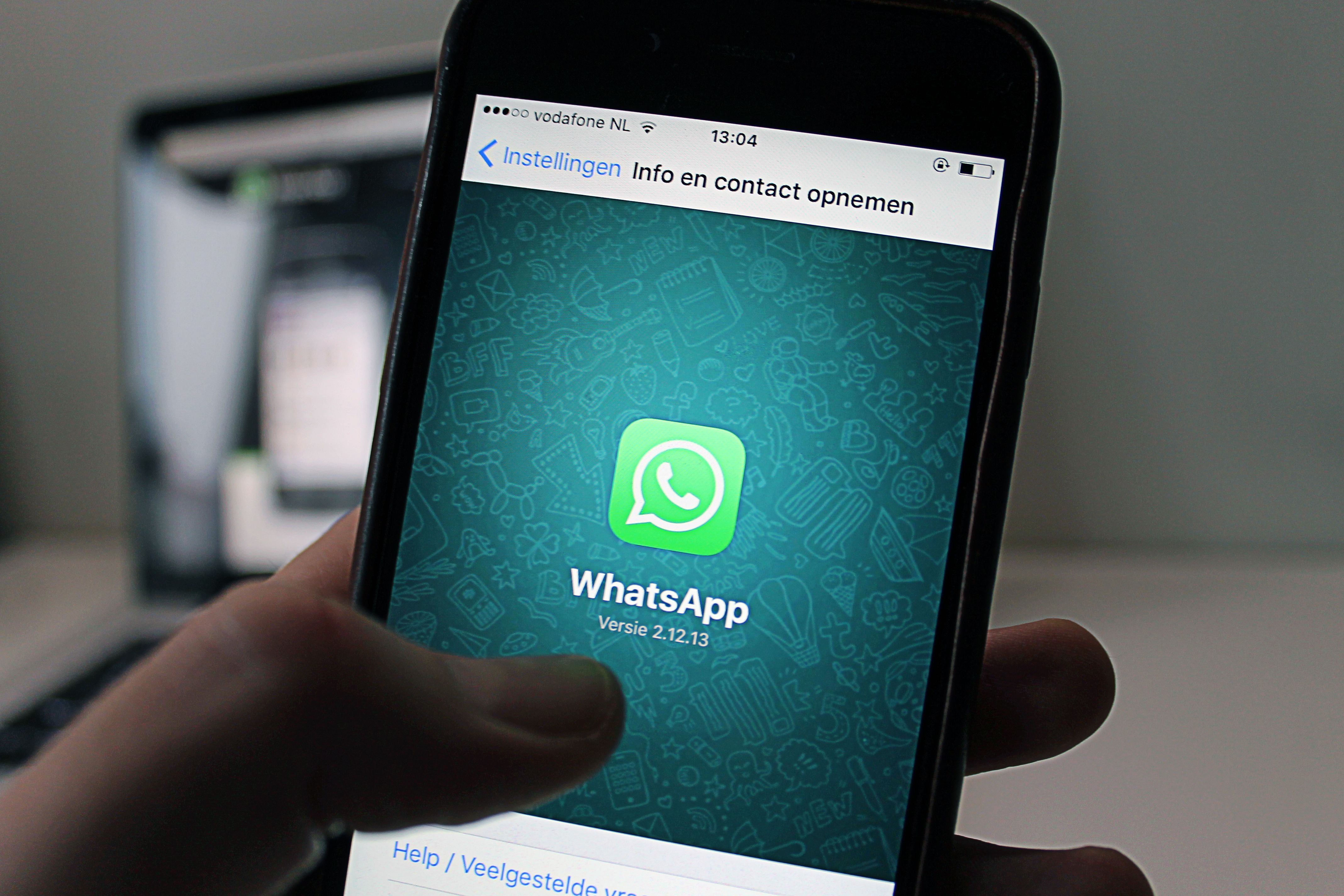
Meta has turned a familiar WhatsApp Business promise—reply faster, sell more, stay available—into a cost that needs active management. From 1 August 2026, reporting by TechTimes and Indonesian outlet Poskota says replies handled through Meta Business Agent begin using token-based billing, reported at US$2 per million tokens, translating to an estimated 4–5 cents per typical reply. For a small business, the important question is not whether AI can answer a chat. It is whether every automated answer is useful enough to justify the variable cost it creates.
This is not a reason to abandon WhatsApp automation. It is a reason to stop treating it as a free, limitless auto-reply button. Meta’s own June announcement says the agent can answer business-specific questions, recommend catalog products, book appointments, qualify leads, close sales, and hand conversations to a person. Those are valuable jobs. But they need a clear scope, short answers, and a human escape hatch—especially for Indonesian businesses that already run much of their customer service inside chat, from a home-based fashion seller who takes every order through DMs to a neighborhood clinic that books appointments by text.
The timing is not incidental. Meta has spent nearly two years quietly testing an AI agent inside WhatsApp Business in India and Mexico before taking it global at its Conversations 2026 conference in London on 3 June. Within days, more than a million businesses were already running some version of the agent. Indonesia, with hundreds of millions of WhatsApp users and a business culture built around chat-first commerce, sits squarely inside the audience Meta is courting—and squarely inside the audience that now has to budget for it.
📌 What changed on 1 August
The change concerns Meta Business Agent, the conversational AI layer Meta is rolling out across WhatsApp, Messenger, and Instagram. Meta announced the global expansion on 3 June, describing an agent that can be set up quickly or connected to an existing business stack. Its own newsroom said getting started was free, while paid offerings would follow in coming months.
Coverage published ahead of the August change adds the immediate pricing detail: token billing for AI-generated replies. TechTimes reported US$2 per million tokens and described a typical interaction as roughly US$0.04 to US$0.05. Poskota reported the same headline rate and translated that estimate to roughly Rp700–Rp900 per response. Treat those per-response estimates as planning illustrations, not a guaranteed Indonesian tariff: usage varies with the task, the prompt, the context supplied to the agent, and Meta’s current commercial terms.
The practical distinction matters. A standard WhatsApp template and a free-form service reply are not automatically the same thing as an AI-agent response. Meta reclassified non-template messages on WhatsApp Business starting 1 July, splitting what used to be a single "Service Message" category into two: ordinary Service Messages and Meta Business Agent replies. That split is the plumbing underneath the new meter—it is how Meta can bill an AI-generated answer differently from a human agent typing the same words. Do not add up invoices with a blog post alone. Check the pricing view in the business account, identify the message category, and confirm the exact terms available to the account before making a budget commitment.
There is a second date worth marking on the same calendar: 1 October 2026, when Meta is separately reported to end the free 24-hour service-message window that businesses have relied on since late 2024. That second change is not the subject of this article, but it sits close enough in time that a business reviewing its WhatsApp costs in August should plan for both shifts together rather than being surprised twice in the same quarter.

🤖 What the agent is actually meant to do
Meta is positioning Business Agent as more than a scripted FAQ. According to the official launch announcement, it can:
- answer questions tied to the business;
- recommend products from a catalog;
- book appointments and qualify incoming leads;
- let the business decide when a team member takes over; and
- help close sales.
That combination can be powerful for a salon checking appointment slots, a food seller answering delivery-area questions, or an online shop matching a customer to a product variant. It can also create long, repetitive exchanges if the agent is asked to improvise on stock availability, bargaining, returns, delivery exceptions, or payment disputes without a reliable source of truth. The agent also doubles as an operations tool for the owner: Meta says it can deliver a morning briefing that summarizes overnight conversations and flags trends, which is useful for a small team that cannot staff a chat inbox around the clock but still wants to know what was missed.
A good operating principle is simple: automate retrieval and routing before automating judgment. Let the agent retrieve a published price, explain a delivery cutoff, collect a name, or route a complaint to a person. Keep decisions involving refunds, payment verification, custom discounts, sensitive personal details, and unusual delivery promises with a trained human. This is not a philosophical preference; it reflects how the underlying billing works. A retrieval-style answer tends to be short and predictable in token cost. A judgment-style answer—one where the agent has to weigh options, negotiate, or improvise policy—tends to be longer, more variable, and more likely to say something the business did not actually approve.

🧾 Why token billing changes the operating model
A fixed monthly tool fee is easy to recognize. A usage-based AI charge behaves differently: it rises with the number and complexity of conversations. The input matters as well as the output. A concise question with a short catalog answer may use far less context than a customer who sends several messages, asks for comparisons, and gets a lengthy answer that includes product details and policy text.
That means the right KPI is not merely “how many chats were automated.” It is cost per useful outcome. For each automated flow, a business should be able to see whether it produced a qualified lead, a completed booking, a product click, a resolved routine question, or an unnecessary back-and-forth.
Use a small scorecard for the first month:
- number of conversations the agent handled;
- average and maximum cost per resolved conversation;
- escalation rate to a human;
- conversion rate after an agent interaction;
- repeat questions that reveal missing website or catalog information; and
- customer complaints caused by an incorrect or overconfident answer.
A low per-message estimate can still become material if an agent is permitted to generate several verbose answers per customer. Conversely, a higher-cost answer may be worthwhile when it recovers a purchase that would otherwise be lost outside working hours.
🧮 A budgeting method that does not rely on guesswork
Start with three flows, not the entire inbox. Pick high-volume, low-risk questions such as store hours, delivery coverage, product catalog navigation, or appointment intake. Write the business-approved answer for each flow. Then set a short response style and a handoff condition.
For each flow, estimate a monthly ceiling with this formula:
monthly test budget = expected agent-handled conversations × conservative cost per conversation × safety multiplier
The safety multiplier is not an accounting trick. It recognizes that early deployments tend to have messy prompts, incomplete catalogs, and conversations that exceed the tidy demo. A business might choose a multiplier of two while learning, then lower it only after reviewing actual usage data.
Do not use the reported Rp700–Rp900 illustration as a price promise. Use it only to build a range. For example, if a flow appears to handle 300 routine conversations a month, model a low, expected, and high case. If the high case makes the workflow unattractive, shorten the agent’s permitted task or retain a human reply path. The goal is a decision that survives a busy day, not a spreadsheet that works only in a quiet week.
Two more variables deserve a line in the model. First, seasonality: a business that sells gifts, uniforms, or festive food will see conversation volume spike around specific weeks, and an agent budget built on an average month will understate the peak. Second, language mix: Meta says the agent responds in the customer’s local language and the business’s tone, which is a genuine advantage for a market as linguistically diverse as Indonesia, but longer or code-switched conversations can also mean more tokens per exchange. Build a small buffer for both.
🛍️ Where Indonesian UMKM should begin
The best first use case is usually a question that has one correct answer and a clear next step. An online fashion seller can use an agent to direct customers to size guidance, colors, or a catalog link. A clinic can collect preferred appointment times before staff confirm the slot. A local food business can explain delivery zones and operating hours, then transfer special-order questions to a person.
Avoid making the agent the sole authority for information that changes fast. Stock counts, courier conditions, custom pricing, and payment status are operational facts, not marketing copy. If those systems are not connected and current, the agent must say it will hand the conversation to the team rather than invent certainty.
This is particularly relevant for chat-first commerce. A customer who receives a quick answer but later finds that the promised color is unavailable is not experiencing “automation”; they are experiencing a broken promise at higher speed. The better design is an agent that clearly labels what it can confirm, what it can suggest, and when it is bringing in a person.
It is also worth remembering how many Indonesian sellers already treat WhatsApp as their entire storefront rather than a support channel bolted onto a website. For them, the agent is not an add-on to an e-commerce stack—it effectively is the front end. That raises the bar for care: an error in an agent’s reply is not a minor support hiccup, it is a mistaken sale, a wrong price quoted to a paying customer, or a promise the business now has to honor or explain away.

📣 Discovery, sales, and the limits of a chat thread
The Business Agent announcement sits alongside Meta’s effort to make businesses easier to discover within WhatsApp. Meta says people will be able to find businesses by name in Search or share a phone number or contact card in chats. That makes the first reply more important: a new visitor might be asking a basic question before deciding whether to browse, order, or leave.
But a chat thread should not become a substitute for a usable website. The website remains the stable place for prices, policies, sizing, menus, availability guidance, and proof of credibility. Every missing or unclear page on the site creates another question for the agent to answer—and potentially another usage cost. Better product pages and a maintained FAQ can therefore reduce chat volume while making the remaining conversations more valuable.
Meta’s Nikila Srinivasan, vice president of business messaging, described the company’s broader vision to the BBC this way: “a business and a customer should be able to get things done right in a chat thread.” That is a useful direction, but it does not remove the need for a source of truth behind the thread. A small business should treat the chat as the front door, not the entire building.
🎥 What Meta is showing developers
Meta Developers’ Conversations 2026 video gives useful context for businesses working with a developer or a customer-service provider. The platform pitch is about AI-enabled messaging infrastructure, integrations, controls, and measurement—not simply a prettier chatbot box.
For a business owner, that translates into questions for any vendor offering setup help: What data will the agent read? Who can edit its instructions? How are price changes reflected? Which actions require human approval? Where can the owner inspect a transcript and the cost? If those answers are vague, the implementation is not ready for customer-facing use.
The official Meta announcement also says the Business Agent Platform can connect to systems such as Shopify, Zendesk, and Shopee. Integration can make answers more useful, but it also raises the stakes. A wrong connection can expose stale stock data or allow the agent to act on an outdated rule. Start read-only wherever possible, then add actions only when the business can audit them.
None of this is exclusive to large retailers. Meta named Swiggy, Madhulika Enterprises, and Kaizen Adventours as early adopters in India, spanning food delivery, manufacturing, and travel—three very different operating models built on the same underlying agent. Indonesian businesses evaluating a vendor pitch can reasonably ask which of those integration patterns is closest to their own, and what the vendor's own transcript-review and cost-monitoring process looks like before agreeing to anything irreversible.
🧑💼 Design the human handoff before launch
An agent is safest when it knows its boundaries. Write these boundaries before switching it on:
- Payment: never mark a payment as received based only on a customer claim or screenshot; route it for verification.
- Price and promotions: quote only a current approved catalog or promotion; escalate custom discounts.
- Inventory: do not promise stock without a live, trustworthy source.
- Complaints and refunds: acknowledge the issue, collect the minimum needed information, and hand off.
- Sensitive data: do not ask for information that is unnecessary to complete the service.
- Urgent cases: make the route to a person explicit, including working hours.
The human handoff is not a failure of automation. It is the control that protects customer trust and prevents a low-cost answer from becoming a costly operational error. Meta itself lists the ability for businesses to decide when a team member steps in as part of the product. Use it deliberately.
Write the boundary rules down somewhere the whole team can see, not just in the head of whoever configured the agent. A one-page policy that lists what the agent may answer, what it must escalate, and who receives the escalation removes ambiguity when a staff member is filling in for someone else, or when a new hire takes over the WhatsApp inbox for the first time. Revisit that page every time the catalog, pricing, or delivery terms change—an agent instructed with outdated boundaries is just as risky as one with no boundaries at all.
📉 Keep answers short, factual, and measurable
Token-priced systems reward discipline. The agent does not need a long brand story when a customer asks, “Is this available?” Give it a compact approved answer, a link or catalog choice, and a clear escalation if the answer cannot be verified.
Build a content pack before launch:
- current price list and product names;
- delivery zones, cutoffs, and fees;
- returns and exchange policy;
- store hours and response-time expectations;
- appointment rules; and
- an escalation directory for sales, operations, and complaints.
Review real conversations weekly. Look for answers that were too long, questions that repeatedly fell through the cracks, and knowledge that has gone stale. Those reviews will often improve the customer experience more than adding another clever prompt.
🌏 The local-commerce opportunity—and the caution
WhatsApp is already a practical business channel for many Indonesian sellers, from neighborhood services to online-first stores. The opportunity is not to mimic a large call center. It is to make a small team more responsive where speed genuinely helps: the first product question, the basic order inquiry, or an after-hours request for an appointment.

The caution is equally local. Margins can be thin, teams are small, and a misunderstanding about a price or payment can spread quickly through chat. That is why an AI response should not be optimized only for speed. It should be optimized for accuracy, appropriate brevity, and a graceful route to a human.
A business that measures those three things can use the new billing model as a discipline: if a response is not accurate, brief, or helpful, it should not consume more AI usage. If it is, the spend can be treated as a service cost linked to a visible outcome rather than an opaque technology bill.
✅ A 30-day rollout checklist
Week one is for preparation: select three safe flows, update the FAQ and catalog, set the handoff rules, and define a monthly test ceiling. Week two is for a limited launch during a known operating window, so staff can catch edge cases quickly. Week three is for reviewing transcripts, costs, conversions, and complaints. Week four is for deciding whether to expand, narrow, or pause each flow.
Before expanding, answer these questions honestly:
- Did customers get correct answers more often and faster?
- Did the agent create work that staff had to undo?
- Can the business explain the cost per successful outcome?
- Does the website or catalog answer the questions that still recur?
- Is a human clearly reachable when the agent cannot verify something?
If the answer to the first, third, and fifth questions is yes, the experiment has a healthy foundation. If not, improve the knowledge base and handoff design before buying more automation.
None of this requires enterprise budget or a technical team. A single owner can run this checklist with a notebook and thirty minutes a week: read ten transcripts, note what the agent got wrong or over-explained, fix the source document, and move on. The discipline matters more than the tooling, and it is the discipline that keeps a token-priced assistant affordable.
🎯 What this means for your business
Meta Business Agent is a meaningful shift because it makes capable conversational AI available in the messaging surfaces where customers already ask to buy, book, and get help. The reported August token billing makes the shift more concrete: AI chat is becoming an operating expense, not just a feature checkbox.
For Indonesian UMKM, the smart response is neither panic nor blind enthusiasm. Start narrow. Publish the facts your business can stand behind. Put a human behind the exceptions. Track cost against resolved customer needs. That is how WhatsApp automation can become a durable service advantage instead of another unmeasured monthly bill.
Sources: Meta newsroom and WhatsApp Business pages (3 June 2026); Meta Developers’ Conversations 2026 video; TechTimes (16 July 2026); Poskota (30 July 2026); BBC reporting featuring Meta VP Nikila Srinivasan. Pricing and availability can change; verify the terms shown in your own Meta business account before deployment.