OpenAI's ChatGPT ads are no longer a distant marketing rumor. The company has been testing sponsored placements in conversations, and its advertising tools are now detailed enough that a business can see the outline of a new performance channel: budgets, bids, product feeds, a measurement pixel, conversion reporting, and context-based matching. For an Indonesian small business, the immediate question is not "How quickly can we buy an ad?" It is whether the platform is available to the advertiser, whether its audience matches the offer, and whether the business can measure a result.
That order matters. A chat conversation looks intimate. An ad placed below an answer may look like a recommendation to a hurried customer. It is still advertising. OpenAI says the placement is labelled "Sponsored" and separated from the answer. The company says ads do not change the answer itself. Those are useful guardrails, but they do not turn a small test into a proven acquisition channel.
🔑 The short version
- ChatGPT Ads are a real, evolving product, not a keyword-search clone.
- The current system uses context hints, geography, first-party audiences where eligible, ad copy, and landing-page material. It does not offer ordinary keyword targeting or demographic targeting.
- Search Engine Land's August 10 field guide reported daily budgets as low as US$25 and observed average CPCs of US$2 to US$5 across its campaigns. Those are observations, not an OpenAI price promise.
- Indonesia is not listed among the markets in the August 10 guide. Availability must be checked in OpenAI's own Ads Manager availability page before anyone allocates budget.
- A small business should start with one offer, one landing page, a fixed learning budget, clear UTM tags, and a conversion event it can verify outside the platform.
🧭 What OpenAI has actually launched
OpenAI announced its approach to advertising in January and began a phased test for logged-in adult users in the United States on ChatGPT's Free and Go tiers in February. Its help materials say Plus, Pro, Business, Enterprise, Education, and other higher-tier accounts are not part of the ad experience. OpenAI also says the test excludes people it knows or predicts are under 18 and excludes sensitive or regulated conversation areas such as health, mental wellbeing, and politics.
The placement described by OpenAI and reported by Engadget is below a response, visibly labelled and separated from the model's answer. OpenAI says an advertiser does not receive a user's conversation or personal data, and that advertisements do not affect what ChatGPT says. A business should treat these as product commitments worth checking in the current policies, not as evidence that every placement will be equally appropriate for every brand.
The more recent development is that advertising is becoming operationally legible. OpenAI's developer material describes a measurement pixel, conversions API, and Advertiser API. Search Engine Land's John Horn reported on August 10 that advertisers could create standard or product-feed campaigns, choose reach, clicks, or conversions, set geographic targeting and exclusions, and use context hints at ad-group level. That is enough structure for a careful trial. It is still early enough that process matters more than tricks.

🗺️ Availability comes before a campaign plan
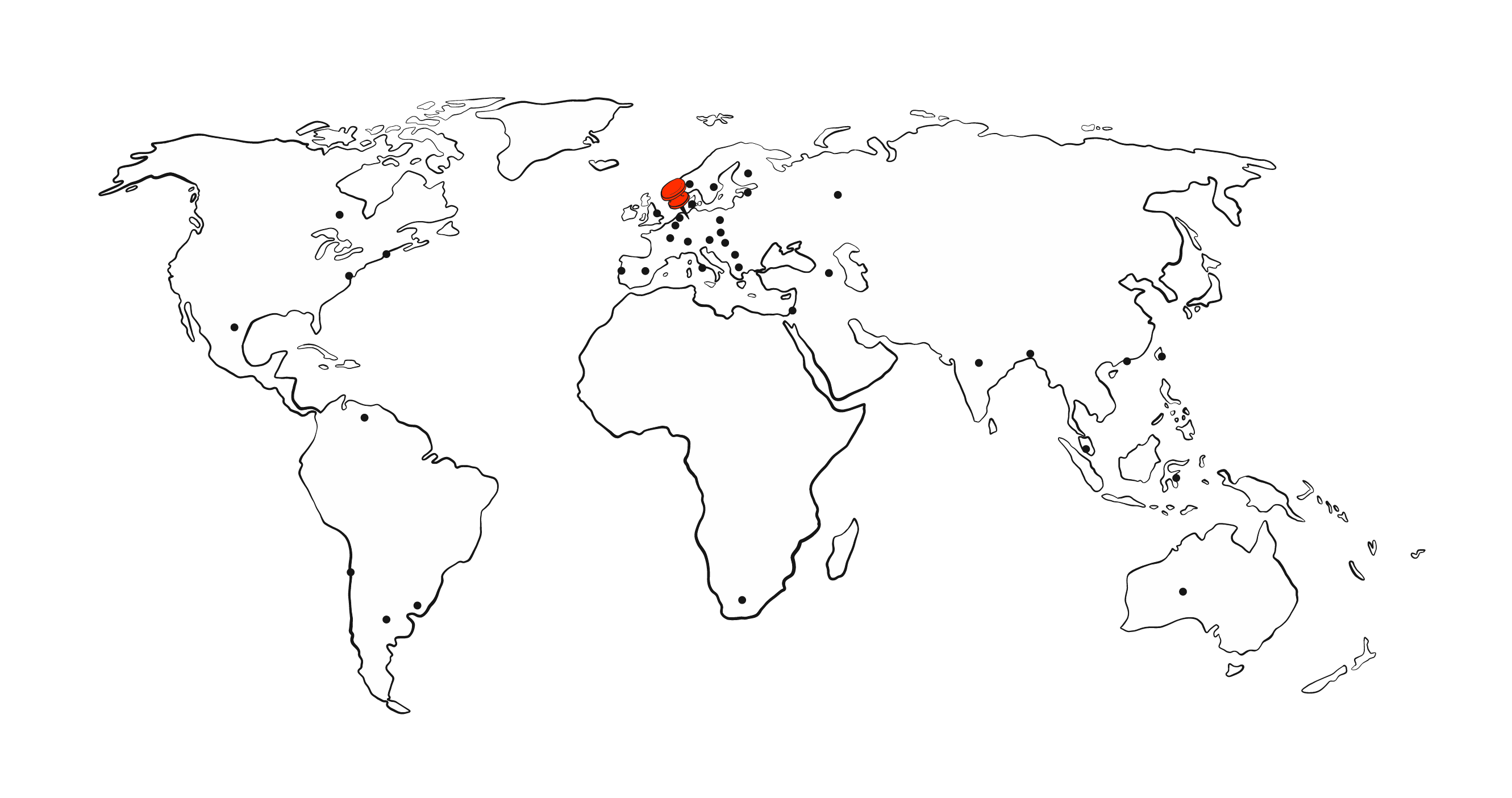
A platform can be technically interesting and still be unavailable to the business that wants to use it. OpenAI's Ads Manager availability page is the source to check because country access can change during a phased rollout. Horn's August 10 guide listed the United States, Australia, Canada, Japan, New Zealand, South Korea, and the United Kingdom as targetable countries. It did not list Indonesia.
That does not mean an Indonesian company can never reach a customer through ChatGPT. It means a local company should not assume that a ChatGPT account, an API account, or a customer base in Indonesia grants it advertiser access. The advertiser's business location, account eligibility, billing arrangements, policy category, and available markets are separate questions. Trying to work around country restrictions is not a marketing plan and can create an account risk.
For a business selling to one of the available markets, the next issue is relevance. A Bali travel operator selling to Australia, a software company serving the United Kingdom, or an exporter with a Canadian distributor may have a legitimate cross-border reason to investigate the channel. A neighbourhood business whose customers buy only within one Indonesian city should wait for actual availability and keep improving channels it can already measure.
🧠 Context hints change the planning work
Google Search advertisers are used to keywords. Meta advertisers are used to audience definitions. ChatGPT Ads asks for a different input. Horn reports there are no keyword, demographic, or in-market audience controls in the ordinary sense. At ad-group level, advertisers use a freeform "context hints" field to describe conversations, topics, or terms in which an offer may be relevant. OpenAI's guidance says these hints guide matching; they are not exact-match rules.
That distinction should change how a small business writes its test. Do not dump a year of search terms into one ad group and call it targeting. Start by identifying the decision a customer is trying to make. A bookkeeping service might describe conversations about choosing software, reconciling invoices, or setting up a small-company finance process. A hotel might describe questions about transport, room type, and travel dates. The copy and landing page must answer the same decision.
A context hint is not permission to target every adjacent topic. It should be specific enough to make a mismatch obvious when reviewing results. Avoid sensitive traits, unsupported claims, and language that assumes the system knows a user's private situation. The ad should stand on its own when seen below a conversation. If the business would be embarrassed to show the exact offer beside the likely question, the context is too broad.
💸 Budget is a learning cost, not a trophy
The practical figures in early reporting are useful only when read with their limits. Horn's guide says a daily budget can begin at US$25, and that the campaigns he observed averaged US$2 to US$5 per click across industries. It also says a maximum CPC below US$3 may trigger a delivery warning. Platform conditions, location, objective, creative, and competition can change those outcomes.
A small business should not translate a dollar figure into a promise of leads. Set a total amount that the business can afford to learn from, then decide in advance what information will justify continuing. For example, a business could run one offer for a fixed period, cap the spend, and compare qualified inquiries, booked calls, completed orders, or another meaningful event against its existing search campaign. The decision rule should be written before the first impression arrives.
The first test has three jobs. It tells the team whether the account can deliver. It tells the team whether the landing page receives the traffic it expects. It gives a first comparison against an existing channel. It does not establish a permanent customer-acquisition cost. If a campaign produces clicks but no usable customer action, that is a result. The right response may be to change the offer, improve the page, or stop.
OpenAI's advertising documentation supports product-related formats, and the August 10 guide describes product-feed campaigns alongside standard ads. Horn reported that product cards were being updated to show information such as price and star ratings. This makes product data more important, not less.
A retailer should not feed a catalogue into a new channel until basic facts are reliable. Check price, stock status, variant names, delivery area, return policy, and product images. A product page that says "available" after stock has ended can turn an exploratory campaign into a customer-service problem. The business also needs a clear source for ratings and a process for correcting them. A star icon is not a substitute for a trustworthy review policy.
For a service business, the equivalent is an accurate offer page. Explain who the service is for, where it is available, what the customer receives, how booking works, and any meaningful limitation. Do not imply that a chat ad is an endorsement by OpenAI or by the answer above it. It is a sponsored placement. The offer has to earn the click.

📏 Measurement belongs outside the ad account too
OpenAI's developer documentation describes a pixel and conversion tools. Horn reports that the pixel can be installed on a website, events can be attached to actions such as button clicks and page loads, and dynamic values can support revenue measurement. He also recommends UTM parameters so the traffic can be read in GA4 and other independent systems.
That last point is essential. An ad platform can count an impression, a click, and a platform-attributed conversion. The business still needs to know whether the lead was real, whether the order was paid, whether a cancellation occurred, and whether a sales team could contact the inquiry. Put UTM parameters on every destination URL. Store the campaign name in a naming convention that the team can understand three months later. Test the form, checkout, phone link, and thank-you page before spending money.
Use a small scorecard:
- Spend and clicks, to see whether the campaign is delivering.
- Landing-page sessions and engaged sessions in analytics, to see whether the click lands where expected.
- A defined business action, such as a qualified form, completed purchase, or booked consultation.
- Revenue or verified margin where that can be connected safely.
- A qualitative note on lead quality, refunds, no-shows, and customer questions.
Do not optimize only for the easiest platform event. A click is cheap to count. It may be expensive to serve if it produces irrelevant inquiries.
📉 Early benchmarks are a warning, not a verdict
Horn's field guide compared roughly 1,500 users arriving at the same website from Google Ads and ChatGPT Ads. In that test, Google Ads had 41 seconds of average engagement time per active user versus 17 seconds for ChatGPT Ads. The reported conversion rates were 3.71% for Google Ads and 0.21% for ChatGPT Ads. The study is one operator's early data, not a market-wide benchmark and not a prediction for another business.
The useful lesson is restraint. New inventory can attract curiosity clicks. A user may click from a conversation to inspect an offer without being ready to purchase. That makes strong landing pages and independent conversion tracking more important. It also means a business should compare outcomes against Google Search, Meta, marketplaces, email, WhatsApp follow-up, and organic traffic, rather than declaring a winner after one interesting dashboard.
OpenAI says paid placement does not determine whether a brand is mentioned organically in ChatGPT, and an organic mention does not determine whether the brand can buy an ad. Keep those workflows separate. Good product information, customer support, a clear site, and legitimate reviews are useful regardless of whether an ad account is available.
⚖️ Policy and brand safety are operational work
OpenAI maintains ad policies that cover restricted categories and sensitive contexts. Horn's guide lists categories such as adult content, alcohol, tobacco, financial services, and gambling among restricted areas. Rules can change, and some categories have nuanced limits, so the current policy page and account review are more reliable than an old marketing thread.
A business should also write its own red lines. Do not use exaggerated scarcity. Do not make a medical, legal, financial, or performance claim that the company cannot substantiate. Do not target a context that would make a normal customer feel watched. Do not build a landing page that hides the price, eligibility, or cancellation terms. These rules improve ordinary advertising too.
There is a reputational detail here. Chat assistants are used for planning, work, and personal questions. An ad can be technically allowed and still feel poorly placed. Review the likely contexts, the wording, and the destination page as a customer would. If the campaign needs ambiguity to work, it is not ready.
🛠️ A seven-step pilot for a small team
A useful pilot is intentionally narrow.
- Confirm access. Check Ads Manager availability, account eligibility, business location, billing, and the current policies. Do not assume Indonesia is eligible.
- Choose one commercial decision. Pick an offer with a real landing page and an outcome the business can verify, such as a booked demo or a paid order.
- Write context hints around the decision. Describe relevant questions and topics without pretending they are exact keywords or private-user profiles.
- Prepare the destination. Make price, service area, inventory, delivery, terms, and contact route accurate before launch.
- Install measurement. Use the platform's supported tools where appropriate, then add UTM parameters and verify analytics and downstream events.
- Set a learning cap. Fix the budget, dates, and stop-or-continue rule before launch. Do not expand because a click-through chart looks exciting.
- Review business quality. Compare not only CPC and CTR but also real revenue, qualified leads, refunds, repeat questions, and staff workload.

🧑💼 Where an Indonesian UMKM should focus today
For many Indonesian UMKM, the most accurate answer today is preparation rather than purchase. Build pages that state the offer clearly. Maintain product data. Connect analytics. Track the source of leads. Keep Google Business Profile, marketplace listings, social channels, and WhatsApp follow-up consistent. These are not substitutes for a future ChatGPT campaign. They are the conditions that let a business judge one when access arrives.
Teams that sell across borders can be more active. They should confirm the advertiser market and target market in the official tools, then run a limited test against a working baseline. An agency should not promise clients a guaranteed new source of demand simply because it can open an account. The channel is young, reporting is still limited, and the matching mechanism is not transparent to advertisers.
The headline is not that every business needs another ad account. The headline is that conversational AI is becoming a paid discovery surface with its own rules. The businesses that benefit first will be the ones that can explain their offer plainly, measure a real outcome, and stop spending when the evidence says the fit is poor.
🤝 How ChatGPT Ads compares with channels a UMKM already runs
A useful way to size up a new channel is to place it next to what the business already spends money on. Google Search ads reach people who type an explicit query and usually show clear purchase intent. Meta ads reach people scrolling a feed, so they rely more on interruption and visual appeal than on an active question. Marketplace ads reach people who already decided to shop inside that platform. ChatGPT Ads sit in a different spot: a person mid-conversation, asking a specific question, who may or may not be ready to act.
That in-between position explains why Horn's early data showed weaker engagement and conversion than Google Search traffic on the same site. It does not mean the channel is worthless. It means the comparison has to be fair. Judge ChatGPT Ads against the channel it resembles most, which is closer to search intent than to social scrolling, and expect the numbers to move as the ad product matures and OpenAI refines matching.
A local UMKM that already tracks cost per lead across Google, Meta, TikTok, and marketplace ads has the discipline this new channel needs. A business that has never separated one channel's performance from another will struggle to judge ChatGPT Ads fairly, because it has no baseline to compare against. Building that baseline is worthwhile even before the channel becomes available in Indonesia.
Terminology gets confusing quickly when a new ad platform borrows some Google and Meta language while inventing its own. A one-page glossary shared with the team, a hired agency, or a freelance marketer prevents avoidable mistakes.
- Context hints: a freeform description of the conversations or topics where an ad may be relevant. It is a matching signal, not an exact-match keyword list.
- Standard ad: a static sponsored placement with a headline, description, image, and destination link.
- Product ad: an ad generated from a submitted product feed, intended to show items such as price and rating alongside the offer.
- Reach bidding: paying per thousand impressions, useful when the goal is visibility rather than an immediate click.
- Conversion bidding: bidding toward a defined action, tracked through the advertiser's own pixel and conversion setup, while still billed per click.
- Ads Manager availability: OpenAI's own reference for which countries can currently create or target ChatGPT Ads campaigns; this list can change and should be checked at the time of planning, not assumed from an old article.
Keeping these terms distinct avoids two common mistakes: treating a context hint like a keyword list, and assuming a reach campaign will behave like a conversion campaign. Each objective changes what OpenAI optimizes for and what a business should expect to see in its reporting.
🧭 The decision worth making
ChatGPT Ads deserve attention because OpenAI has moved from a general advertising announcement to a practical system with campaign controls and measurement tools. That makes a disciplined pilot possible for eligible advertisers. It does not remove country restrictions, make context hints equivalent to keywords, or turn a click into proof of demand.
For an Indonesian small business, check eligibility first. If the channel is not available, use the waiting period to fix the landing page, tracking, catalogue, and lead process. If it is available for a legitimate cross-border market, test one clear offer with a budget you can afford to learn from. A new surface is valuable only when the business can tell what it bought and what it earned.
Sources: OpenAI advertising announcement, Help Center, developer documentation, and ad policies; John Horn, Search Engine Land, August 10, 2026; Engadget, February 9, 2026. Accessed August 13, 2026.