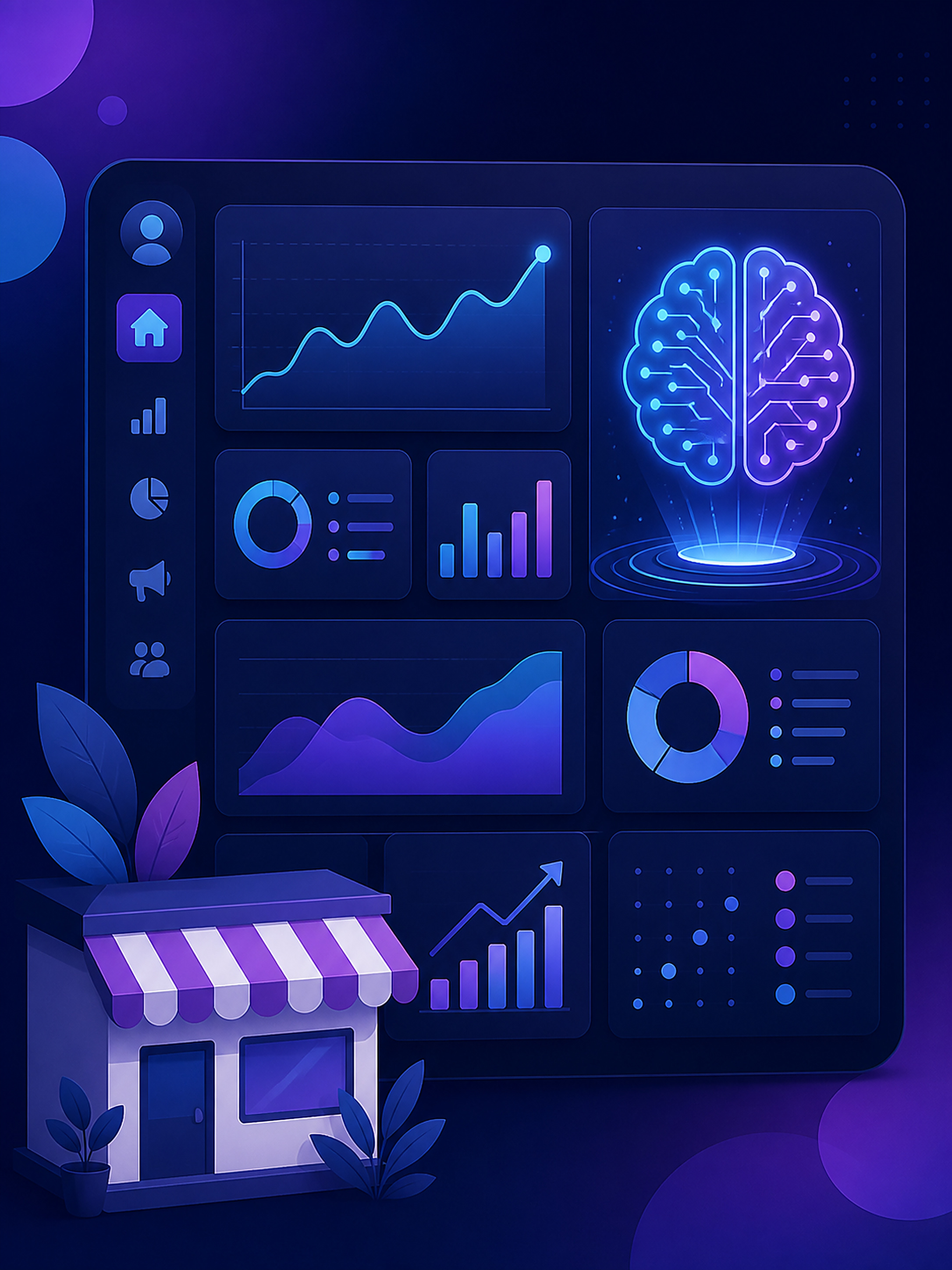
Microsoft Advertising switched on AI Max for every Search campaign in every account worldwide on August 19, 2026. The rollout ends a staged rollout that started with an open pilot in May, and it changes how ads on Bing and Copilot get matched to what people actually type, including full sentences typed into a chat window rather than a short list of keywords.
For a small business running its own Bing or imported Google Ads campaigns, the change is not cosmetic. AI Max moves auction logic away from a fixed keyword list toward a system that reads a site's landing pages, existing ads, and buyer intent signals to decide which searches an ad should chase. That shift arrives at the same time Microsoft is pushing harder into Copilot as a shopping surface, so a poorly structured product page or vague ad copy now has a direct line to whether an AI system decides to show a business at all.
🔍 What Microsoft Actually Turned On
Navah Hopkins, Microsoft's Ads Liaison, announced the global rollout on LinkedIn rather than through a corporate blog post. "AI Max is here! Microsoft Advertising has officially started rolling out AI Max to all accounts globally," she wrote, adding that "we could not be more excited to bring you the best of AI innovation in Search campaigns."
The feature bundles three settings behind one master toggle in Search campaign configuration:
- Search term matching widens which queries a campaign can win beyond an advertiser's keyword list, drawing on keywords, ad copy, landing pages, and both intent and contextual signals to surface searches the account was not previously reaching.
- Text customization lets Microsoft's AI generate and test additional ad copy variations from a business's existing assets and website content, then pick the best-performing combination at auction time.
- Final URL expansion can redirect a click away from the landing page set in the ad and toward whichever page on the site the system judges to match the searcher's intent more closely, when it predicts that swap improves performance.
Hopkins tied the search term matching feature specifically to conversational search: "helping you appear on and convert more complex conversational queries — especially ones in AI experiences on Bing and Copilot." That detail matters because keyword lists were built for short, lexical queries, not the sentence-length prompts people now type into a chat interface.
📊 The Two-Month Runway Behind the Launch
This was not a surprise feature drop. Microsoft first flagged AI Max in an April 21, 2026 blog post about Copilot-era advertising, then confirmed on June 17 that the Search campaign version would move to open pilot within a month. In late July, Microsoft quietly updated its help documentation to confirm that Predictive Matching — an older, keyword-free targeting option — would be folded into the new Search term matching setting inside AI Max. That notice carried no effective date and told advertisers no action was required at the time.
Global availability landed roughly two months after the June pilot announcement, giving advertisers a working destination for a change that had been signaled in pieces since spring.

🛡️ Brand Controls Shipped on Day One, Not After Complaints
The most notable design decision is sequencing. According to Hopkins, "We heard you that brand controls and reporting are critical to trusting AI as a partner in campaign management, which is why brand controls (including term exclusions for text asset generation), reporting, and choice are present from day one."
The Search campaign settings panel backs that up with a dedicated Brand controls section, split into two mechanisms:
- Brand exclusions stop ads from serving against search queries mentioning specified brand names, managed through brand lists capped at 20 lists per campaign. That cap limits the number of lists, not how many brand terms each list can hold.
- Brand inclusions work as the mirror image, defining which branded queries a campaign is permitted to chase rather than avoid.
Microsoft has offered brand exclusions before; the mechanism first appeared as a pilot feature inside Performance Max campaigns in October 2024. Folding it into AI Max at launch, rather than adding it months later in response to advertiser complaints, is Microsoft reading the room after watching how automated ad products from competitors have drawn criticism over lost control.
One structural detail separates Microsoft's version from a rival implementation: Microsoft confirmed in December 2025 that exact match keywords retain absolute auction priority over every other campaign type competing for the same placement. Any AI Max expansion inside a Microsoft account sits behind an exact match keyword that also qualifies for the same search, which puts a ceiling on how far the automation can encroach on a tightly built, deliberately narrow campaign.
📱 Existing Campaigns Do Not Start From Zero
Advertisers already running Predictive Matching or autogenerated text assets for Search campaigns will see the corresponding AI Max settings switched on automatically, since those older features effectively moved house into the new framework. No other AI Max feature activates without an explicit opt-in — the search term matching and final URL expansion settings stay off until an advertiser turns them on.
Campaigns imported from Google Ads inherit their AI Max configuration where compatible: if an imported Google Search campaign already had matching AI Max features enabled, Microsoft Advertising switches on the equivalent settings after import. One exception applies. If an imported AI Max campaign started life as a Dynamic Search Ads campaign upgraded into AI Max on the Google side, Microsoft converts it back into a plain DSA campaign on its own platform while it continues building out equivalent functionality — a workaround tied to the fact that Microsoft has not announced a retirement date for DSA campaigns, unlike Google, which already has one.
💬 Why This Lands Differently Than a Typical Ads Update
The quote captures the strategic logic behind the timing. Microsoft has spent two years building the case that Copilot placements outperform conventional search ads: internal research the company published in August 2025 found Copilot ad placements delivered 73% higher click-through rates and 16% stronger conversion rates than traditional search placements, alongside customer journeys measuring roughly a third shorter. A keyword list, tuned for exact-phrase lexical matching, simply does not map cleanly onto a sentence a user types into a chat window. Search term matching is Microsoft's attempt to build that bridge without asking every advertiser to rebuild their keyword strategy from scratch.
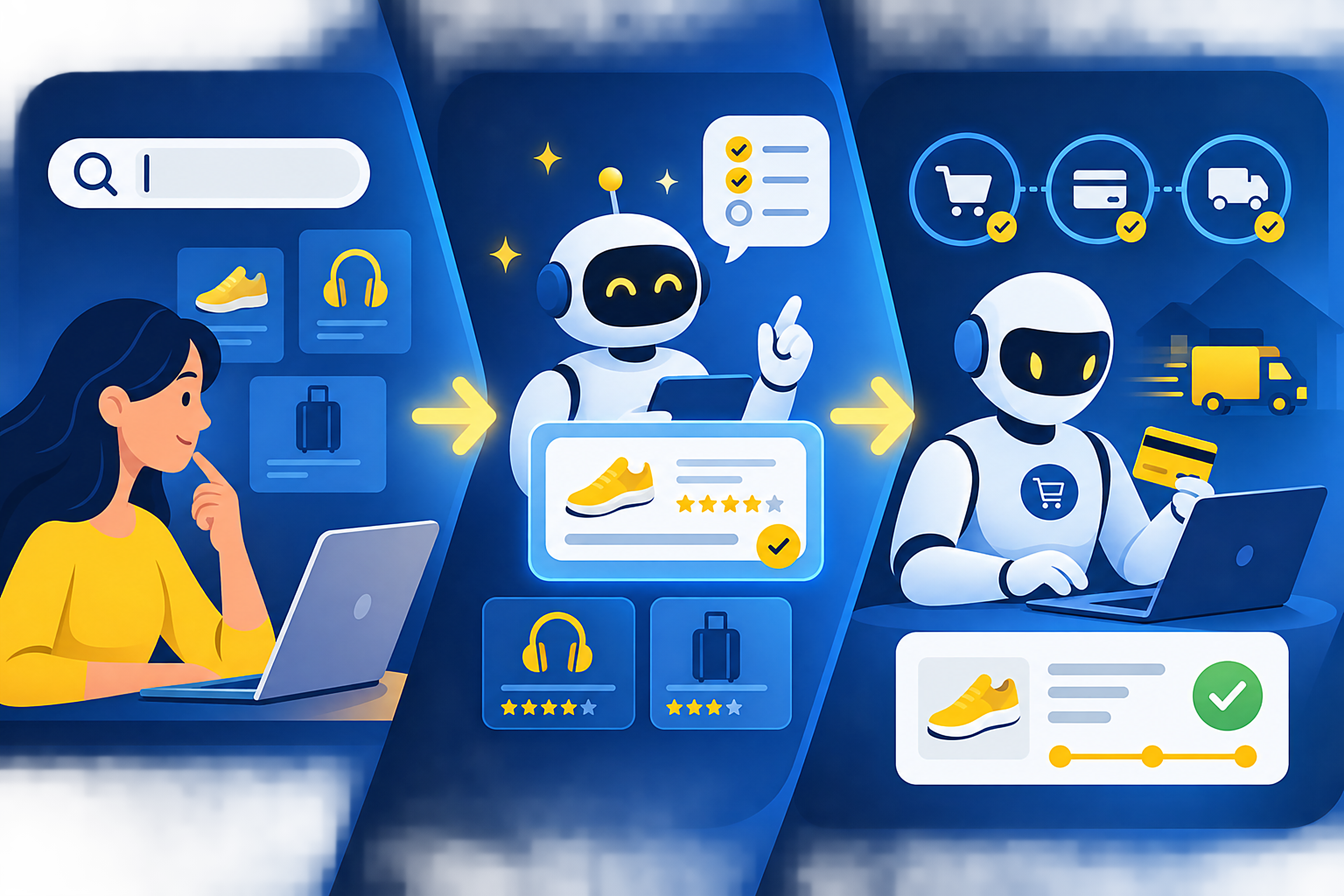
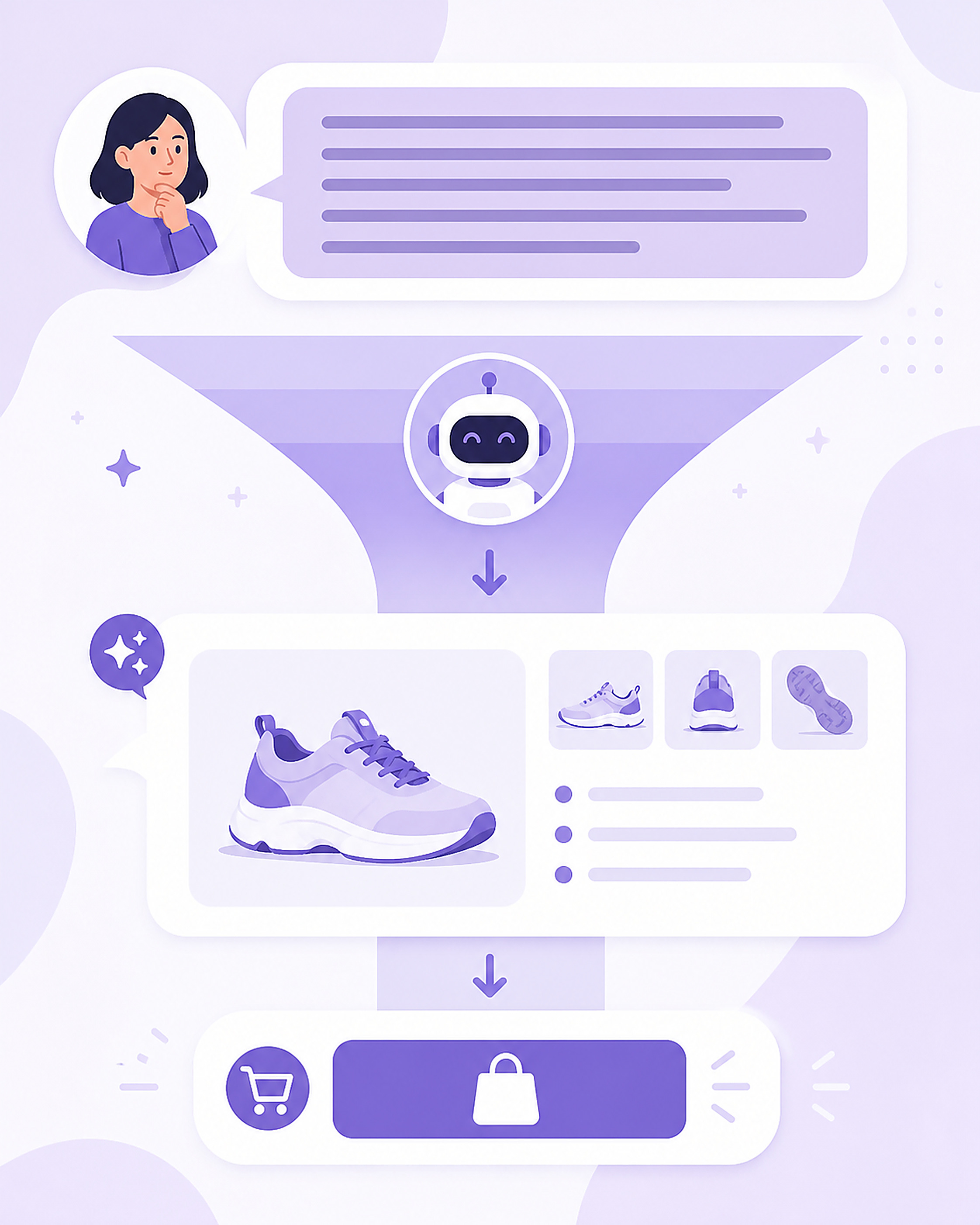
The company frames this inside a broader shift it calls the "three eras of the web" — a human web where people search and compare manually, an LLM web where AI narrows the options while a person still decides, and an emerging agentic web where an AI agent finds, evaluates, and completes a purchase on someone's behalf. Microsoft's own figures describe automated, non-human traffic growing roughly eight times faster than human traffic, with AI-driven browsing sessions nearly tripling during 2025 and agentic browser traffic up by a factor Microsoft rounds to roughly 8,000% year over year. Those figures come from Microsoft's own internal analysis and should be read as a vendor's framing of its own product category, not as an independently audited industry benchmark.
⚠️ The Part Microsoft Has Not Fully Documented Yet
Final URL expansion carries a downstream risk that Microsoft has not spelled out with the same clarity it gave brand controls. On the Google Ads side of an equivalent feature, static tracking templates that omit a proper redirect tag have been documented to route visitors to the tracking destination itself rather than the intended page, producing broken links and 404 errors when the URL structure does not match what the automation expects. Microsoft has not published an equivalent technical caveat for its own final URL expansion feature, which leaves site owners to test the setting cautiously rather than assume it behaves identically to a competitor's version.
Reporting is another open question. Hopkins' announcement described reporting as available from day one, and Microsoft's June pilot announcement had promised a search term-to-landing-page report showing the full path from query to destination page in one view. Screenshots of the live settings panel circulating after the launch do not show that reporting surface inside the campaign configuration screen itself, and Microsoft has not published a separate note detailing exactly which reports shipped alongside the global rollout versus which remain in progress.
🧩 How This Compares to Google's Own AI Max
Microsoft did not build this feature in isolation. Google has run its own version of automated, keyword-agnostic search matching under a similarly named AI Max banner for longer, and the comparison matters because a large share of small businesses run campaigns on both platforms simultaneously, often through the same agency or the same in-house marketer juggling two dashboards.
The two platforms diverge on a detail that changes how cautiously an advertiser should approach the rollout. On Google's side, PPC Land has documented that automatically created assets and campaign-level broad match campaigns are set to convert to AI Max starting September 1, 2026 — a forced migration date that gives advertisers a hard deadline to review settings before the system changes underneath them. Microsoft has taken the opposite approach: AI Max remains fully opt-in for the two newer capabilities, with no announced date at which non-participating accounts get switched over automatically. That difference is not cosmetic. A business that ignores the Google side risks an unplanned change to how its campaigns behave on a fixed date; a business that ignores the Microsoft side simply keeps running its current setup until it chooses otherwise.
The import behavior between the two platforms compounds this. When a Google Ads Search campaign with AI Max settings enabled gets imported into Microsoft Advertising, Microsoft carries those settings across automatically — meaning an agency managing both platforms cannot assume a Microsoft account behaves identically to how it was configured before import. A campaign that started as a plain Search campaign on Google but was later upgraded to Dynamic Search Ads and then wrapped into AI Max follows an even more particular path: Microsoft converts it back into a standard DSA campaign on its own platform rather than preserving the AI Max wrapper, a decision tied directly to the fact that Microsoft, unlike Google, has not set a retirement date for DSA campaigns.
For a small business, the practical lesson is not to treat "AI Max" as one feature that behaves the same everywhere it appears. It is a brand name two competing platforms are both using for a family of related but distinct automation settings, each with its own opt-in rules, own migration timeline, and own failure modes. An agency or in-house marketer running both platforms needs to check each dashboard separately rather than assuming a setting reviewed on one service tells the full story about the other.
📈 What the Broader AI-Search Shift Around This Launch Signals
The AI Max rollout did not happen in a news vacuum, and situating it inside the surrounding weeks of search-industry activity is useful for understanding why Microsoft moved when it did. In the same window, Google was finishing the global rollout of its own August 2026 spam update, adjusting its Search Console reporting to cover Instagram, TikTok, X, and YouTube performance data, and pushing a "Preferred Sources" button that lets readers pick specific publishers by name inside Google News and Discover. Search Engine Land and Search Engine Roundtable both tracked a burst of ranking volatility in early August that several independent trackers picked up but Google's own status dashboard never confirmed as an official update — a reminder that not every visible ranking swing traces back to a named algorithm change, and that businesses should be cautious about over-attributing a short-term traffic dip to any single headline.
Set against that backdrop, Microsoft's timing looks less like a coincidence and more like a company trying to stake out ground in conversational and agentic search before Google's own equivalent tooling becomes the default comparison point every advertiser reaches for. Both companies are racing to make Search campaigns legible to systems that increasingly answer a user's question directly rather than handing over a page of blue links, and both are betting that advertisers who adapt their sites and campaigns early will keep more of the traffic that used to flow through traditional organic and paid listings.
None of this changes the operational advice for a small business, but it explains why "AI Max went live" is worth an owner's attention this week rather than filed away as routine platform housekeeping. Advertising platforms rarely announce a defensive move directly; the announcement always reads as a feature launch. The strategic read sits underneath the press release.
⚙️ A Practical First-Week Checklist

A small business running paid search through Microsoft Advertising, directly or through an agency, faces three practical decisions this week rather than a distant policy change.
First, the setting is opt-in for the two newer capabilities, so nothing changes automatically for anyone who does not explicitly turn on search term matching or final URL expansion. Advertisers already using Predictive Matching or autogenerated text assets will notice those specific settings already switched on, since the older features migrated into the new toggle.
Second, the quality of a website's own landing pages now feeds directly into an automated matching system rather than only influencing a human media buyer's manual keyword research. A landing page with vague copy, missing product details, or unclear intent signals gives the AI Max system less to work with when it decides which additional queries to chase and which page to route a click toward. This is the same underlying dynamic search engines and AI answer systems have been pushing all year: structured, specific, easy-to-parse content earns more of the automated attention than generic pages built primarily for humans to skim.
Third, brand safety tools exist from day one this time, which is worth using immediately rather than treating as optional. A business with a distinctive name, a product line with a recognizable term, or a reputation to protect should set up brand exclusion and inclusion lists before turning on the broader matching settings, not after noticing an unwanted result.
🔑 Key Takeaways
- Microsoft Advertising rolled out AI Max to all accounts globally on August 19, 2026, following an April announcement and a May-to-August pilot period.
- The feature bundles three settings: search term matching, text customization, and final URL expansion, inside one master toggle in Search campaign settings.
- Brand exclusion and inclusion controls, capped at 20 lists per campaign, are available from launch rather than added later.
- Exact match keywords retain absolute auction priority over any AI Max expansion competing for the same placement.
- Predictive Matching and autogenerated text assets automatically migrate into the equivalent AI Max settings; the newer features remain opt-in.
- Final URL expansion technical caveats and full reporting details remain less documented than the brand controls Microsoft highlighted at launch.
🏁 The Practical Close
Nothing about this rollout requires an immediate account overhaul. What it does require is treating a business's own website content — landing pages, product descriptions, ad copy — as the raw material an AI system will use to decide reach and relevance, rather than an afterthought behind a manually built keyword list. A site that already reads clearly for a human customer has a head start; a site built mostly for a search engine to rank rather than a person to read does not translate as well into a system optimizing for conversational queries. The businesses that benefit fastest from AI Max will likely be the ones that spent the last year making their own site specific and easy to parse, not the ones waiting for the next platform update to fix a structural gap in their web presence.
For an owner who has never touched Microsoft Advertising and only runs campaigns on Google or Meta, the launch is still worth noting for a different reason: it is a preview of where every ad platform is heading. Keyword lists, manual bid adjustments, and static landing pages were built for a decade in which a human typed a short phrase and scrolled a results page. The three platforms that carry the most small-business ad spend today — Google, Meta, and Microsoft — are each converging on the same idea from different angles: read the site, read the intent, and let a model decide the match in real time. A business that treats its own website as a well-organized, specific, easy-to-parse source of truth is preparing for all three platforms at once, not just the one that happened to ship a headline feature this week.
That same perspective applies to a business that has never run a paid campaign at all. Clear website content, complete product pages, and specific descriptions are not only capital for organic SEO or paid ads; they are the same capital that determines whether an AI assistant like Copilot, ChatGPT, or Gemini surfaces a business when someone asks about the product or service it offers. Rewriting a website's own copy so it reads clearly, making sure each page answers one prospective customer's question directly, and keeping pricing and availability information current will still pay off regardless of which ad platform a business uses, or even if it decides to skip paid advertising entirely this year.
Sources: Search Engine Roundtable (August 20, 2026); Search Engine Journal (August 19, 2026); Search Engine Land; PPC Land (August 2026); Microsoft Advertising official blog, "Win Across All Three Eras of the Web" (April 2026); LinkedIn post by Navah Hopkins, Microsoft Ads Liaison (August 19, 2026).