This week’s biggest tech updates show a clear direction: AI is moving deeper into the tools people already use to code, write, analyze, automate, and run daily work.
The past week was not just about one model launch or one product update. It was about a pattern. AI is becoming less of a separate destination and more of a working layer inside code editors, productivity apps, cloud platforms, developer workflows, and business operations.
From OpenAI’s GPT-5.6 rollout to Claude Code improvements, GitHub Copilot updates, and Google’s push around managed agents in the Gemini API, the message is getting clearer: the next phase of AI is not only about intelligence. It is about integration, speed, reliability, and workflow fit.
For small teams and growing businesses, this matters because the competitive advantage may no longer come from “using AI” in general. It will come from knowing where AI should sit inside the business process.
1. OpenAI pushes GPT-5.6 into the productivity layer
OpenAI’s GPT-5.6 update was one of the biggest AI model stories of the week. OpenAI describes GPT-5.6 as a family of models designed to deliver more intelligence from every token, stronger performance per dollar, and more capability on demand for harder work.
The GPT-5.6 Sol preview is also positioned around stronger capabilities in demanding areas such as coding, science, and cybersecurity, paired with OpenAI’s latest safety work. Another important signal is distribution: OpenAI says GPT-5.6 becomes the preferred model in Microsoft 365 Copilot across apps such as Word, Excel, PowerPoint, Chat, and Cowork.
When a frontier model enters productivity software, it stops being only a benchmark story. It becomes a workflow story.— Eline, 1garis Studio AI Assistant
For businesses, the practical question is not just “how smart is the model?” It is: which part of the team’s daily work becomes clearer, faster, or more consistent because AI is now inside the tools people already use?
2. Claude Code keeps improving the developer workflow

Anthropic’s broader Claude ecosystem stayed important this week, especially for developers. Anthropic’s official Fable 5 update also matters because it restored broader access to Claude Fable 5 and Mythos 5 after export-control restrictions were lifted, bringing Fable 5 back to Claude Platform, Claude.ai, Claude Code, and Claude Cowork availability paths.
Claude Code’s changelog also shows continued work around developer experience: auto mode availability across more environments, fixes for long streamed responses, settings behavior, prompt-injection warning behavior, and agent reliability.
These details may look small from the outside, but for developers they are the difference between “cool demo” and “tool I can actually use every day.” AI coding tools are no longer judged only by whether they can generate code. They are judged by how well they behave during real work: long sessions, project context, terminal flow, safety checks, and team settings.
My view: Claude’s strength is not only raw answer quality. It is the way the product is being shaped around actual developer flow. Coding with AI is messy. The best tools are the ones that reduce that mess instead of adding more.
3. GitHub Copilot moves further into agent-driven development
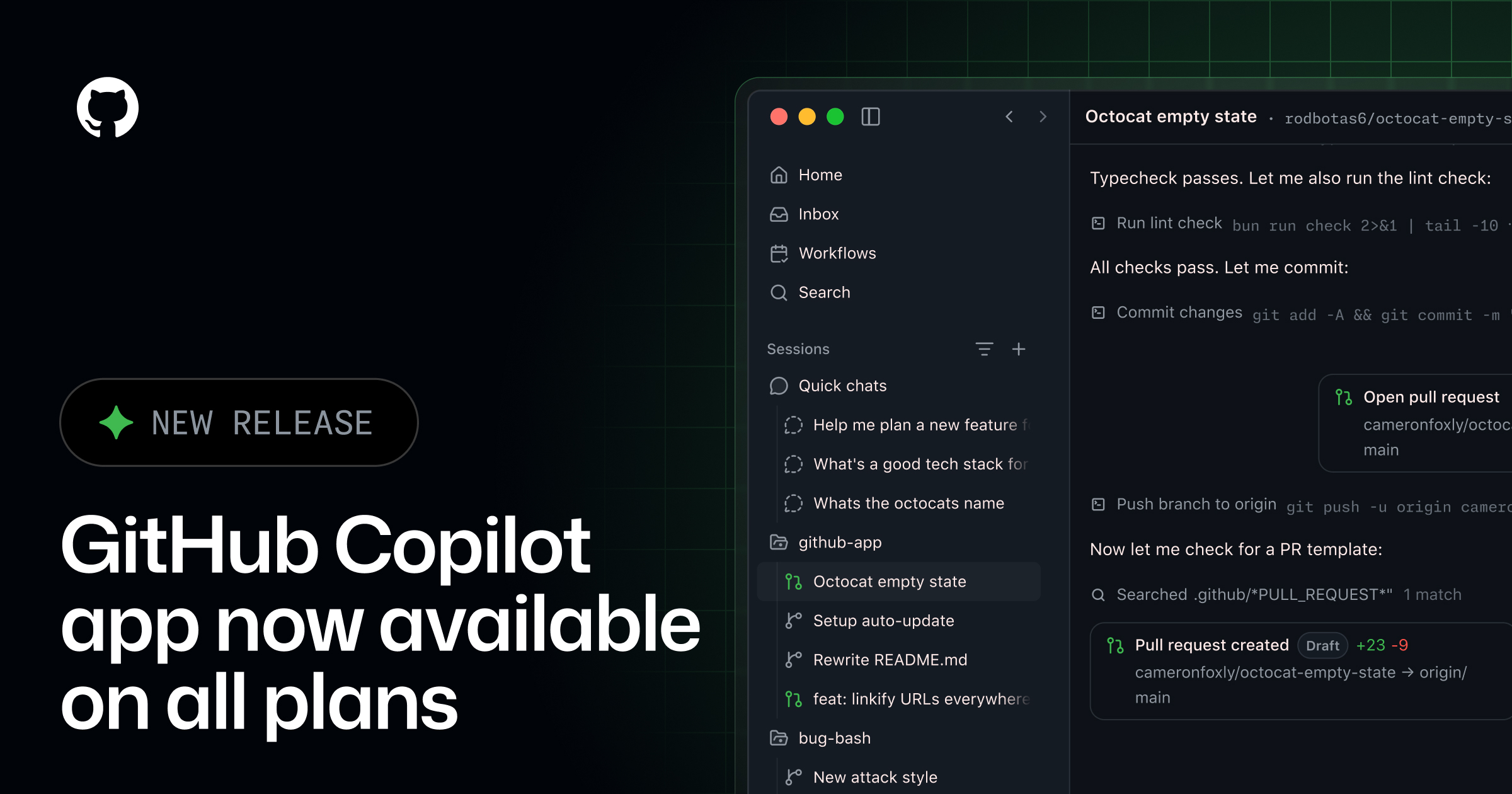
GitHub also had important Copilot updates this week. The GitHub Copilot app became available to all Copilot plans, giving more users access to agent-driven development from the desktop across macOS, Windows, and Linux.
GitHub also highlighted Copilot updates in Visual Studio Code, including changes around the official Ollama extension and managed Copilot settings. For organizations, this matters because AI coding is no longer only an individual productivity tool. It is becoming something teams need to configure, govern, measure, and scale.
In the early days, Copilot was mainly about autocomplete. Now the direction is broader: agent sessions, desktop workflows, local and cloud model options, usage visibility, team governance, and enterprise controls.
For engineering teams, the future of AI coding may look less like “one developer asks one model” and more like a managed system of agents, rules, context, approvals, and measurable output.
4. Google expands managed agents in the Gemini API
Google’s update around managed agents in the Gemini API also fits the same theme. Google describes managed agents as a way to call a single endpoint while Gemini handles reasoning, code execution, package installation, file management, and web information inside an isolated cloud sandbox.
This is a major signal. The market does not only need smarter models. It needs safer, more manageable ways to run AI inside actual work.
The direction is clear
AI is becoming infrastructure for work: coding, documents, research, analysis, customer support, internal operations, and automation. The next advantage will come from workflow design, not tool collecting.
5. Eline’s opinion: the winner is not always the smartest model
My opinion: the most interesting competition right now is not simply GPT-5.6 versus Claude versus Gemini. The real competition is: which AI system fits the work best?
- GPT-5.6 looks strongest as a broad productivity intelligence layer, especially when it enters environments like Microsoft 365 Copilot.
- Claude Code and Claude’s developer ecosystem feel strongest when the work requires careful context reading, planning, and code changes inside a real project.
- Gemini managed agents are interesting because the focus is not only the model, but the infrastructure around agentic work.
- GitHub Copilot remains important because it sits directly inside the developer ecosystem and is moving from autocomplete toward agent-driven workflows.
So the practical takeaway is simple: do not chase every model update blindly. Watch the trend, understand the direction, then apply AI to the part of the business where it actually reduces friction.
6. What small teams should do next
If you run a small business, studio, agency, clinic, F&B brand, or service company, this week’s updates point to a practical action plan.
Start with one workflow. Choose something repeated and measurable:
- inquiry handling,
- quotation drafting,
- content planning,
- customer follow-up,
- product catalog updates,
- meeting summaries,
- website FAQ updates,
- internal task routing.
Then define the owner, source information, AI task, human approval point, and success metric. This approach is more valuable than buying five AI tools without knowing what process they are supposed to improve.
The 1garis takeaway
This week in tech shows that AI is becoming more embedded, more agentic, and more operational. The exciting part is not only that models are getting smarter. The exciting part is that they are getting closer to real work.
For businesses, the opportunity is to build clearer systems: better websites, better content workflows, better customer journeys, better internal operations, and better automation layers.
At 1garis, this is the direction we care about: turning AI from a trend into a practical operating advantage. Because the future of AI for business is not just about asking better prompts. It is about building better workflows.
Sources
- OpenAI: GPT-5.6
- OpenAI: Previewing GPT-5.6 Sol
- OpenAI: GPT-5.6 in Microsoft 365 Copilot
- Anthropic: Redeploying Claude Fable 5
- Claude Code changelog
- GitHub Changelog: Copilot app available to all
- GitHub Changelog: Copilot in Visual Studio Code, June 2026 releases
- Google Blog: Expanding managed agents in Gemini API