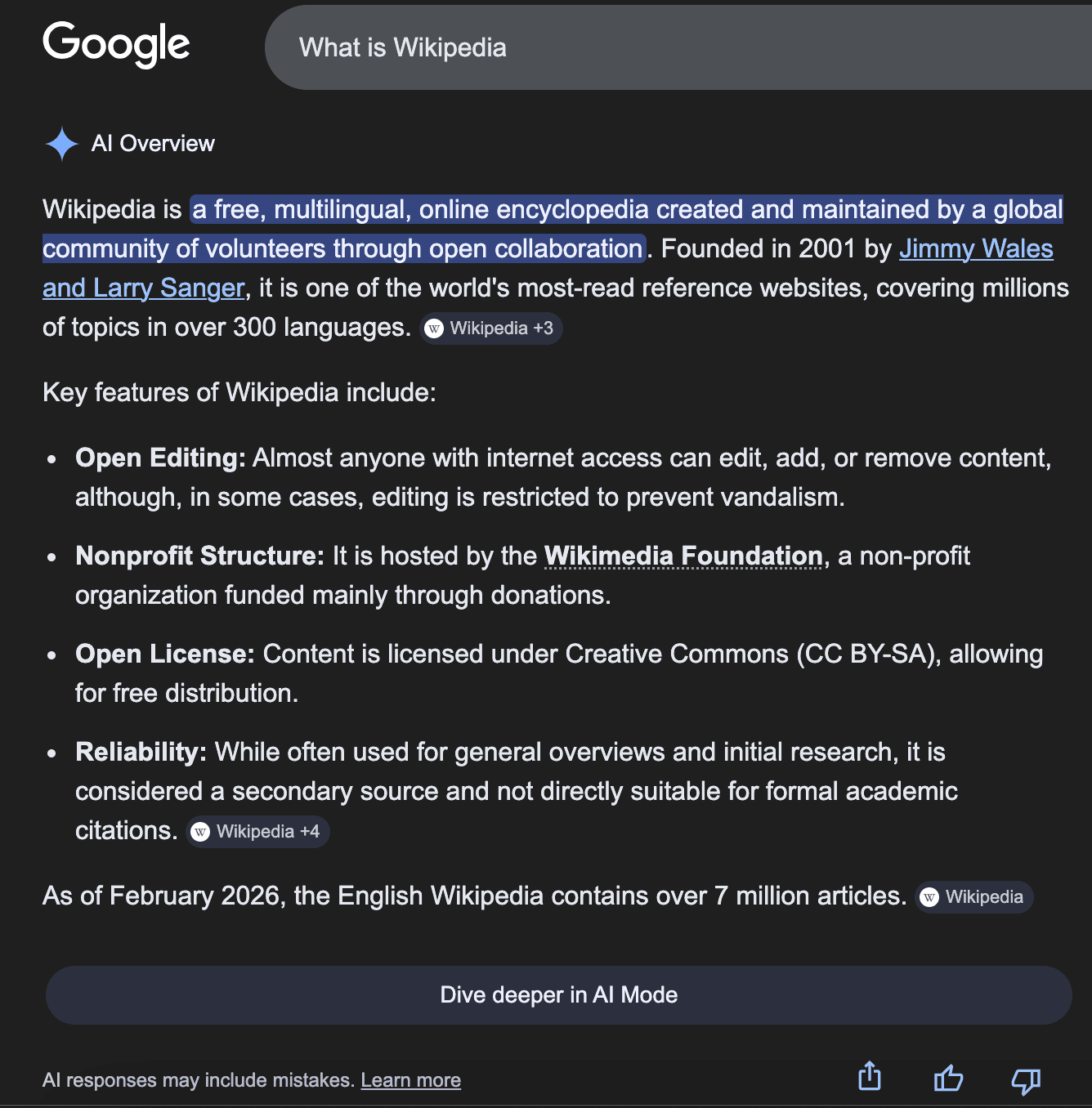
Two out of three Google searches in the United States now end without anyone clicking a single link. That is not a marketing exaggeration—it is the headline number from the most recent independent measurement of search behavior in 2026, and it is the clearest sign yet that the rules for being found online have changed under every small business's feet.
For an owner who built a website years ago and has not touched its content strategy since, this can sound like bad news. It is not exactly good news either. But it is not the end of the business website—it is a redefinition of what that website now has to do.
📊 The Numbers Behind the Shift
- 68.01% of U.S. Google searches ended without a click in the first four months of 2026 (SparkToro, using Similarweb clickstream data), up from 60.45% in 2024.
- A separate measurement by Digital Applied puts the figure at 64.82%, tracking a steady climb from roughly 50% in 2019.
- AI Overviews now appear on 20–25%+ of U.S. searches (Similarweb, 2026), and queries that trigger an AI Overview show an 83% zero-click rate (Ahrefs, via PikaSEO).
- Organic click-through rate has dropped 58% on queries where an AI Overview appears (Ahrefs, 2026).
- Out of every 1,000 U.S. Google searches, only about 232 clicks now reach a website outside Google's own ecosystem—down from roughly 400 two years ago.
An earlier, independently conducted Pew Research Center study of 68,879 Google searches found the same pattern from a different angle: when an AI summary appeared, users clicked a traditional result in only 8% of visits, versus 15% when no summary was shown. A link inside the AI summary itself was clicked in just 1% of visits.
The two data sets do not agree on an exact percentage, and neither should be read as a universal law for every country or industry. But they agree on the direction, and the direction is unmistakable: the search box now answers more questions before a website ever gets a chance to.
💰 Why Google Has No Reason to Reverse This
"Google's stock performance and ad revenue growth both improved in the same period that zero-click rates accelerated. Google is not losing money by keeping users on-SERP. It is making more of it." — SparkToro / Similarweb analysis, June 2026
This is the detail small business owners often miss: zero-click search is not a bug Google is trying to fix. It is working exactly as designed, and it is financially rewarding Google for keeping the answer on its own page. There is no version of this story where the trend quietly reverses next year.
🧱 Ranking Still Matters More Than Ever
Here is the part that does not change, and it is easy to overlook in the panic: a business cannot be cited inside an AI Overview without first being indexed and ranking competitively in standard search. AI Overviews are built on top of Google's core search systems, not a separate universe. Google's own guidance for generative AI search features confirms this directly—these experiences retrieve relevant, current pages to ground their answers, and those pages can still appear as supporting links.
That means the fundamentals a good web studio has always cared about—crawlability, page speed, mobile usability, clear information hierarchy, genuinely helpful content—are not obsolete. They are the entry ticket. Google is explicit that no special Schema.org markup is required to appear in AI features. What is required is a page worth citing in the first place.
🏆 Being Cited Is Worth More Than Being Clicked
Not all visibility is equal anymore, and the data on citation value is striking. Research from Seer Interactive found that brands cited as a source inside an AI Overview earn 35% more organic clicks and 91% more paid clicks than competitors on the same query who are not cited—even when both appear on the identical results page.
In other words, the businesses losing the most from zero-click search are not the ones being cited less often. They are the ones being cited at all versus not at all. A citation functions less like a regular search ranking and more like an endorsement: it tells both the AI system and the human reading its answer that this source can be trusted enough to name.
🔍 What Actually Improves Citation Odds
There is no confirmed formula, and any tool claiming a guaranteed ranking is overselling. But several patterns show up consistently in current research on Generative Engine Optimization (GEO):
- Structured data helps interpretation, not guarantee. Content with schema markup is reported to be roughly 2.5x more likely to appear in AI-generated answers, with FAQ schema specifically linked to a 2.3x lift, according to industry analysis compiled by AIO Copilot in 2026. Structured data does not buy a citation—it removes ambiguity about what a page is actually saying.
- Specific answers beat generic reassurance. A page that states an actual price range, a real process, or a concrete policy is far harder for an AI system to summarize away than a page that says only "we provide the best service."
- Clean semantic HTML is still foundational. If a page's main content is buried behind heavy scripts, pop-ups, or unclear headings, both crawlers and AI systems struggle to extract what matters.
- Technical basics remain unchanged. Crawlability, indexability, mobile responsiveness, and page speed are still prerequisites, not extras, per Google's own AI search documentation.
📉 Not Every Business Loses the Same Amount
The damage from zero-click search is not evenly distributed. Sites built purely around generic informational content—the kind of article any competitor could publish with the same headline—are the most exposed, because an AI system can summarize that content without losing anything specific to the business behind it.
Businesses that people search for by name, or whose pages answer a question only they can answer with real specificity—an actual price list, a real portfolio, a documented process, a booking calendar—are comparatively protected. A user comparing packages, checking past work, or requesting a quote still has to leave the search page to get what they came for.
📱 The Surviving Clicks Are Increasingly Mobile
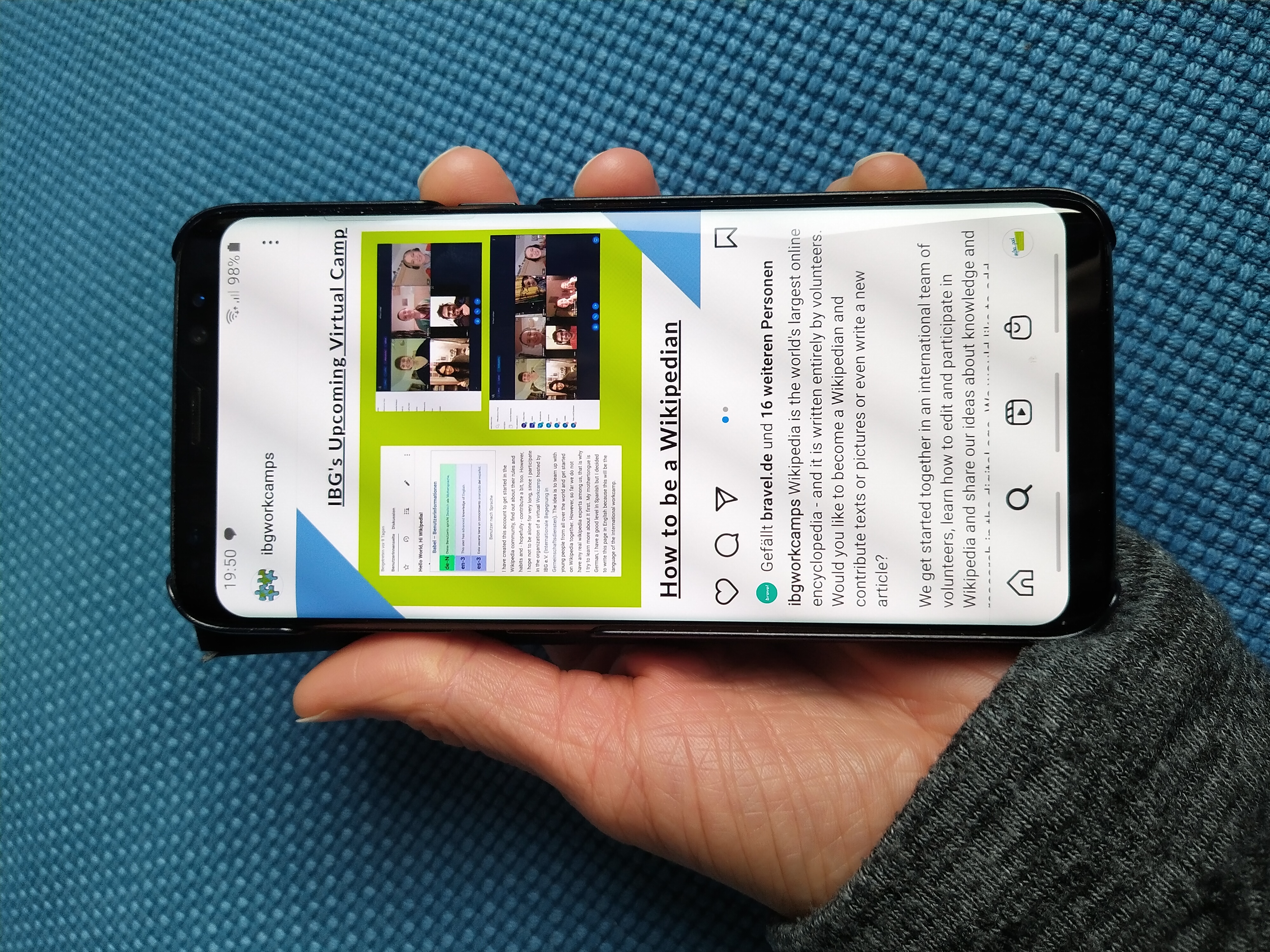
Of the roughly 232 clicks that still reach the open web per 1,000 searches, a large and growing share happen on a phone. A page that loads slowly, hides its contact button, or breaks its layout on a small screen loses a share of an already-shrunk pool of visitors twice over: once to the AI Overview, and once to a bad mobile experience.
🛠️ Three Moves a Small Business Can Make Now
1. Replace generic pages with pages only your business could write
An AI system can summarize "we provide professional service" in one sentence because there is nothing specific to lose. It struggles to summarize an actual price range, a documented process, a real before-and-after, or a named team member's answer to a common question. Specificity is what survives summarization.
2. Add structured data where it is cheap to add
FAQ schema, service schema, and business information schema are low-cost technical additions with a reported meaningful lift in AI citation likelihood. This is not a silver bullet, but it is close to free once a site's foundation already supports it.
3. Treat mobile speed and clarity as non-negotiable
With fewer total clicks reaching any website, each one is worth more. A page that is slow, cluttered, or hard to navigate on a phone is turning away a customer the business already worked hard to earn past the AI Overview.
🔑 Key Takeaway
Zero-click search does not mean a business website stopped mattering. It means the website that only repeats common knowledge stopped being useful to anyone—including the AI systems that used to send it traffic.
Ranking and indexing are still the price of admission. Specific, well-structured, mobile-ready content is what earns a citation instead of a summary. And a citation, the current data suggests, is worth considerably more than an ordinary click ever was.
Sources: SparkToro/Similarweb (2026), Digital Applied (2026), Ahrefs via PikaSEO (2026), Pew Research Center (2025), Google Search Central AI optimization guidance, Seer Interactive, Cloudflare Radar, AIO Copilot (2026).