
When financial analysts speak about artificial intelligence infrastructure, the numbers sound astronomical and abstract: sixty-billion-dollar debt syndicates, twenty-year nuclear power purchase agreements, and data centers consuming hundreds of megawatts in the desert. The capital spending feels distant from daily life, insulated inside server halls and enterprise balance sheets. On October 12, 2026, market research firm Counterpoint Research released preliminary third-quarter global shipment data that brought those abstract billions directly down to the electronics counter. Global smartphone shipments plunged 20 percent year-over-year in the third quarter of 2026, falling to their lowest third-quarter level since 2012. The primary cause was not a sudden collapse in buyer interest or an absence of new handset designs. The culprit was a brutal, cascading shortage of semiconductor memory that has inflated manufacturing bills and forced phone makers to push retail prices up by an average of 20 percent across the industry.
Behind that contraction lies a structural reallocation of the global semiconductor supply chain. To feed the insatiable appetite of AI accelerators built by Nvidia, Broadcom, and hyperscale cloud providers, memory manufacturers including Samsung Electronics, SK Hynix, and Micron have aggressively redirected cleanroom floor space and silicon wafer capacity toward High Bandwidth Memory and enterprise server DRAM. Every silicon wafer committed to an eight-layer or twelve-layer HBM stack is a wafer that cannot produce the low-power DDR5 or DDR4 modules that keep smartphones running. The result is an inescapable component shock that has reshaped the bill of materials for handsets worldwide. Handset makers who built their businesses on thin margins have watched component bills climb faster than retail markets can absorb, creating an environment where entry-level hardware is being squeezed out of existence while premium devices become substantially more expensive.
🏭 When Silicon Fabs Choose Between Servers and Smartphones
To understand how enterprise artificial intelligence ended up driving up the cost of an everyday pocket device, one must look at the physical limitations of a semiconductor fabrication plant. A modern memory fab does not possess infinite cleanroom floor space, nor can it instantaneously conjure new extreme ultraviolet photolithography scanners out of thin air. When Samsung, SK Hynix, or Micron plans wafer starts for a given quarter, capacity allocation is a zero-sum calculation. A 300-millimeter silicon wafer assigned to produce high-density enterprise memory is a wafer unavailable for mobile LPDDR chips.

Throughout 2025 and into 2026, the economic incentives governing that allocation tilted decisively toward the data center. An enterprise customer constructing an AI cluster will happily pay a premium of several hundred percent for certified HBM3E or HBM4 stacks, because memory bandwidth represents the primary performance bottleneck in large-scale model inference and training. In contrast, smartphone original equipment manufacturers have historically operated in an intensely price-sensitive environment where component cost increases of even three or four dollars trigger executive escalations. Faced with boundless, high-margin demand from cloud operators willing to sign multi-year prepayment contracts, memory producers systematically shifted their advanced lithography lines toward server-grade products.
That shift produced an immediate supply squeeze in the mobile market. Mobile phones do not use standard desktop DDR memory. They rely on Low-Power Double Data Rate dynamic random-access memory, engineered specifically to operate under tight thermal budgets and consume minimal milliwatts when idle. As cleanroom space and advanced packaging capacity were absorbed by server memory, contract prices for mobile LPDDR modules began an extraordinary ascent. Memory modules that traded for roughly one hundred dollars six months earlier reached three hundred dollars in spot and contract negotiations by the third quarter of 2026. For memory makers, the pivot produced windfall profits. Samsung Electronics demonstrated the scale of that transformation on October 8, 2026, issuing preliminary guidance for approximately 195 trillion Korean won in quarterly revenue and a staggering 107.4 trillion won in operating profit. The semiconductor sector was thriving, but the downstream electronics industry was about to absorb the bill.
The friction between upstream chip suppliers and downstream device manufacturers highlights a fundamental misunderstanding of hardware economics. Consumers frequently assume that because modern software and artificial intelligence models are immaterial, the digital tools built around them operate without physical constraints. In reality, the physical substrate of modern computing is strictly bound by silicon wafer area, chemical yields, and cleanroom throughput. When one sector of the computing industry experiences an unprecedented capital boom, other sectors that share the same silicon foundries must inevitably surrender their access or pay punitive prices to maintain their allocation.
📉 The Worst Third Quarter in Fourteen Years
The consequence of that component shock became undeniably visible in the third-quarter numbers compiled by Counterpoint Research. Global handset shipments fell to levels not witnessed in a third quarter since the transition from feature phones to early 3G and 4G smartphones in 2012. The contraction was neither accidental nor localized to a single geographic territory; it was a systemic retrenchment across major global brands as manufacturers confronted unprecedented cost inflation.
As Counterpoint Senior Analyst Shilpi Jain documented, the third quarter of 2026 represented the second consecutive quarterly period to bear the full brunt of the memory crisis. The relentless increase in both DRAM and NAND flash prices forced handset brands to make uncomfortable operational trade-offs. Rather than attempting to maintain historical shipping volumes at negative gross margins, original equipment manufacturers across the globe passed component price hikes directly through to wholesale and retail channels. Average selling prices climbed 20 percent on an annualized basis, depressing consumer willingness to upgrade and driving replacement cycles to record lengths.
The impact was felt unequally across the competitive landscape. Samsung maintained its position at the top of the market with a 23 percent shipment share, though its own volume dipped 3 percent year-over-year. Samsung possessed a unique structural buffer: it produces its own memory and display panels, allowing it to insulate certain product tiers from external pricing shocks while reaping record profits from third-party component sales. Furthermore, early consumer demand for its foldable Galaxy Z Fold8 series helped preserve revenue value even as overall unit counts diminished.
Apple captured a 22 percent market share, crossing the 20 percent threshold for the first time in any third-quarter recording period. Although Apple also experienced an overall decline in shipment volume due to the absence of a base-tier iPhone 18 in its initial channel fill, sustained demand for the higher-priced iPhone 18 Pro family in key markets such as China and India supported its financial margins. Apple's immense cash reserves and long-term advance procurement agreements provided a measure of insulation that smaller competitors could only envy.
The sharpest pain landed on brands that built their global presence on high-volume, thin-margin value propositions. Xiaomi saw its market share retreat to 12 percent as shipments fell by nearly a third year-over-year. In response to skyrocketing memory component costs, Xiaomi deliberately withdrew from lower price segments and trimmed inventory in secondary overseas markets, choosing to protect operating margins rather than bleed capital on unprofitable budget models. OPPO and vivo each recorded shipment plunges exceeding 20 percent year-over-year, shrinking their respective global market shares to 9 percent and 8 percent. Both brands were forced to consolidate their sub-brand operations, trim overlapping product lines across OnePlus and realme, and abandon key price brackets where affordable hardware was once taken for granted.
💸 The Two-Hundred-Dollar Memory Penalty Inside Your Pocket
The industry-wide contraction can be understood in abstract market-share percentages, but its true magnitude becomes tangible when examined through the bill of materials of an individual smartphone. On October 10, 2026, Richard Yu, chairman of Huawei's Consumer Business Group, offered an unusually blunt assessment of the situation during an industry briefing in Taipei. Surging memory component costs, Yu explained, have added more than two hundred dollars to the hardware bill of materials for each Huawei smartphone manufactured under current market conditions.
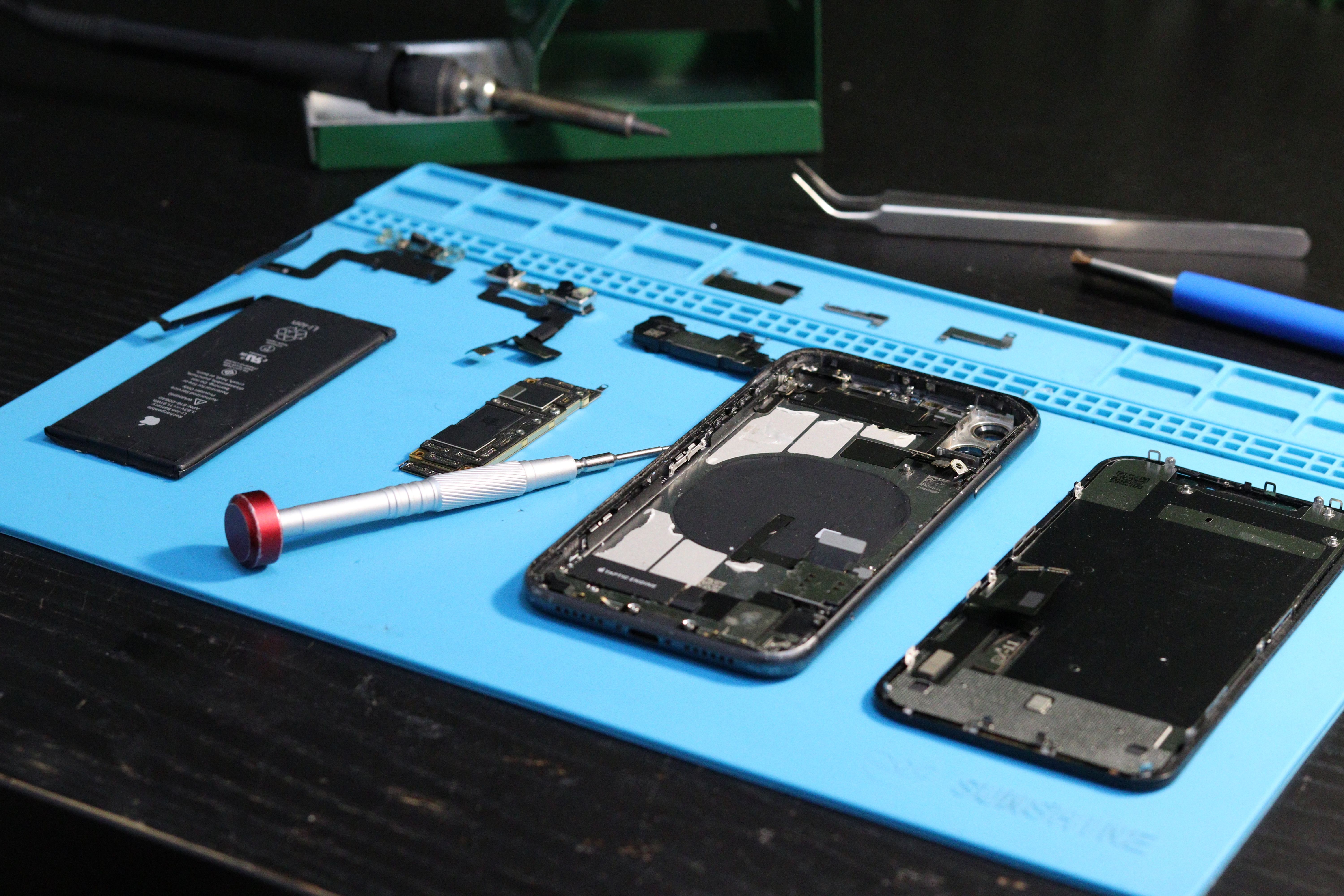
A two-hundred-dollar cost penalty at the factory gate is not a marginal expense that can be quietly absorbed by trimming promotional budgets or optimizing logistics. In consumer hardware manufacturing, a two-hundred-dollar increase in bill of materials typically translates to an increase of three hundred to four hundred dollars in final retail pricing once distributor markups, import duties, retailer margins, and value-added taxes are incorporated. For a flagship device that previously retailed for one thousand dollars, an increase to twelve hundred or thirteen hundred dollars strains consumer budgets, but many premium buyers will still find ways to finance the purchase. For a midrange device engineered to sell for four hundred dollars, a two-hundred-dollar cost shock is a commercial death sentence.
Consider the anatomy of a contemporary smartphone motherboard. The central system-on-chip—whether designed by Qualcomm, MediaTek, or an in-house engineering team—is physically married to a multi-gigabyte LPDDR package through package-on-package stacking techniques. Adjacent to the processor sits the non-volatile storage chip, typically a high-speed UFS 3.1 or UFS 4.0 NAND flash die. In a typical 2024 smartphone configuration, that combined memory and storage subsystem accounted for approximately fifteen to twenty percent of the total bill of materials. By late 2026, that single line item swelled to encompass thirty-five to forty percent of the total manufacturing cost of the device.
When memory swallows that much of the component budget, handset designers face a set of impossible choices. They can raise the retail price substantially and watch unit sales crater. They can downgrade other critical hardware elements—substituting cheaper camera sensors, replacing aluminum frames with painted plastic, or reverting from OLED screens to low-refresh-rate LCD panels—to maintain a target price point. Or they can downgrade the memory configuration itself, offering four gigabytes of RAM in market segments where eight gigabytes had become the baseline standard three years earlier. None of those outcomes benefits the consumer. The modern smartphone experience has reached a point where operating systems and everyday applications demand substantial memory overhead. Selling a modern phone with inadequate RAM produces sluggish app switching, frequent background tab reloads, and premature hardware obsolescence.
The phrase "AI tax" is often used metaphorically to describe subscription fees for cloud software or the environmental footprint of large data centers. In the smartphone market of late 2026, however, the AI tax is literal, tangible, and billed in hard currency. Every consumer who walks into an electronics store to replace a cracked or aging handset is paying a surcharge created by the fact that hyperscalers bought up the world's silicon memory output before the consumer ever arrived at the cash register.
🧠 Why High-Bandwidth Memory Gobbles Three Times the Wafers
To comprehend why the expansion of artificial intelligence infrastructure has had such a disproportionate effect on mobile memory availability, one must examine the engineering architecture of High Bandwidth Memory itself. Non-specialists often assume that manufacturing high-bandwidth memory for an enterprise server involves roughly the same industrial effort as manufacturing standard mobile memory, just packaged differently. In reality, the manufacturing physics of HBM are vastly more demanding, requiring an extraordinary amount of silicon wafer surface area for every usable gigabyte delivered.
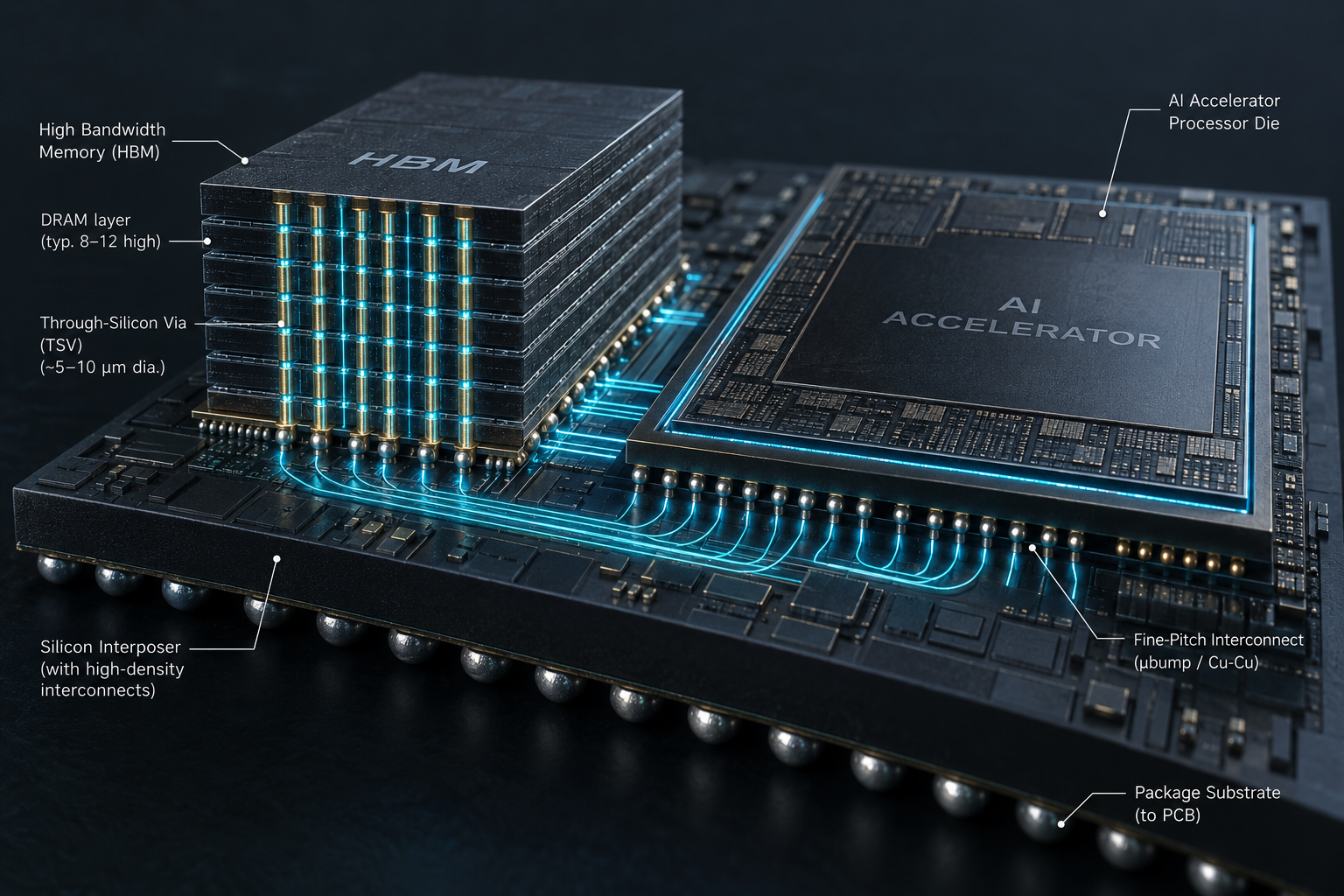
Standard mobile memory, such as an LPDDR5X die, is produced as a monolithic, single-layer planar silicon chip. The dies are patterned across a 300-millimeter silicon wafer using advanced photolithography, tested for defects, cut with precision diamond saws, and encapsulated into thin surface-mount packages. Because the architecture is relatively mature and planar, wafer yields are exceptionally high. A single silicon wafer can produce hundreds of functional mobile memory dies with minimal defect waste.
High Bandwidth Memory operates on an entirely different architectural paradigm. An HBM3E or next-generation HBM4 module is not a single silicon chip; it is a three-dimensional vertical stack consisting of a base logic controller die topped by eight, twelve, or even sixteen vertically stacked DRAM dies. To connect those vertically stacked layers, engineers must etch tens of thousands of microscopic vertical electrical connections called Through-Silicon Vias through the body of each silicon die. The individual dies must then be thinned down through mechanical grinding to a fraction of the thickness of a human hair, aligned with nanometer-level precision, and bonded together using advanced micro-bumps or direct copper-to-copper hybrid bonding.
This complexity creates a dramatic disparity in silicon consumption. Industry teardowns and semiconductor manufacturing analyses demonstrate that producing one gigabyte of HBM requires roughly three times the raw silicon wafer area of an equivalent gigabyte of standard LPDDR5 DRAM. There are several engineering reasons for this dramatic ratio:
- Larger die footprints: Each individual DRAM die within an HBM stack must accommodate substantial internal interface logic and thousands of through-silicon via landing pads, reducing the proportion of silicon dedicated to pure bit storage.
- Multiplicative yield loss: In a twelve-layer stack, every single layer must be functionally flawless. If a single die in a twelve-layer assembly exhibits a manufacturing defect after bonding, the entire stack—including the eleven functional dies and the expensive base logic die—must be discarded as scrap.
- Wafer thinning and handling fallout: Grinding silicon wafers down to microscopic thicknesses induces mechanical stress, resulting in higher breakage rates during post-processing and packaging.
- Extended fab cycle times: Processing an HBM wafer through multiple rounds of TSV etching, metallization, thinning, and thermal annealing consumes significantly more tool hours inside cleanrooms compared to the streamlined flow of standard mobile memory.
When a memory fabricator commits one hundred thousand wafer starts to HBM production to fulfill enterprise server contracts, that decision removes the equivalent of three hundred thousand wafers worth of conventional DRAM capacity from the global supply pool. The capital that cloud operators pour into procurement does not immediately expand total wafer capacity; it cannibalizes existing production lines. Building and outfitting a brand-new, leading-edge semiconductor fab requires three to five years and capital expenditures exceeding twenty billion dollars. Until those new greenfield facilities come online in late 2027 or 2028, the smartphone market remains trapped in a structural supply deficit that it did not create and cannot independently resolve.
📱 The Disappearing Two-Hundred-Dollar Smartphone
The most socially and economically damaging consequence of this memory squeeze is the rapid extinction of the capable, affordable smartphone. For more than a decade, the democratization of mobile computing was driven by relentless price-performance improvements in the sub-two-hundred-dollar price bracket. Devices manufactured by Xiaomi, realme, Transsion, Samsung's Galaxy A series, and Motorola made modern web browsing, digital banking, mobile payment systems, and remote education accessible to hundreds of millions of people across Southeast Asia, India, Latin America, and Africa.
That entire category of hardware is currently under existential threat. Counterpoint Research projections indicate that the persistent component cost shock could effectively wipe out more than 230 million sub-two-hundred-dollar smartphone shipments over the course of the current market cycle. The arithmetic behind this contraction is unyielding. When a phone sells at retail for 150 dollars, the total manufacturing bill of materials cannot exceed 75 to 85 dollars if the manufacturer, supply chain partners, and retail distributors are to cover shipping, warranty reserves, import duties, and minimal channel overhead.
When wholesale prices for a baseline mobile memory package (such as 6GB of LPDDR4X paired with 128GB of eMMC or UFS storage) jump from 18 dollars to more than 45 dollars, the entire economic foundation of the entry-level smartphone collapses. A manufacturer cannot absorb a 27-dollar cost increase on an 80-dollar bill of materials without operating at a catastrophic financial loss. Consequently, handset brands have adopted three distinct strategies to cope with the crisis, none of which serves the budget-conscious consumer:
- Abandoning the price band entirely: Brands like Xiaomi, realme, and OPPO have visibly curtailed their entry-level launches, canceling planned refreshes of their most affordable model lines and redirecting marketing budgets toward devices priced at 350 dollars and above where gross profit margins are wide enough to absorb component inflation.
- Aggressive hardware downgrading: Manufacturers attempting to keep a model near the 150-dollar mark have been forced to reintroduce compromised specifications that were phased out years ago. Devices that offered 6GB or 8GB of RAM in 2024 are being replaced by models sporting 4GB of slower memory, low-grade LCD displays with poor viewing angles, sluggish processor bins, and stripped-down camera assemblies.
- Geographic withdrawal: Handset vendors have actively reduced inventory allocations to emerging markets where consumers are unable to absorb price hikes, concentrating their limited component supplies in wealthier urban markets where financing plans and carrier subsidies soften the blow of higher retail stickers.
This dynamic creates a profound digital divide. In emerging economies where the smartphone represents a household's primary or sole gateway to the internet, mobile banking, government services, and employment opportunities, higher device prices function as an exclusionary barrier. People whose livelihoods depend on gig-economy platforms, digital agriculture portals, or instant messaging marketplaces cannot simply decide to purchase an eight-hundred-dollar flagship on an installment plan. If an affordable replacement device is unavailable when their current phone fails, their participation in the digital economy is abruptly severed. The boom in artificial intelligence infrastructure, celebrated on financial television as an engine of global productivity, is actively pricing the world's most vulnerable internet users out of basic connectivity.
🔄 The Great Refurbished Pivot and Longer Ownership Cycles
Faced with steep retail price increases and compromised budget alternatives, consumers around the world have begun altering their purchasing habits in fundamental ways. The traditional upgrade cycle—in which an average smartphone owner replaced their handset every twenty-four to twenty-eight months—has stretched dramatically. Across major international markets, the average retention period for a primary smartphone has expanded beyond thirty-six to forty months, and consumer sentiment surveys indicate that owners are increasingly determined to hold onto existing hardware until complete mechanical or electronic failure occurs.
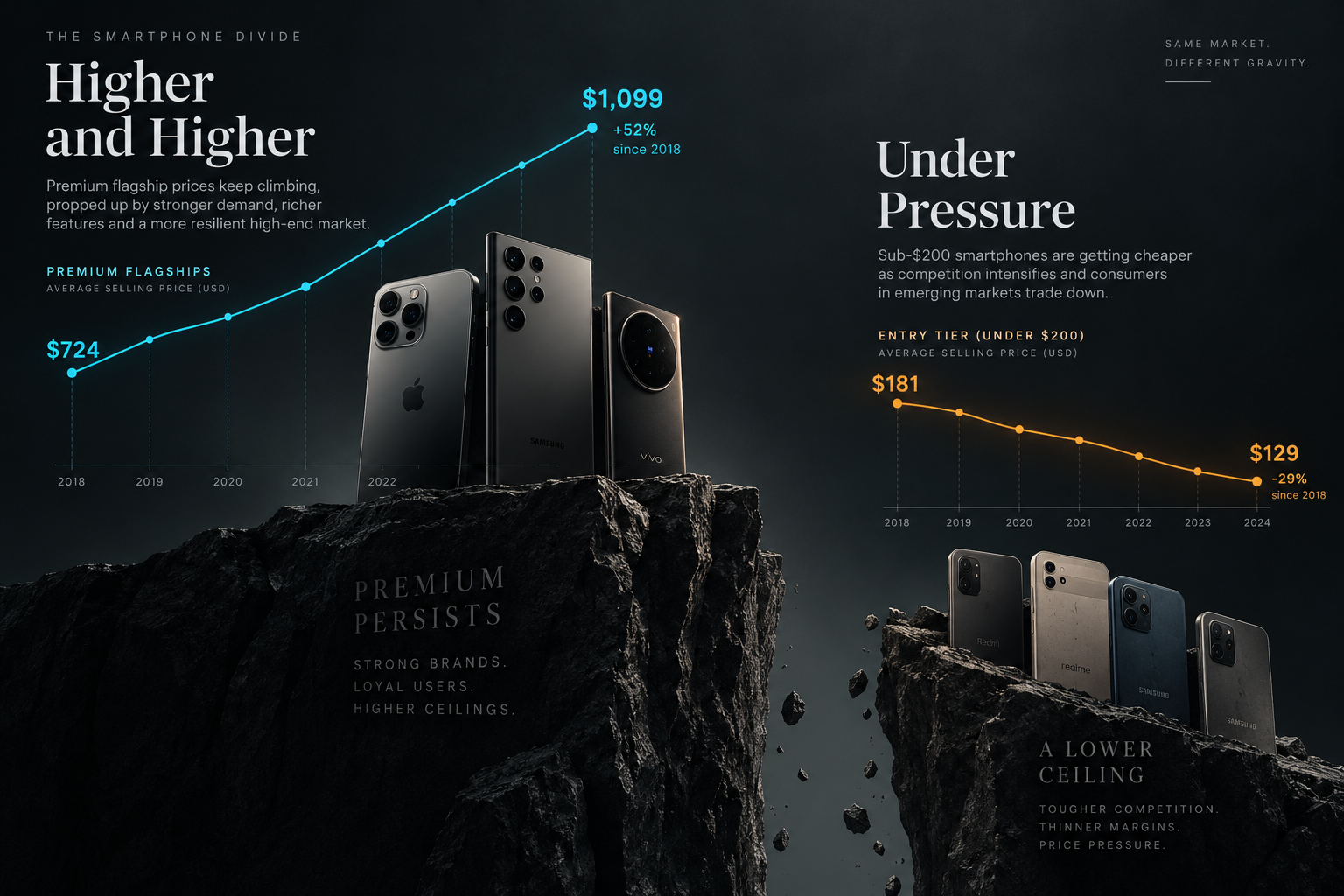
This reluctance to purchase new hardware at inflated prices has triggered an unprecedented surge in the secondary and refurbished smartphone market. Counterpoint's market analysis identified the refurbished sector as one of the few consumer hardware categories demonstrating robust double-digit growth throughout 2026. Rather than spending 450 dollars on a newly manufactured midrange device that features downgraded materials and 6GB of RAM, consumers are actively choosing to purchase two- or three-year-old certified refurbished flagship devices—such as an iPhone 14 Pro, a Galaxy S23, or a Pixel 8—for the same price.
The logic behind this consumer migration is compelling. A previous-generation flagship device typically incorporates superior industrial build quality, premium display panels, optical image stabilization in its cameras, and eight to twelve gigabytes of high-speed memory that was procured before the current crisis distorted component pricing. When paired with a newly installed replacement battery and supported by modern multi-year software update commitments from major operating system vendors, a refurbished flagship frequently offers a significantly better user experience than a compromised, price-inflated new entry-level model.
At the same time, the independent electronics repair sector has experienced a substantial revival. Consumers who previously viewed a cracked display, a degraded battery, or a worn charging port as an excuse to buy a new phone are now paying for professional component-level repairs. Battery replacement services, screen restorations, and chassis tune-ups have become economically rational investments when the alternative is paying twenty percent more for a replacement device of equivalent capability.
This behavioral shift carries significant long-term implications for the smartphone industry as a whole:
- Slower ecosystem turnover: When hardware stays in active service for four or five years, annual software release cycles encounter an increasingly aging installed base, forcing operating system vendors to optimize performance for legacy chipsets rather than relying on newer hardware to brute-force bloated code.
- Revenue shifts toward services: Hardware manufacturers confronting stagnant or declining unit sales must extract greater recurring revenue from their existing user bases through cloud storage subscriptions, extended warranty packages, digital media services, and device financing arrangements.
- Expansion of formal trade-in networks: Handset brands and retail carriers are competing fiercely to secure used device inventory, investing heavily in automated testing kiosks, reverse logistics, and factory refurbishment facilities to maintain an inventory of accessible devices for cost-conscious shoppers.
The expansion of the refurbished market is a healthy development from the perspective of electronic waste reduction and resource conservation. However, it represents a defensive reaction by consumers against an industry that has ceased delivering meaningful annual cost-performance gains. People are keeping their phones longer not because new devices lack novelty, but because the economics of upgrading have become blatantly hostile.
🔍 What Every Buyer Must Check Before Spending in 2026
For consumers who find themselves in genuine need of a replacement smartphone under current market conditions, navigating retail shelves requires far greater vigilance than in previous years. The simple heuristic of buying a particular brand's newest entry within a familiar price bracket no longer guarantees acceptable performance. Manufacturers under severe component margin pressure are actively employing marketing sleight-of-hand to obscure hardware downgrades.
Before committing capital to a smartphone purchase in late 2026, buyers should rigorously verify four technical specifications that are frequently obscured in promotional materials:
- Physical RAM versus virtual RAM gimmicks: Be wary of retail packaging that loudly advertises "16GB RAM" or "12GB Dynamic Memory" on devices priced under three hundred dollars. In almost every case, the physical hardware contains only 4GB or 6GB of real LPDDR memory, with the remainder composed of "virtual RAM"—a software paging trick that uses slow internal flash storage as swap memory. Virtual RAM cannot match the bandwidth or latency of physical DRAM. When background apps are swapped to flash memory, performance degrades, and excessive write cycles accelerate storage wear. Demand to know the actual physical DRAM figure, and treat 8GB of true physical memory as the minimum threshold for a smooth, multi-year Android experience.
- Storage bus standards: Check whether internal storage uses modern Universal Flash Storage (UFS) or obsolete Embedded MultiMediaCard (eMMC 5.1) architecture. To reduce manufacturing costs, several brands have quietly reverted to eMMC storage in their entry-tier models. eMMC operates on a single-lane, half-duplex bus that cannot read and write simultaneously, resulting in agonizing system freezes during app installations, camera saves, and operating system updates. Insist on at least UFS 2.2 or UFS 3.1 storage.
- Operating system software support guarantees: Because current hardware prices necessitate keeping devices for four years or longer, verify the manufacturer's binding commitment to security patches and Android version updates. A cheap phone that receives only twelve months of security patches becomes a security hazard and an application compatibility dead end long before its physical hardware wears out.
- Battery health and replacement accessibility: If purchasing a certified refurbished device, require documentation verifying that the battery retains at least 85 to 90 percent of its original design capacity, or budget fifty to seventy dollars for an immediate battery replacement at an authorized service center. A high-end processor paired with an exhausted battery will throttle its clock speeds to avoid unexpected system shutdowns, defeating the purpose of buying capable hardware.
By approaching the market with technical skepticism, consumers can avoid purchasing overpriced, compromised hardware designed solely to protect manufacturer margins during a component squeeze. In many cases, the most rational purchasing decision is to replace the battery in an existing device, optimize storage hygiene, and defer buying a brand-new handset until semiconductor capacity rebalances.
⚖️ When Will the Memory Cycle Ease for Consumers
The central question lingering over the global electronics industry is how long this artificial intelligence-driven distortion of the memory market will persist. Semiconductor cycles are notoriously cyclical, characterized by alternating periods of acute undersupply and crushing overcapacity. Yet analysts across Wall Street and the electronics manufacturing supply chain increasingly warn that the current squeeze differs structurally from previous boom-and-bust cycles.
In traditional memory cycles, elevated component prices quickly incentivize memory fabricators to construct new production lines. Within eighteen to twenty-four months, that new capacity floods the market, supply outstrips demand, prices crash, and consumers enjoy cheap, plentiful memory in smartphones and personal computers. That self-correcting dynamic is currently obstructed by three structural realities:
First, building modern cleanrooms capable of sub-two-nanometer memory fabrication and advanced three-dimensional through-silicon via packaging takes substantially longer than in previous decades. Massive fab construction projects currently underway by Samsung in Pyeongtaek and Taylor, Texas, by SK Hynix in Cheongju and Yongin, and by Micron in Idaho and New York are not scheduled to reach commercial volume production until late 2027 at the earliest, with some facilities stretching into 2028.
Second, the capital intensity of high-bandwidth memory production is so extreme that memory manufacturers are deliberately exercising supply discipline. Having suffered billions of dollars in operating losses during the memory glut of 2022 and 2023, executive boards are in no hurry to flood the market with cheap silicon. They are prioritizing contractual certainty with hyperscale cloud customers who are willing to finance long-term buildouts, rather than speculative production for volatile consumer hardware markets.
Third, the architectural demand for memory inside artificial intelligence clusters shows no sign of plateauing. As foundation models transition from pure text processing toward real-time multimodal reasoning, high-resolution visual generation, and persistent agentic memory architectures, the volume of high-speed memory required per server cluster continues to compound exponentially. Cloud infrastructure operators are treating memory capacity as a strategic resource to be hoarded, securing multi-year delivery commitments that tie up manufacturing lines years in advance.
For the everyday smartphone buyer, this means that relief will not arrive in the immediate holiday shopping seasons of late 2026 or early 2027. The twenty percent price inflation currently visible across retail channels represents the new baseline operating environment for mobile electronics. The era of the disposable, high-performance hundred-and-fifty-dollar smartphone has drawn to a close, replaced by a more disciplined, bifurcated market where consumers must either invest substantially in long-lasting hardware or adapt to longer ownership cycles through maintenance and refurbished devices. The global artificial intelligence race may ultimately deliver remarkable software breakthroughs in the years ahead, but for the hundreds of millions of people who buy and use pocket technology every day, its first unmistakable manifestation has been a two-hundred-dollar tax levied on the hardware that connects them to the world.
Sources: Counterpoint Research Market Monitor Q3 2026 Preliminary Report and commentary by Senior Analyst Shilpi Jain (published Oct 12, 2026); Samsung Electronics Q3 2026 Preliminary Earnings Guidance and Public Disclosures (published Oct 8, 2026); Huawei Consumer Business Group executive briefing by Richard Yu in Taipei via Digitimes (published Oct 10, 2026); The Business Times Singapore global smartphone supply chain analysis (published Oct 13, 2026); Reuters market reports on semiconductor memory price inflation (published Oct 12, 2026); Wikimedia Commons microelectronics silicon wafer documentation by Le hollandais volant (CC BY 4.0).