
A game can disappear without leaving your hard drive. The files remain, the controller works, and the computer can still draw the opening screen. What has vanished is permission from a machine somewhere else to continue. That is the practical problem behind Stop Killing Games, and it makes the phrase digital game ownership harder to interpret than a receipt suggests.
The European Commission answered the campaign's European Citizens' Initiative on 16 June 2026. It did not propose the preservation obligation organisers sought. Instead, its formal response said it intended to begin stakeholder exchanges by the end of 2026 to explore an industry-led code of conduct. As that deadline approaches, the useful question is not whether players deserve infinite free servers. It is what a seller should leave behind when a paid game's service ends. This is a consumer-rights essay about that unfinished promise, not an announcement that Europe has already solved it.
🎮 The purchase that outlives the product
Ubisoft's notice about the original The Crew makes an unusually clear starting point. The publisher said the racing game would remain playable until 31 March 2024. After that date its servers would close, making it inaccessible on PC, Xbox 360, Xbox One, PlayStation 4, Amazon Luna and Ubisoft+. It also referred recent purchasers to their store's refund policy. These are the publisher's stated consequences, not an inference from an angry forum thread.
The notice gave server infrastructure and licensing constraints as the reasons. That explanation matters because an honest account should not pretend every shutdown is technically trivial to avoid. Games combine software, network services, licensed material and commercial commitments. We cannot independently reconstruct The Crew's contracts from a public announcement. Nor does the announcement prove what every other publisher could do with a different architecture.
Still, the distinction between a reason and a remedy is important. A consumer can understand why a company wants to stop running a service and still ask whether the purchase should become unusable. Explaining a business constraint does not itself tell the buyer what was promised, what remains, or what alternatives were considered. Those are different questions, and they deserve separate answers.
Imagine two purchases made on the same afternoon. One is explicitly a month's access to an online world; the other is presented as a game to keep in a library. The first carries a visible time boundary. The second may contain a less visible operational boundary. This hypothetical is not a legal classification of any particular title. It shows why the words around a checkout button matter alongside the software behind it.
The problem is therefore more precise than nostalgia for a cardboard box. A buyer wants to know which part of the experience survives ordinary changes in a business. A campaign should be playable, a multiplayer world may need a community, and a licensed soundtrack may bring another set of limits. Treating all those expectations as identical makes both criticism and defence less useful.
📜 What a million signatures actually achieved
The official European Citizens' Initiative register records 1,294,188 verified signatures for Stop Destroying Videogames. The collection ran from 31 July 2024 to 31 July 2025, and the initiative was submitted to the Commission on 26 January 2026. The formal communication records a meeting with organisers in February and a European Parliament public hearing in April. Those are substantial institutional steps, not a referendum that automatically changes the law.
The organisers' published objective is to require publishers selling or licensing games to EU consumers to leave them in a functional, playable state. Their text expressly distinguishes that aim from acquiring intellectual-property or monetisation rights. It also says they do not expect publishers to keep providing resources after discontinuation if a reasonably functional version remains. That limit should be in every serious description of the campaign.
This is a claim about an exit condition. It does not say every leaderboard, seasonal event, moderation system and online economy must remain intact forever. The difficult work is deciding what reasonably functional means for different games. A small puzzle game and a shared online world cannot be judged by simply counting the same features on a checklist.
The Commission's response took a different position on the requested legal obligation. It said that such a proposal would not be proportionate, citing the balance of consumer protection, intellectual property, business interests and other concerns. Its proposed next step was stakeholder discussion about a possible self-regulatory or industry-led code. A possible code is not a binding preservation law, and beginning discussions is not the same as completing one.
That distinction is especially important on 1 November 2026. The formal text gives an end-of-year intention. It does not establish, by itself, that the exchanges have already happened or that any code has been agreed. Readers should look for a subsequent official outcome before treating a planned meeting as a consumer guarantee. A date in a policy document is a commitment to watch, not proof of delivery.
🧾 A licence does not answer every question
Steam's Subscriber Agreement provides a direct example of the contract language involved. Its general licence section says that content and services are licensed, not sold, and that the licence confers no title or ownership in them. That tells us how Valve frames the permission it supplies. It does not prove that every game has the same online dependency or that all consumer remedies disappear when the word licence appears.
The distinction between owning copyright and having a durable right to use a copy is easy to lose. Buying a printed novel does not transfer the author's copyright. In the same way, asking to continue playing a purchased game need not mean asking for the right to sell its art or publish a commercial sequel. Those are separate interests even when they meet inside one legal agreement.
The EU's Digital Content Directive, Directive 2019/770, provides another part of the framework. It addresses conformity, supply and remedies for digital content and services under specified conditions. The Commission's 2026 response refers to existing transparency and consumer-remedy rules rather than accepting that a licence places a transaction outside consumer protection. Applying those rules to a real dispute depends on facts and jurisdiction.
For an Indonesian reader, this is an explanation of a European policy debate, not a promise of an EU refund. The location of the consumer, contracting entity, terms and applicable mandatory law all matter. It would be irresponsible to turn a paragraph about European remedies into a universal instruction to demand money back from any store. Keep the receipt and the sales description; seek a relevant consumer body or qualified advice when a dispute needs a legal answer.
The editorial point is narrower and stronger. A licence label describes a legal arrangement, but a buyer still needs an intelligible account of duration and dependence. If a product can stop functioning when a remote service ends, that dependency belongs in the purchase conversation. Hiding it in a vocabulary lesson about ownership does not help someone decide what they are paying for.
🏛️ A shelf of cartridges is an imperfect comparison
An older console offers a useful contrast without proving that the past was simple. Evan-Amos's public-domain photograph shows a Nintendo Entertainment System and controller as physical objects. It is not a photograph of The Crew, a shutdown, or a campaign event. Its role here is to make the idea of a locally held machine visible while keeping the historical comparison honest.
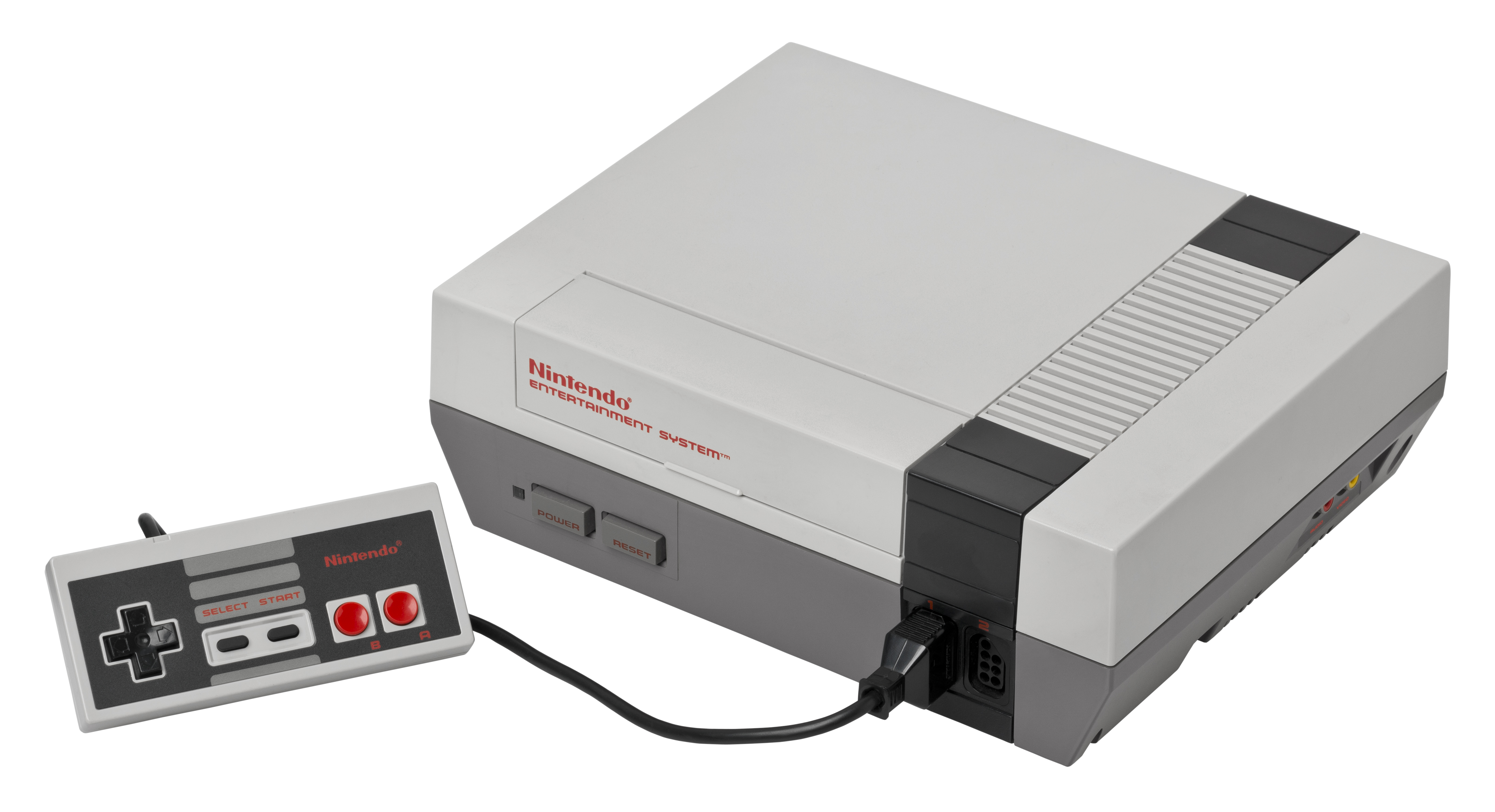
A cartridge-era object can suggest an experience that exists nearby: console, controller, television and a copy of the software. That does not mean every old game is accessible now, every piece of hardware still works, or every reproduction is lawful. Age can bring broken components, missing documentation and rights questions. A physical object is an imperfect preservation strategy, not an automatic guarantee.
The useful difference is where the essential conditions sit. If the required computation and authorisation are local, a publisher's decision to close a current service may not be part of starting that particular game. If a remote server is essential, possession of client files alone is insufficient. That is an architectural distinction, not a moral judgement about every connected feature.
It also changes how we think about a collection. A screenshot records an image. A video records a sequence of play. Neither necessarily preserves the ability to make a different choice, explore another route or encounter an unexpected interaction. Games are cultural works partly because a player acts inside them. Recording their appearance and preserving their playability are related but different tasks.
The Commission's communication places games within a cultural and creative context while discussing these policy tensions. That does not settle which organisation must preserve what. It does establish that the debate is broader than whether one disappointed customer can switch to another product. A replacement racing game may entertain someone, but it is not the same work with the same rules, spaces and history.
🔌 The server has several different jobs
The phrase online game hides multiple dependencies. A server might authenticate a licence, locate other players, calculate the shared world's state, store progression, distribute content or help moderate behaviour. These are possible roles in game systems, not a claim that every role exists in The Crew. Mapping them separately makes a shutdown plan more understandable than a single online-required badge.
Consider a hypothetical single-player campaign that asks a service to approve launch but performs the actual play locally. Its exit problem differs from a world whose essential simulation runs on company machines. Removing a launch check, providing an offline mode and supplying a server package are not interchangeable engineering tasks. A policy that ignores those distinctions risks promising an easy switch where none has been demonstrated.

There is also a difference between a local save and a portable experience. A save can depend on an exact software version, assets, account state or service logic. Exporting a small data file may be valuable without being sufficient to reconstruct the game. A meaningful preservation promise should name what the export lets a player do, rather than treating the existence of an export button as the end of the discussion.
The same caution applies to physical discs. A disc may contain substantial game data, but its presence does not establish that every required component is on it. Conversely, a digital download need not require a continuous connection merely because it was delivered online. Storage medium and operational dependence are two different axes. Neither a box nor a download icon can answer both questions.
For readers, this suggests a better way to inspect a purchase: ask what must still be available at the moment of play. Must an account sign in? Must another service approve access? Must a remote world keep running? Can a locally installed mode launch without those services? Product-specific documentation and actual supported behaviour are more useful evidence than broad assumptions about physical or digital ownership.
🛠️ An ending can be designed before launch
There are several conceivable ways to leave something usable: a supported offline mode, a local version of core play, a permitted community-hosting package, or a documented transfer to another operator. These are options to examine, not a claim that every publisher can deliver them cheaply or legally. Their value depends on the actual game and the rights attached to its components.
The timing matters in a straightforward engineering sense. If a product is designed around a component that cannot be distributed, a later promise to distribute the whole system may conflict with that component's terms. Thinking about an end state before those choices are locked in can expose the problem. This is our analysis of design choices, not evidence that any named studio deliberately ignored one.
A credible plan would identify which modes remain, what hardware they need, how they start and which features are excluded. It would also describe how a player obtains the final supported files. Saying that a patch exists is less useful if the only distribution route is the same service being retired. Availability and functionality must be considered together.
Security deserves equal specificity. Software that no longer receives fixes should not be presented as risk-free simply because preservation is desirable. Community servers can require moderation, secure configuration and clear rules. The Commission expressly discusses cybersecurity, safety and intellectual-property concerns. Those issues need answers, but naming them should lead to a better design discussion rather than ending every discussion with an undefined warning.
For a small developer, the useful question is proportionality in practice. What core experience can reasonably be preserved with the resources and rights available? For a large publisher, the same question can be asked against a different scale of systems and commitments. Neither size automatically settles the answer. A public end-of-service plan would let buyers judge the actual proposal rather than inventing one on the company's behalf.
🛋️ Players are buying evenings as well as software
A generic photograph of someone playing at home cannot document a particular shutdown. Its value is different: it puts the purchase back into everyday life. The licence, server and policy dispute eventually affect whether someone can spend an evening with a familiar activity. That is the scale on which many readers will evaluate a technical dependency.

This perspective does not require claiming that every player wants an archive or expects decades of use. Some people want to finish a campaign once. Others return to a favourite environment, practise a difficult route or play with relatives. Those are possible patterns of use, not survey findings. A clear purchase description should allow different expectations to coexist without pretending they are all subscriptions.
Price can be considered in that light without inventing a universal formula. A buyer might accept a short, clearly bounded experience at one price and prefer a durable local game at another. The important ingredient is knowing the boundary before paying. It is hard to compare value when one product states its duration plainly and another leaves its essential service dependency difficult to find.
There is a second, less obvious cost: deciding what is worth learning. Games can ask players to understand systems, develop skills and organise time with other people. No receipt measures those investments. They do not automatically create a legal entitlement to perpetual access, but they explain why replacing a title with the next release may not answer the emotional or practical complaint.
An honest consumer discussion can hold both positions. A company cannot reasonably promise that every service and every community will remain unchanged indefinitely. A customer can reasonably want to know what survives when support stops. Treating those statements as incompatible leaves the debate stuck between infinite support and complete disappearance, with too little attention to the useful territory between them.
⚖️ Transparency is a floor, not a preserved game
An end-of-life label could help someone decide whether to buy. It cannot, by itself, make an unavailable game run. That is the limitation readers should keep in view when assessing the Commission's proposed exploration of a code of conduct. Better disclosure and continued playability address different harms. A voluntary process might improve one, both, or neither; its actual text and adoption would need examination.

A useful code would make promises testable. It could distinguish a service closure from store delisting, describe advance notice, identify surviving modes and specify where buyers can find the final plan. These are editorial criteria for evaluating a future document, not provisions already agreed by the Commission or industry. We should not award a policy result before there is a result to read.
The Commission's position also deserves more care than a headline saying either players won or Europe rejected preservation. The initiative secured an official response and institutional attention. The requested legislative obligation was not proposed. Existing consumer law remains relevant under its own conditions. Those facts can all be true together, and combining them is more informative than choosing a victory slogan.
For Indonesian players, the European process is worth following because it offers a concrete set of questions to put to global storefronts and publishers. It does not automatically change Indonesian contracts. Nor should readers assume that a game available in multiple regions has identical purchase terms everywhere. Follow the policy as evidence of a developing debate, and inspect the actual offer in front of you.
The strongest practical standard is simple to state even when difficult to implement: a seller should make the ending legible. If the product depends on an ongoing service, say what that service does. If there is a supported exit, describe it. If no playable version will remain, do not let an attractive library tile carry a promise the contract and architecture cannot support.
🔎 What to keep before the lights go out
There is no universal trick that converts a connected game into a permanent local possession. Advice claiming otherwise can lead readers toward unsafe downloads, breached accounts or unlawful circumvention. A sensible response starts with documentation and supported options. Preservation is a reason to be careful about provenance, not a reason to trust any file advertised as a rescue.
Before buying a game you hope to revisit, inspect the information that would determine its ending:
- Read the game's own connection and account requirements, not just the store's delivery format.
- Look for an explicit supported offline mode and understand which modes it includes.
- Keep the receipt, product description and relevant terms with the date of purchase.
- Distinguish removal from sale, loss of downloads and loss of playability. They are different events.
- If a shutdown is announced, use the publisher's documented export, patch and support routes first.
- For a dispute, check the store process and consumer protections applicable to your location rather than assuming a policy from another region applies.
These steps do not shift all responsibility onto players. A consumer should not need to reverse-engineer a network diagram to understand an ordinary purchase. They are a defensive reading practice while disclosure remains inconsistent across products. The better long-term outcome would be offers that answer these questions without requiring detective work.
The next meaningful checkpoint in the European debate is the Commission's stated intention to initiate exchanges by the end of 2026, followed by whatever public documents or commitments actually emerge. A new announcement should be judged against its words: discussion, code, law, implementation and playable release are not synonyms. That discipline protects readers from both exaggerated optimism and premature dismissal.
A game need not stay fashionable to deserve an intelligible ending. The buyer's most useful question is not whether the publisher will love it forever. It is whether, when that relationship ends, there will still be a supported way to press play. Until the answer is visible at purchase, the library on a screen remains partly a collection and partly a set of dependencies someone else controls.
*Sources: European Commission communication, 16 June 2026; official initiative register; Ubisoft's The Crew notice; Steam Subscriber Agreement; Directive 2019/770. Policy status described from these documents; proposed evaluation criteria and purchasing examples are editorial analysis.*