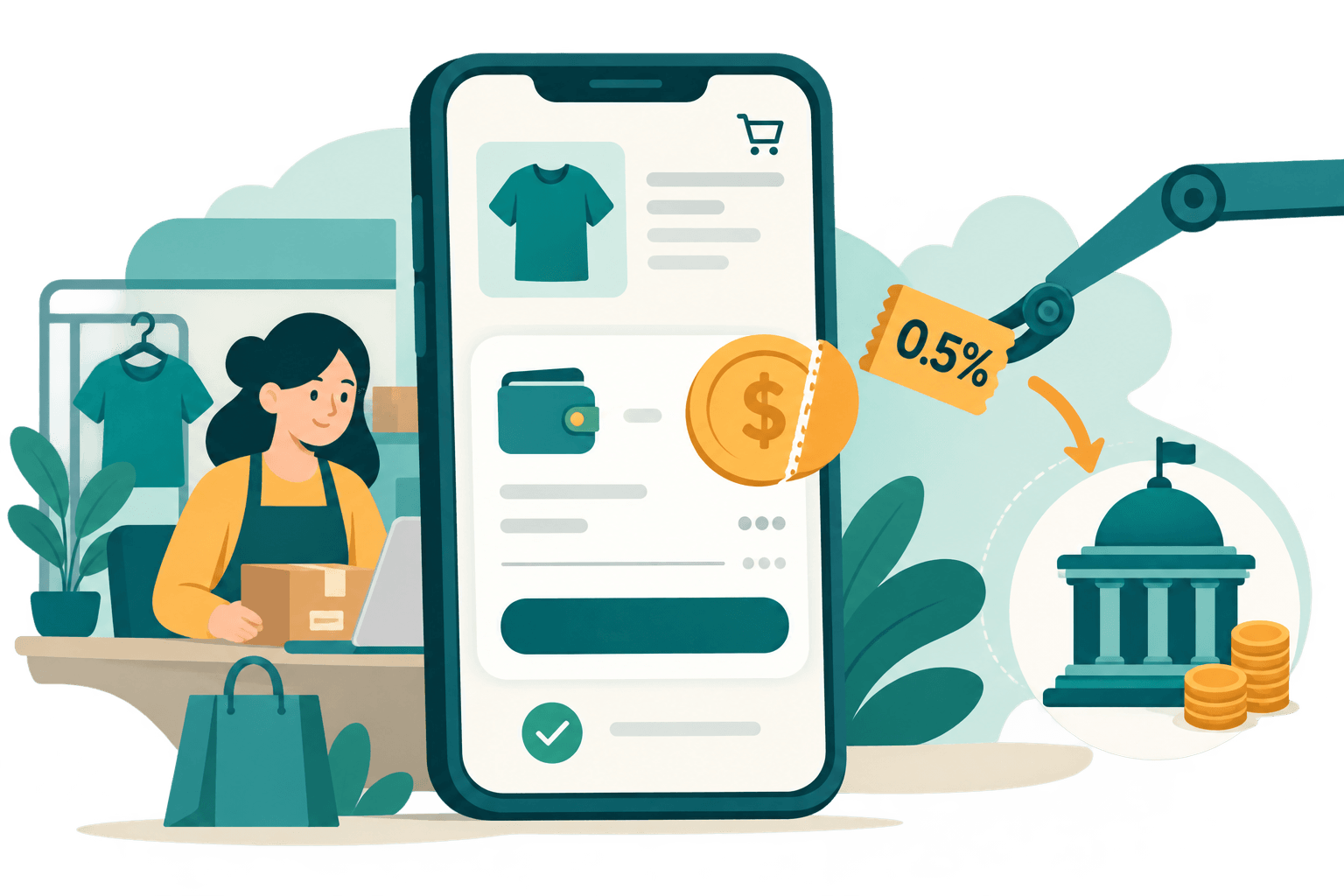
Indonesia's small business ministry is about to flip a switch that most sellers only started hearing about this week. Minister of Cooperatives and SMEs (Kementerian UMKM) Maman Abdurrahman told reporters in Jakarta on August 21 that a Ministerial Decree (Kepmen) cutting marketplace service fees in half for verified local-product sellers would be signed on Monday, August 24, or "at the latest" Tuesday, August 25, 2026. By August 23, he confirmed the same signing window to Bisnis.com, saying technical integration with Shopee, Tokopedia, TikTok Shop, Lazada, and Blibli was already finished on the platform side.
That single signature turns a six-month-old regulation from a promise on paper into something a warung owner in Surabaya or a batik seller in Solo can actually apply for. The underlying rule, Peraturan Menteri UMKM No. 3/2026 on Protection and Competitiveness of Micro and Small Enterprises in Electronic Commerce, has been in force since June 17, 2026. Its Article 15 requires non-UMKM e-commerce operators to cut service fees by "at least 50 percent" for verified micro and small sellers who exclusively sell domestically made products. What has been missing is the technical decree that tells marketplaces exactly how to apply it — and that decree is what Maman says he is about to sign.
💸 What the 50 Percent Actually Covers
Service fees on Indonesian marketplaces are not one line item. They bundle administrative charges, commission percentages, and "application service" fees that platforms charge for every completed order, separate from advertising or promoted-listing spend a seller chooses to buy. According to Deputy for Small Business Affairs Temmy Satya Permana, current service fees on major platforms typically run 10 to 18 percent of transaction value before any optional ad spend is added on top. A comparison published by e-commerce advisory site Webekspor in mid-2026 put Shopee's effective take at roughly 6 to 13 percent without ads and 15 to 25 percent with ads switched on, Tokopedia at 8 to 12 percent rising to 12 to 20 percent, and TikTok Shop at 8 to 12 percent climbing to 15 to 30 percent once affiliate commissions are included.
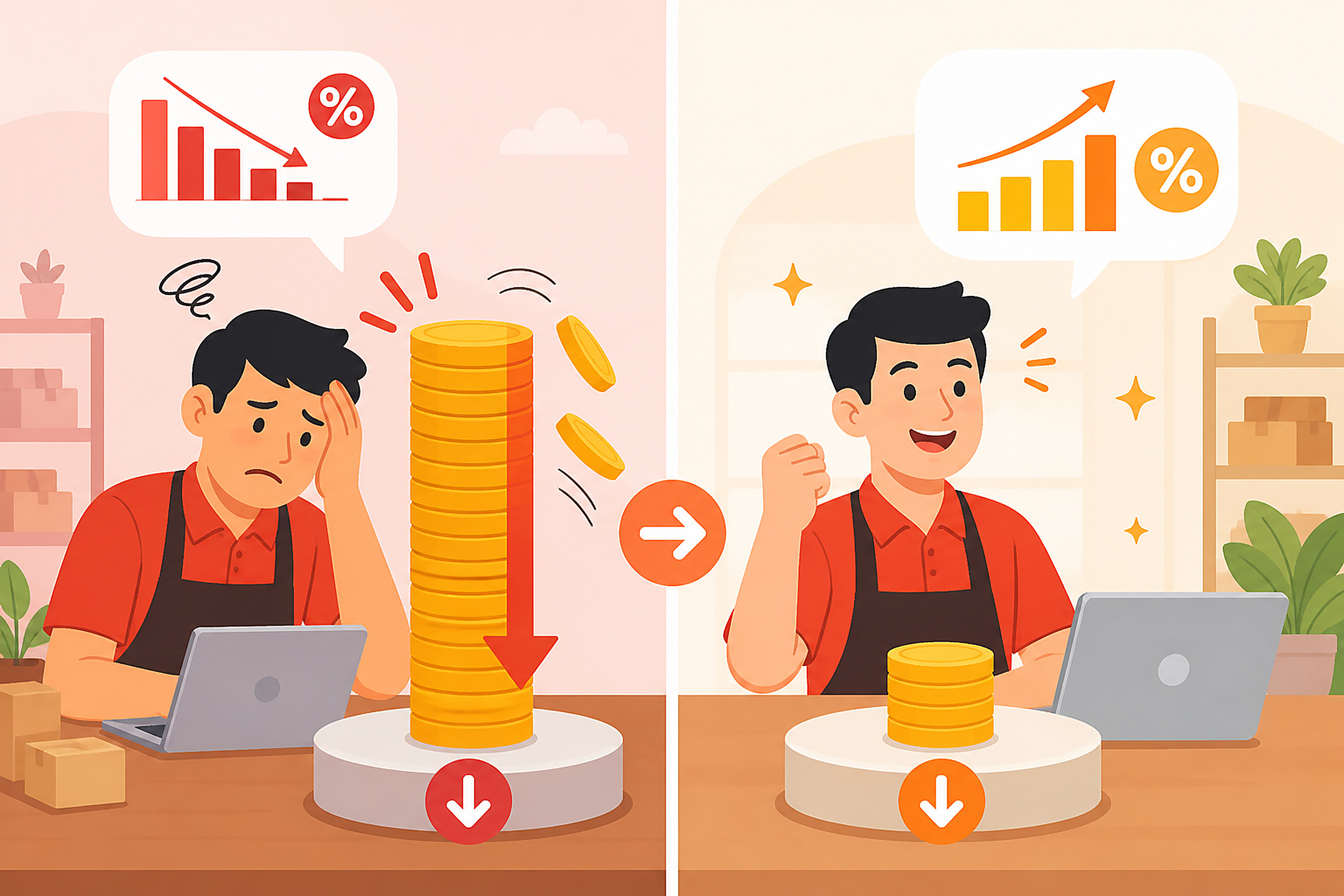
Under the new Kepmen, a verified seller in that fee bracket would see the service fee component — not the advertising spend, not shipping subsidies, not payment processing — cut by at least half. On a seller paying 12 percent in straight service fees, that is roughly a 6-percentage-point reduction on every completed transaction, which on a modest Rp 5 million monthly turnover works out to around Rp 300,000 kept in the business rather than handed to the platform. It will not offset a seller's entire advertising budget, but for razor-thin-margin categories like fashion basics or snack food, a few percentage points is often the difference between a profitable order and a break-even one.
📋 Who Actually Qualifies
The discount is not automatic and it is not universal. Three conditions determine eligibility, based on statements from Temmy and the underlying ministerial regulation:
- The seller must be classified as usaha mikro or usaha kecil (UMK), the two smallest tiers in Indonesia's micro, small, and medium enterprise classification, not the medium tier.
- The seller must sell exclusively domestically produced goods. A store mixing local products with imported reseller stock does not qualify for the discount on any of its listings under the current framework.
- The seller must pass a fraud and reputation check run jointly by the Ministry and the platform, on top of the product-origin verification.
Notably, the Ministry has stopped short of requiring formal Tingkat Komponen Dalam Negeri (TKDN) certification, the domestic-content certification scheme normally used for government procurement. Temmy said the Ministry will instead confirm that production genuinely happens in Indonesia and that most raw materials are domestically sourced, a lighter-touch standard aimed at micro sellers who could never afford or navigate full TKDN paperwork. Exactly how platforms will check that claim beyond seller self-declaration and Ministry cross-checking has not been published in detail, which is the most obvious gap sellers should watch once the Kepmen text becomes public.

🖥️ How to Apply Through SAPA UMKM
Registration runs through Sistem Aplikasi Pelayanan (SAPA) UMKM, the Ministry's existing digital service platform, rather than through each marketplace separately. The process Temmy described to Bisnis.com and Detik has three steps:
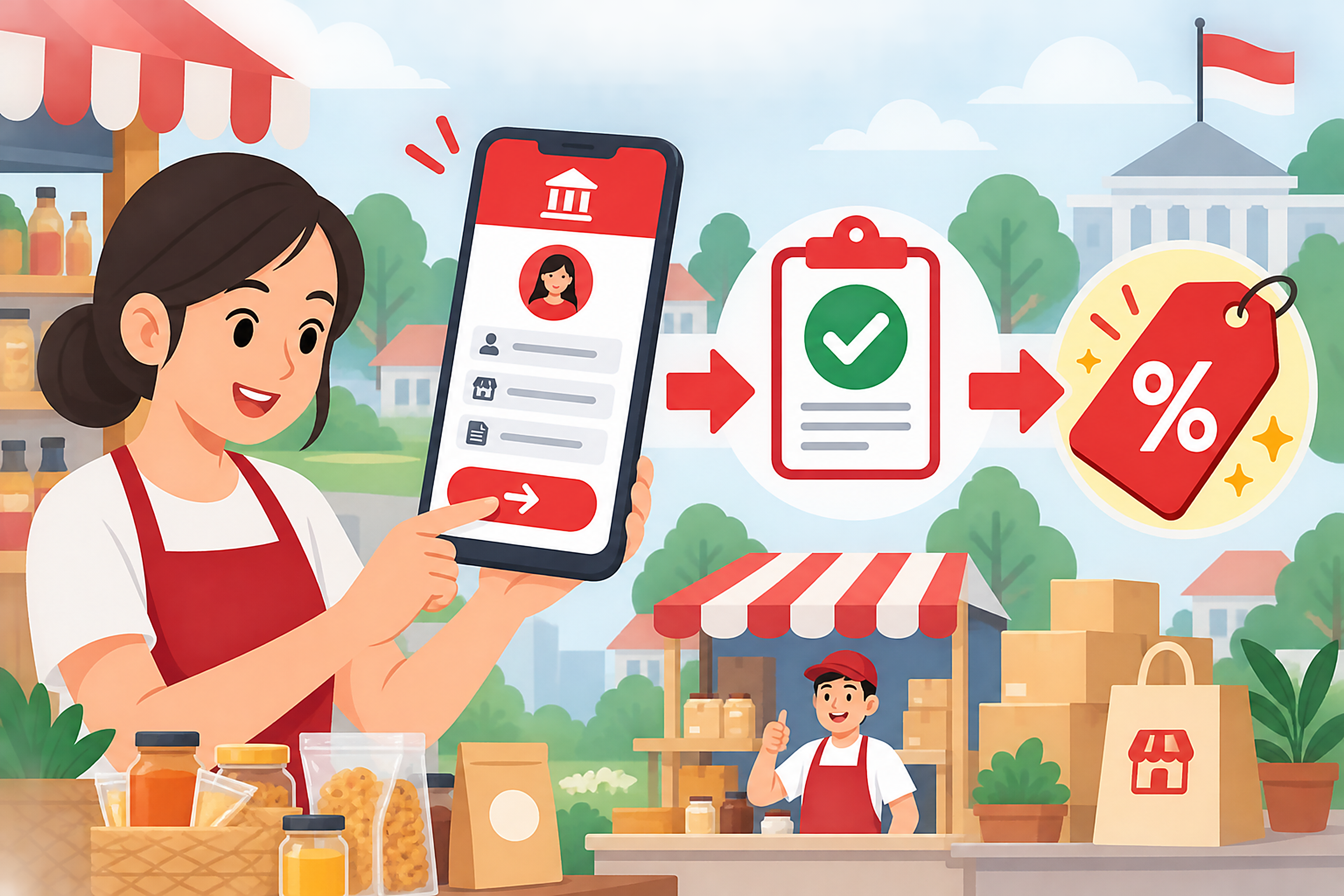
- A seller submits an application through SAPA UMKM, listing the specific products sold and formally declaring those products as domestically made.
- The Ministry verifies the submission and forwards seller data to the relevant marketplace for a second, platform-side check.
- The marketplace confirms product origin and seller standing, and applies the discounted fee rate going forward.
Temmy estimated the full cycle, from submission to verification, at around two weeks under standard operating procedure, though he said the Ministry would try to compress that timeline so sellers who register as soon as the system opens can realistically see the discount applied before the end of August. Critically, he was explicit that the discount is not retroactive and not automatic: "Nggak dong, kan ada proses dulu," he told Bisnis.com — sellers must apply first, get verified, and only then does the reduced rate take effect on future transactions, typically starting the following billing cycle.
🏪 Why the Ministry Is Doing This Now
The policy sits inside a broader affirmative push for domestically made goods against a wave of ultra-cheap imported listings that has squeezed Indonesian micro-sellers on price for the past two years. Temmy framed it directly as a competitiveness tool: local products, he said, need the government's "keberpihakan dan afirmasi" — partisanship and affirmation — to compete on the same shelf as imported goods that often arrive with lower landed costs regardless of tariffs.
UMK akan mengajukan melalui SAPA terkait diskon itu dengan mencantumkan produk apa saja mereka jual, dengan menyatakan bahwa produk itu adalah produk dalam negeri, lokal. — Temmy Satya Permana, Deputy for Small Business Affairs, Ministry of UMKM, quoted by Bisnis.com, August 12, 2026
The timing also lands alongside a separate, unrelated easing of payment costs: Bank Indonesia's decision to cut QRIS merchant discount rates to zero for transactions up to Rp 100,000 starting October 1, 2026, which several UMKM outlets have already covered as a complementary cost relief measure for the same seller population. Together, the two policies point at the same target — the gap between what a sale is worth on paper and what a micro-business actually keeps after platform, payment, and processing fees eat into it.
The broader context includes a parallel, separate discussion at the Ministry of Trade over revising Permendag 31/2023, the regulation governing e-commerce more generally, with officials saying as early as January 2026 that administrative fees charged by platforms needed structural review so Indonesian-made goods could compete on price against imports. That revision remains a longer-term process without a firm signing date, which makes the UMKM-specific Kepmen the faster, more concrete relief actually reaching sellers this year rather than a broader rewrite still working through inter-ministerial review.
🧮 A Worked Example: What Changes on an Invoice
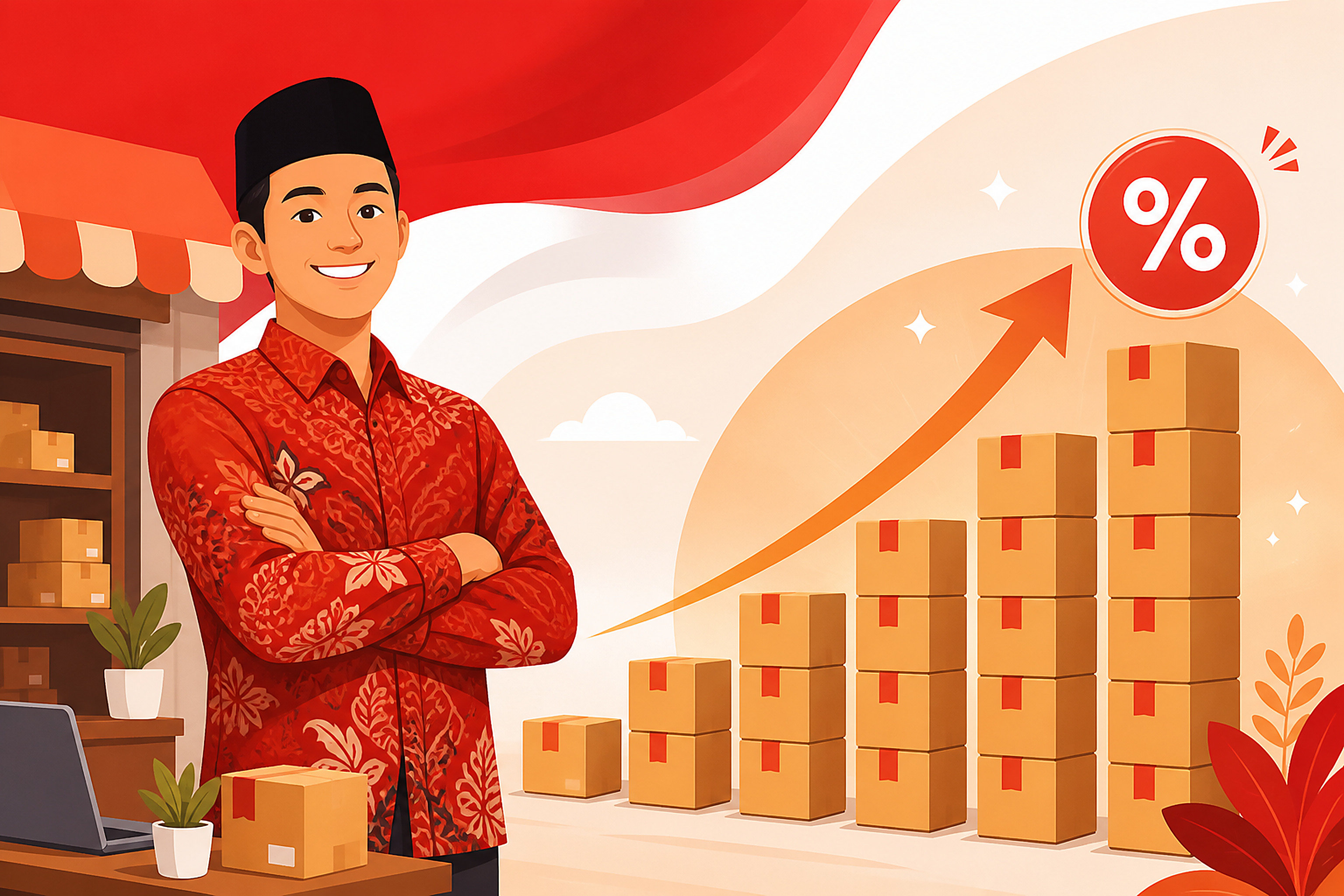
Numbers get concrete faster than percentages do. Take a hypothetical seller of handmade woven bags on Tokopedia, running a Power Merchant account with roughly Rp 20 million in monthly sales through the platform. At a mid-range 10 percent service fee, that seller currently loses Rp 2 million a month to the platform's service charge alone, before any advertising spend, before payment processing, and before the flat per-order processing fee of Rp 1,250 that Tokopedia and TikTok Shop began charging sellers in August 2025.
Under a verified 50 percent discount, that same Rp 2 million service charge drops to Rp 1 million, freeing up Rp 1 million a month that the seller can put back into raw materials, into a modest ad budget on the same platform, or simply keep as margin. Scaled across a full year, that is roughly Rp 12 million — meaningful capital for a micro business that would otherwise have gone straight into a platform's revenue line. None of this changes shipping subsidies, promotional fees for flash sales, or the separate 0.5 percent final income tax (PPh Final) that applies once annual turnover crosses Rp 500 million, but it does directly change the number that lands in the seller's bank account after each settlement cycle.
The caveat is that this example assumes full, immediate eligibility. A seller whose product mix includes even a small share of imported components, or who has not yet completed SAPA UMKM verification, keeps paying the standard rate until the paperwork clears — which is exactly why gathering documentation now, rather than after the Kepmen is signed, is the single highest-leverage move available this week.
⏳ A Timeline That Has Slipped Before
It is worth being direct about the track record here, because this is not the first "any day now" moment for this policy. Maman first said the Kepmen would be signed "this week, at the latest Friday" on August 12. That Friday came and went without a signature. He then targeted "Monday" again on August 21, before Bisnis.com reported on August 23 that the window had shifted to "Monday or, at the latest, Tuesday" — August 24 or 25. Each delay was attributed to continued legal review and platform-side technical integration rather than any change of substance in the policy itself, and officials have consistently said the integration work with Shopee, Lazada, Blibli, and TikTok Shop was functionally complete well before the signature itself.
That pattern matters for sellers deciding how much planning to do this week. The underlying regulation and its 50-percent commitment are not in doubt — Permen UMKM No. 3/2026 has been law since June — but the exact date SAPA UMKM registration opens for this specific incentive, and the exact date the reduced fee first appears on an invoice, has moved by roughly two weeks already and could move again. Sellers who wait for a formal Ministry announcement before registering will lose the least time; sellers who assume the discount is live before checking SAPA UMKM directly risk confusion when nothing changes on their next settlement.
🌐 The Case for Not Depending on Marketplace Fees Alone
Whatever the exact signing date turns out to be, the underlying math is a reminder of something Indonesian marketplace sellers have been quietly running the numbers on all year: platform fees have only moved in one direction since 2023, even before this new discount policy existed. Wartaekonomi reported in early 2026 that some sellers had seen effective fees climb from a 2-to-10-percent range to 20-to-25 percent once every add-on service was counted, prompting a visible shift of smaller merchants toward direct-to-consumer channels on Instagram and TikTok organic content rather than relying purely on marketplace search traffic.
A 50-percent discount on the service-fee component softens that pressure for qualifying sellers, but it does not remove the structural exposure of depending entirely on a channel where the fee schedule, algorithm, and terms of service are all set unilaterally by the platform. A business's own website carries no per-transaction commission at all beyond payment gateway processing, which typically runs a flat 2 to 3 percent regardless of order volume or promotional spend, and it is not subject to marketplace policy changes, seller suspensions, or algorithm shifts that can bury even compliant listings overnight.
📊 How the Big Four Marketplaces Currently Compare
The discount arrives against a fee landscape that already varies meaningfully between platforms, which matters because a seller listing on more than one marketplace will not see the same rupiah impact everywhere. Based on fee comparisons published in 2026 by e-commerce advisory outlets tracking seller costs:
- Shopee charges a base administrative fee of roughly 2.5 to 10 percent depending on category and seller tier (Non-Star, Star, Star+, or Shopee Mall), plus a 3 percent pre-order fee and a 2 percent service fee where applicable. Combined with optional ad spend, effective costs can run 15 to 25 percent of transaction value.
- Tokopedia applies a service fee of 1 to 10 percent for Power Merchant and Power Shop sellers, with a 20 percent discount on the highest-fee categories bringing the effective ceiling closer to 8 percent, plus the flat Rp 1,250 per-order processing fee introduced in August 2025.
- TikTok Shop (including "TikTok Shop by Tokopedia") layers a base commission of roughly 1 to 10 percent with an additional 4 to 6 percent for certain services, plus affiliate commissions of 5 to 20 percent that sellers using creator-driven sales choose to pay separately. Total effective cost lands in the highest range among the major platforms.
- Lazada runs comparatively lower at 1.5 to 6 percent commission plus a Rp 1,250 order-processing fee, giving it the lowest effective total among the four in most comparisons.
The 50-percent discount applies specifically to the service-fee component defined in Permen UMKM No. 3/2026, not to advertising spend, affiliate commissions, or flat per-order processing charges layered on top. A seller active on TikTok Shop who relies heavily on affiliate marketing will therefore see a smaller proportional benefit than a seller on Lazada whose costs sit almost entirely inside the discounted service-fee bucket. Sellers weighing where to concentrate inventory once the discount goes live should run this comparison against their own actual fee breakdown rather than assuming the discount closes the same gap everywhere.
❓ Questions Sellers Are Already Asking
Does the discount apply automatically once the Kepmen is signed? No. Every source that has spoken on the record — Maman, Temmy, and the ministry's own explanation of the SAPA UMKM process — confirms sellers must actively register, submit product declarations, and pass verification before any discount appears on an invoice.
Does it cover advertising spend? No. The discount applies only to the service-fee component: administrative charges, commission, and application-service fees tied to completed transactions. Money spent on flash-sale placements, sponsored search results, or affiliate commissions is unaffected.
What happens to a seller who mixes local and imported products? Based on Temmy's public statements, mixed-inventory sellers do not qualify for the discount on any listing under the current framework, since eligibility is tied to selling domestically made products exclusively. A seller weighing whether to drop imported SKUs to qualify should compare the discount's rupiah value against the margin those imported products currently generate before making that call.
Is TKDN certification required? No. The Ministry has explicitly said it will not require formal Tingkat Komponen Dalam Negeri certification, instead checking production location and domestic raw-material sourcing through a lighter verification process suited to micro-scale sellers.
✅ What a Small Business Should Actually Do This Week
For an owner selling domestically made products on Shopee, Tokopedia, TikTok Shop, Lazada, or Blibli, three concrete actions make sense regardless of exactly which day the Kepmen gets signed:
- Gather proof of local production now. Photos of the production site, supplier invoices for domestically sourced raw materials, and a clear product list will speed up the SAPA UMKM application once registration opens, since the Ministry has said it will check production location and raw-material sourcing rather than requiring formal TKDN certification.
- Register for a SAPA UMKM account immediately if the business does not already have one, so there is no separate account-creation delay stacked on top of the roughly two-week verification cycle once the specific discount registration goes live.
- Treat the marketplace channel as one leg of the business, not the whole business. A discount on service fees is genuine relief, but it does not change the fact that a marketplace can alter its fee structure, ranking algorithm, or seller policies unilaterally at any time. Sellers who pair marketplace presence with an owned website and a direct payment channel keep a channel that cannot be repriced by someone else's quarterly earnings target.
📌 What It Means for the Reader
None of this requires waiting passively. A verified local seller can start assembling documentation today, register for SAPA UMKM this week, and be ready to apply the moment the Ministry opens the specific discount registration — rather than losing the first two weeks of eligibility to paperwork gathered after the fact. And for any small business owner watching platform fees climb regardless of this policy, the more durable move is the one regulation cannot touch either way: building a sales channel the business actually owns, so a fee schedule set in Jakarta or a platform boardroom is never the only thing standing between a sale and a seller's margin.
That last point is worth sitting with, because it is easy to treat a fee discount as the whole solution when it is really one piece of a larger cost picture. A seller who registers for the SAPA UMKM discount, keeps the QRIS zero-fee threshold in mind for October, and still invests in a website that captures repeat customers directly is stacking three separate cost advantages rather than betting the business on any single one holding steady. Policy changes; platforms revise their terms; a domain and a payment page a business actually controls do not disappear because a ministry misses a signing deadline for the third time.
Sources: Bisnis.com (August 12 and August 23, 2026), Detik Finance (August 14 and August 21, 2026), Antara News (August 21, 2026), Liputan6 (August 21, 2026), Suara Surabaya (August 21, 2026), Wartaekonomi (2026), and Webekspor marketplace fee comparison (2026).