TikTok Shop moved $50.3 billion worth of goods worldwide in the first six months of 2026, a 92% jump from the same period a year earlier. Buried inside that number is a ranking shift that had not happened since the platform's e-commerce arm launched: the United States pulled ahead of Indonesia to become TikTok Shop's single largest market by transaction value. US gross merchandise value nearly doubled, climbing from $5.8 billion in the first half of 2025 to $11.8 billion in the first half of 2026, according to the joint research published by Momentum Works and Tabcut in mid-August.
For an Indonesian shop owner who has spent the last two years building a following through live selling and short-form video, that headline can read like bad news. It is not, at least not directly. Indonesia remains TikTok Shop's largest market in Southeast Asia, and the Tokopedia-TikTok Shop ecosystem just posted one of its strongest local-product sales periods on record. The two facts, an American overtaking and a domestic record, sit next to each other in the same six months. Understanding why requires looking past the single ranking number and into what actually drove it, market by market, category by category, and policy change by policy change.
📊 The Numbers Behind the Overtaking
The Momentum Works and Tabcut report, released in the second week of August 2026, tracked TikTok Shop's growth across every major market where the platform operates a shopping feature. A few figures from that report explain the scale of what changed globally, not just in one country.
Momentum Works has published TikTok Shop market data at roughly this same cadence since the platform's early Southeast Asian expansion, and the firm's earlier reports are part of why the August update reads as confirmation rather than surprise inside the industry. The research house's "TikTok Shop in the USA 2025" report, cited by Kompas back in February 2026, had already flagged the US market's rapid acceleration months before the ranking officially flipped. Reading the two reports together shows a platform whose center of gravity was always going to shift once its newer market caught up to the head start its Southeast Asian markets had.
- Global GMV reached $50.3 billion in the first half of 2026, up 92% year over year
- The platform's store count grew from 475,000 to 1.35 million over the same period
- The creator base tracking commerce activity expanded from 15.3 million to 20 million
- Momentum Works projects TikTok Shop will close 2026 near $123.5 billion globally, a figure that started under $1 billion five years ago
Southeast Asia still generates the bulk of TikTok Shop's total volume. Indonesia, Thailand, Vietnam, Malaysia, and the Philippines round out the platform's top five markets by GMV, and reporting from Kompas earlier in the year had already placed Indonesia as the platform's second-largest market globally behind the US, a position that has now firmed further as US growth accelerated. What changed in this latest report is the pace, not the presence: American GMV grew 103% year over year, roughly double the typical growth rate in TikTok Shop's established Southeast Asian markets, according to the Momentum Works analysis.

🛍️ Why American Buyers Suddenly Caught Up
TikTok Shop's US business had a slow start relative to Southeast Asia. Reporting from Business Insider, citing an analysis of US credit and debit card transaction data by the customer-intelligence firm Consumer Edge, found that TikTok Shop accounted for roughly 2% of online US retail spending in July 2026, up from about 1.2% a year earlier. Michael Gunther, SVP of Research & Market Intelligence at Consumer Edge, described the jump in market share as "massive."
"Given that TikTok Shop was at zero a few years ago, these moves are really, really big. I don't know if I've seen something like this," Gunther told Business Insider.
Three shifts inside the US market help explain the acceleration. First, the buyer mix changed: TikTok Shop customers who made 20 or more purchases in the second quarter of 2026 drove about 30% of overall US platform spending while representing only 5% of the total buyer population, a concentration of high-frequency shoppers that the company's earlier, more casual buyer base did not have. Second, the age profile shifted: the fastest-growing demographic by year-over-year spend in the second quarter was shoppers over the age of 35, a group that skews toward higher average order values than the platform's original teenage and young-adult audience. Third, the company began testing infrastructure aimed squarely at repeat purchasing, including a paid membership program called TikTok Shop Plus that mirrors Amazon Prime with discounted pricing and faster shipping for members, first reported by Business Insider in late July 2026.
Category data adds a fourth explanation, and it is arguably the most telling one for what TikTok Shop has become. Reporting from Ecomcrew, drawing on data from the multi-brand seller and fulfillment partner Spreetail, found that some of the platform's bulkiest, highest-consideration categories posted its fastest growth in the first half of 2026: above-ground pools and spas grew 125% year over year (five times the growth rate of other marketplaces), outdoor furniture grew 275%, and lawn and garden grew nearly 150%. Spreetail's chief marketing officer, Amit Dodeja, attributed part of that shift to trust catching up with the platform's maturity. "Consumers feel TikTok Shop is far more trustworthy given that the marketplace has matured over time," he said, adding that video has become a genuine research tool for complex purchases: "The visual nature of TikTok is actually helping a lot of consumers understand what these products are."

🏭 Growth Is Colliding With Shipping Rules Built for Small Items
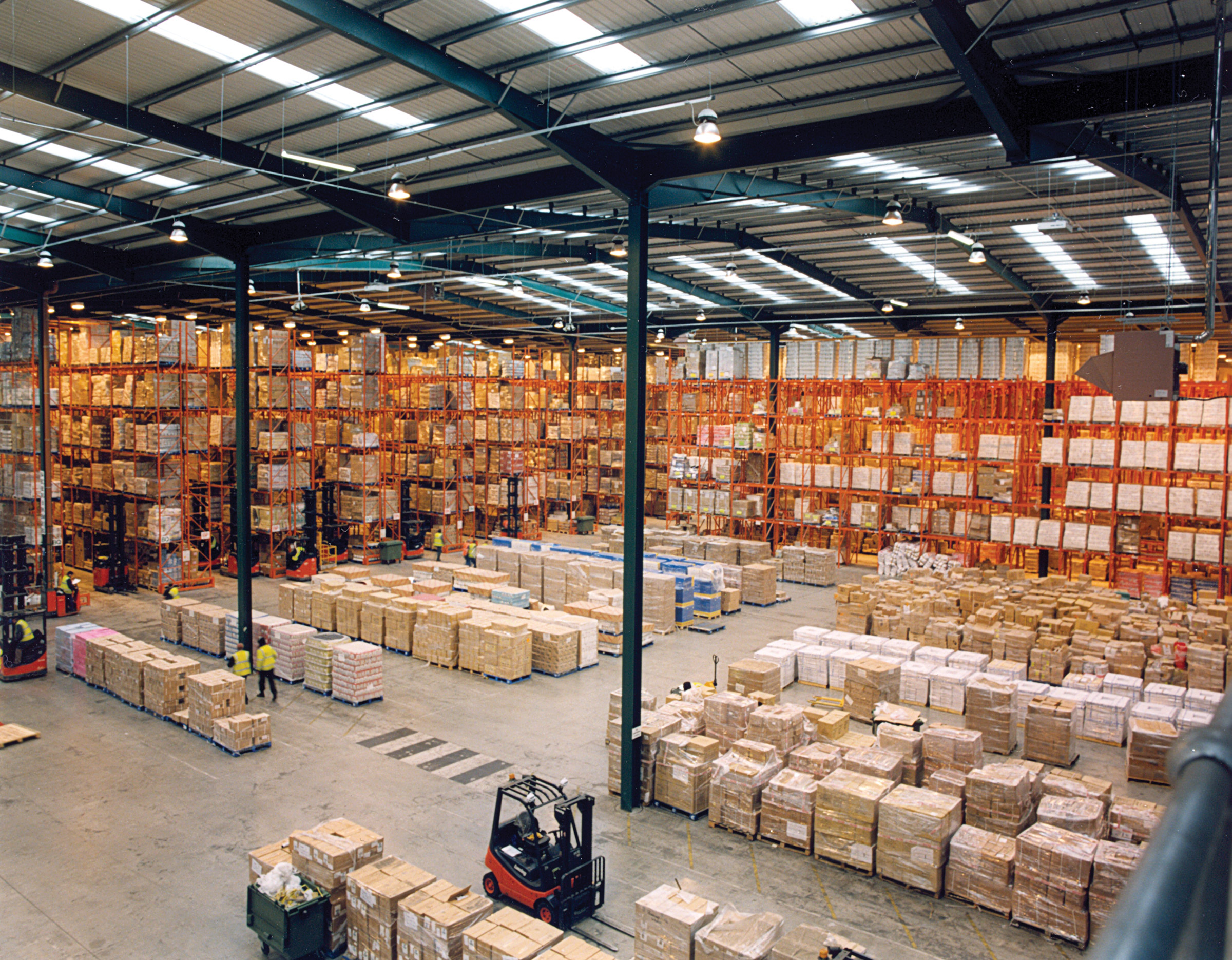
TikTok Shop's US logistics infrastructure was originally built around impulse-buy fashion and beauty products, lightweight items that move fast and ship cheap. The bulky, higher-ticket categories now driving disproportionate growth are colliding with that design, and the platform has already had to rewrite its own shipping rules to keep up.
On March 31, 2026, TikTok eliminated independent shipping for US sellers entirely, ending a phased rollout that began with USPS label restrictions in January. Every US seller must now route domestic orders through one of three TikTok-controlled logistics paths: Fulfilled by TikTok, where TikTok's own warehouses handle picking, packing, and shipping; Upgraded TikTok Shipping, where sellers ship using TikTok's labels; or Collections by TikTok, where TikTok couriers collect directly from high-volume sellers' warehouses. Sellers who do not comply face removal from the platform.
This is a reminder of a general rule that applies to any seller building a business on top of someone else's platform, not just the American bulky-goods sellers named in this reporting: the terms of participation can change with a fixed compliance deadline and no negotiation. A shipping method that worked for a seller in one quarter can simply stop being an option in the next, regardless of how well that seller's existing operation was running. Indonesian sellers on Tokopedia's own fulfillment network have not faced an equivalent overnight mandate, but the March 2026 US case is worth remembering as a general pattern in platform-run commerce, not a one-off American story.
That consolidation cuts two ways for sellers of bulky goods. Fulfilled by TikTok removes the operational risk of missing delivery windows once inventory sits inside TikTok's own warehouse network, but its per-unit fee structure, starting around $3.58 for single-item orders and $2.86 for multi-item orders, plus storage costs after a free period, was built around the platform's original core categories rather than the $2,000 saunas and $85 comforters now driving some of its fastest sales growth. Chad Keller, founder of the DTC sleep brand Mellow Sleep, told Ecomcrew that TikTok's required two-business-day dispatch window for domestic orders "isn't always workable" for bulky items, and that flexibility to choose self-fulfillment order by order, available when his brand launched on the platform in fall 2025, is no longer an option under the current rules.
"That's unlike Amazon, where you're going there specifically to buy a product." — Chad Keller, founder, Mellow Sleep, describing how buyers browse TikTok Shop compared with a purchase-intent platform, reported by Ecomcrew (August 16, 2026)

🌍 The UK Shows Growth Does Not Look the Same Everywhere
While the US shifts toward Shop tab browsing, TikTok Shop's UK operation is moving in the opposite direction. Livestream sales in the UK grew 55% year over year, with the platform hosting more than 6,000 livestream sessions daily, according to the same Ecomcrew reporting on TikTok Shop's H1 2026 performance. Live auctions have become a particular draw for UK sellers in sneakers, streetwear, and collectibles, categories where real-time bidding and scarcity drive faster purchase decisions than a standard product listing does.
The lesson for an Indonesian seller watching from outside both markets is that TikTok Shop's own internal data does not support a single global playbook. The US is pulling toward pre-researched, catalog-style browsing for big-ticket items. The UK is leaning harder into live, time-pressured selling for collectible and fashion categories. Indonesia's own selling culture, which built its early growth on exactly the kind of live-hosted, real-time interaction the UK is now scaling, sits closer to the UK pattern than the emerging US one. That is a point in favor of Indonesian sellers' existing skills, not a reason to abandon them for a Shop-tab-first strategy copied wholesale from American reporting.
🇮🇩 What Actually Happened in Indonesia During the Same Period
The Momentum Works ranking shift describes a global race between two large national markets, not a decline in Indonesia's own numbers. In fact, the same six-month window produced one of the strongest local-commerce results the Tokopedia-TikTok Shop ecosystem has reported. Announced on August 13, 2026, and covered by CNBC Indonesia and Bisnis.com, the "Beli Lokal" (Buy Local) program helped drive nearly 700 million local products sold across the ecosystem in the first half of 2026, a 51% increase compared with the previous six-month period.
That figure matters because it reflects the specific segment 1garis Studio's clients occupy: small and mid-sized Indonesian sellers, not the large international brands increasingly experimenting with TikTok Shop's US membership programs and bulky-goods logistics. Indonesia's position as TikTok Shop's largest Southeast Asian market, and its history as the platform's original proving ground before US growth accelerated, means the app's core mechanics, live selling, short video product discovery, in-app checkout, were built with exactly this kind of seller in mind rather than retrofitted for them the way bulky-item fulfillment in the US now has to be.
The "Beli Lokal" figures also point to something the GMV ranking alone cannot show: how much of Indonesia's TikTok Shop and Tokopedia growth is coming from domestic manufacturing and small production, rather than resale of imported goods. A 51% jump in local products sold in six months means the platform's algorithm, promotions, and creator partnerships are actively surfacing Indonesian-made goods to Indonesian buyers at a larger scale than before, a trend that benefits exactly the kind of small manufacturer or workshop-based seller that international brands moving into the platform's bulky-goods category in the US are not competing against directly.
Kompas reported in February 2026 that Indonesia had already been confirmed as TikTok Shop's second-largest global market behind the US, based on the "TikTok Shop in the USA 2025" research from Momentum Works and Tabcut, well before the August update formalized the pace of the US market's subsequent acceleration. The ranking change reported this month is a continuation of a trend that was visible six months earlier, not a sudden reversal.
💡 What This Actually Changes for a Small Indonesian Seller
None of TikTok Shop's US-specific logistics changes, the shift to platform-controlled shipping, the per-unit FBT fee structure, or the new membership program, apply directly to a seller shipping domestically inside Indonesia. Indonesian TikTok Shop sellers already operate inside Indonesia's own logistics ecosystem through Tokopedia's integrated fulfillment network, which was not affected by the March 2026 US shipping rule change described above.
What does carry over is a set of signals worth watching, because TikTok tends to test features in its most mature markets first before expanding them elsewhere:
- Membership and loyalty mechanics are coming. TikTok Shop Plus, the Amazon Prime-style program being tested in the US, rewards repeat buyers with discounts and faster shipping. If a similar loyalty layer eventually reaches Indonesia, sellers who already have return-customer habits, consistent posting schedules, responsive live sessions, will be positioned to benefit before their competitors adapt.
- The Shop tab is becoming more important than the livestream. In the US, browsing and buying directly from the Shop tab, without watching a video or livestream first, grew to 51.4% of attributed GMV in the first half of 2026, up from 36% for all of 2025. That does not mean livestream selling is dying, US livestream GMV still grew 19% year over year in dollar terms, but it does mean product listings, photos, and descriptions inside the Shop tab deserve the same attention sellers currently give to their live sessions.
- Higher-consideration purchases are proving viable on short video platforms. The above-ground pools, saunas, and outdoor furniture data from the US market shows that buyers are willing to research and buy genuinely expensive items through video content when the seller does the explaining well. An Indonesian seller assuming TikTok Shop only works for impulse-buy items under a certain price point is working from an outdated picture of what the platform's own biggest market has proven can sell.
- Trust accumulates over time, and Indonesia has a head start. Spreetail's CMO attributed US category growth partly to trust catching up with platform maturity, buyers who were skeptical in TikTok Shop's early days becoming comfortable as the marketplace aged. Indonesian sellers who have been building on the platform since its earlier years already have that trust advantage over sellers in newer TikTok Shop markets; the record local-product sales figures from August 2026 are one measure of that accumulated trust converting into actual transactions.
📱 What This Means for a Small Business Building Its Digital Presence
TikTok Shop is one channel, not the whole picture, and the ranking shift covered in the reports above says nothing about whether a seller should rely on the platform's own storefront as their only online presence. A TikTok Shop account, like an Instagram Shop or a Shopee listing, sits inside a platform that sets its own rules, fee structures, and algorithm changes without a seller's input, exactly what the March 2026 US shipping mandate demonstrated when it removed sellers' choice of fulfillment method overnight. An Indonesian seller who has built genuine trust and a customer base through TikTok Shop still benefits from an independently owned website: a place to list the same products, capture direct contact details, and keep operating even if a platform policy changes unexpectedly, the way US bulky-goods sellers had their shipping options rewritten with roughly two months of notice.
This is not a call to abandon TikTok Shop, which the data above shows is still the fastest-growing sales channel for many product categories. It is a reminder that the sellers best positioned to benefit from TikTok Shop's next feature rollout, whether that is a membership program, deeper Shop tab tools, or new bulky-goods logistics, are the ones who already treat the platform as one growth channel feeding a business they own outright, rather than the entire business itself. Sellers who have paired their TikTok Shop storefront with a real website, one that lists the same catalog, states clear service terms, and gives repeat customers a way to reach the business directly, have somewhere to point buyers regardless of what TikTok changes next.
🔑 The Bottom Line
The ranking swap between the US and Indonesia is a genuinely large shift in TikTok Shop's global business, and it is worth understanding because it signals where the platform is investing engineering and logistics attention next: bulky goods, membership programs, and Shop tab discovery. None of it changes the operational reality for a small Indonesian seller shipping through Tokopedia's existing network today. What it does offer is an early look at features and buyer behaviors likely to arrive locally over the next year, and a reminder that Indonesia's own numbers, nearly 700 million local products sold in six months, are strong enough that a shift in a global ranking table is not the story that should worry a seller who already has customers coming back. The next report from Momentum Works, likely covering the second half of 2026, will show whether the US keeps widening its lead or whether Indonesia's own accelerating local-product momentum narrows the gap again. Either outcome will matter more to global investors and platform strategists than to a small seller in Jakarta, Surabaya, or Medan who is simply watching whether this month's orders keep arriving on schedule.
Sumber: Momentum Works & Tabcut (dipublikasikan pertengahan Agustus 2026), Business Insider (12 Agustus 2026), Ecomcrew (13 dan 16 Agustus 2026), CNBC Indonesia dan Bisnis.com (13 Agustus 2026), Kompas (12 Februari 2026).