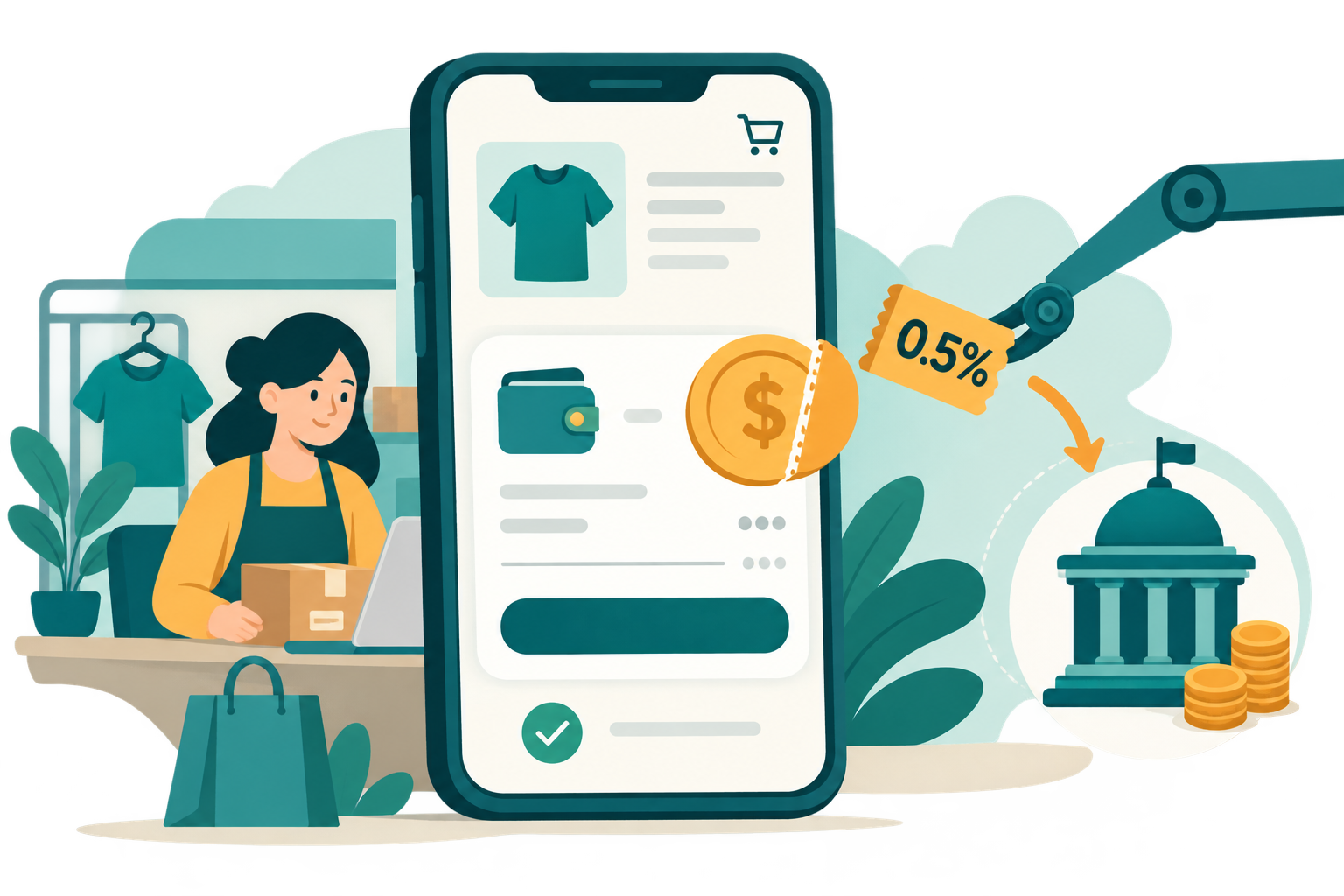
Since August 1, 2026, four of Indonesia's biggest online marketplaces have started doing something they never did before: taking a cut of tax straight out of a seller's sale, the moment a customer pays. Tokopedia, Shopee, Lazada, and Blibli now collect Income Tax Article 22 (PPh Pasal 22) automatically at 0.5% of gross turnover for qualifying merchants, remit it to the state treasury, and report it — no separate trip to the tax office required. Director General of Taxes Bimo Wijayanto announced the mechanism at a press briefing in Jakarta on July 1, 2026, and it went live exactly a month later.
For a small online seller, this is not an abstract policy story. It is a line item that now appears on every payout, and for many it has already shown up as a smaller-than-expected transfer. Understanding what actually changed — and what did not — is the difference between adjusting your pricing calmly this week and discovering a cash-flow problem next month. For a studio like 1garis, which spends its days helping small businesses build a digital presence through websites and other online channels, a change like this is a reminder that a modern online storefront is not only about design and traffic — it is also about whether the money actually reaching the owner's account matches what a spreadsheet expects.
📋 What actually launched, in plain terms
The government issued Minister of Finance Regulation (PMK) Number 37 of 2025, which designates certain e-commerce platforms as official withholding agents for PPh Pasal 22 on transactions completed by merchants trading through them. Tokopedia, Shopee, Lazada, and Blibli were the first four platforms named. The designation took effect July 1, 2026; actual withholding began August 1, 2026, giving both platforms and sellers a one-month runway to adjust systems.
The mechanics are straightforward once you see them laid out: a customer pays for an order through the marketplace, the platform withholds 0.5% of the gross transaction value as PPh Pasal 22, issues the seller an invoice documenting the withholding, remits the tax to the state, and reports it through the Unified Periodic PPh Tax Return (SPT Masa PPh Unifikasi). The seller receives the remainder as payout, plus a paper trail they did not have to generate themselves.
Wijayanto has repeatedly stressed one point in public statements: this is not a new tax. It is a change in who collects an obligation that already existed. Under the old system, sellers were responsible for calculating and remitting their own income tax on marketplace sales — a step many small merchants either skipped, miscalculated, or handled inconsistently. Centralizing the withholding at the platform level is meant to close that compliance gap while, in theory, making life easier for the seller who no longer has to do the arithmetic themselves.

🏛️ Why this rule exists: a decade-old gap in offline vs. online tax treatment
To understand why the government chose withholding at the platform level, it helps to look at what problem it is actually solving. Indonesia's small-business income tax framework — most recently governed by PP 23/2018 and its successors — has long applied a simplified regime to micro and small enterprises, including the same Rp500 million annual turnover exemption that now carries over into marketplace withholding. A shop selling from a physical storefront in a traditional market and a shop selling the identical products through an app were, on paper, subject to comparable obligations. In practice, enforcement diverged sharply.
Brick-and-mortar retailers routinely interact with local tax offices, business licensing processes, and, in many cases, third parties like landlords or business associations that create natural points of contact with the state. Online sellers, especially the smallest ones running a shop from a phone with no physical storefront, often existed almost entirely outside that contact surface. Self-reporting income tax on marketplace sales was, for many, either unfamiliar, inconvenient, or simply skipped — not necessarily out of intent to evade, but because no one in the transaction chain was structurally positioned to remind them or make it easy.
Wijayanto's framing of the policy as creating a "level playing field" between online and offline traders reflects that gap directly. By making marketplaces the withholding agent, the government moves the point of enforcement to where it can actually see transaction volume clearly and consistently — the platform's own payment system — rather than relying on millions of individual sellers, many without accounting support, to calculate and file correctly on their own initiative.
🌏 Indonesia is not moving alone — but the timing still matters locally
Indonesia's move fits a broader regional and global pattern. Tax authorities in several Southeast Asian markets and beyond have been shifting toward platform-level withholding and reporting obligations for digital marketplaces over the past several years, treating large e-commerce platforms as natural collection points precisely because they already process the payment and already hold the seller's identifying information. What makes the Indonesian rollout notable is not that the mechanism is unprecedented globally, but that it lands at a moment when e-commerce penetration among Indonesian small businesses is already high, meaning the number of sellers affected on day one is large relative to many earlier rollouts elsewhere.
That scale is also why the administrative friction reported by DDTCNews and Kontan in the first weeks of August matters more than it might for a smaller market. Four platforms simultaneously building or adapting systems to withhold correctly, report correctly, and reconcile turnover across each other for millions of active sellers is a genuinely large systems problem, not a minor configuration change. DJP has acknowledged that data integration between the platforms and the tax authority is still being worked through in this early period, which is a reasonable thing to expect from a rollout at this scale, but it is also a reason sellers should not assume every number on their dashboard is final or fully reconciled yet.
💰 The Rp500 million line that decides who pays
The detail every small seller actually needs is the exemption threshold. Under PMK 37/2025, an individual taxpayer with gross turnover (peredaran bruto) of up to Rp500 million per year is not subject to the marketplace withholding. This threshold mirrors the long-standing small-business income tax treatment under PP 23/2018 and later regulations, extending the same relief into the marketplace-collection era rather than creating a new bar to clear.
"Small traders, individual taxpayers with gross turnover up to Rp500 million a year, are not subject to Income Tax Article 22 withholding by the marketplace. This policy is not meant to burden small businesses," Wijayanto said at the July 1 briefing.
But the exemption is conditional, not automatic, and this is where sellers most often trip up. To claim it, an eligible merchant must submit a formal statement letter (surat pernyataan) through the marketplace, following the procedure set out in PMK 37/2025. A seller who qualifies by revenue but never files that statement can still be withheld from at the standard rate, simply because the platform has no record confirming their eligibility.
There is a second detail sellers frequently misunderstand: a business that lists products on more than one marketplace is not taxed twice. The Directorate General of Taxes (DJP) has confirmed that turnover is calculated cumulatively across platforms, matched by tax ID (NPWP) or business registration number (NIB), and each designated marketplace is obligated to report transaction data to DJP so the totals can be reconciled centrally. In practice this means a seller who splits sales across Tokopedia and Shopee has their combined turnover checked against the Rp500 million line, not two separate thresholds that could be gamed by spreading volume.

🧾 What the withholding actually costs sellers on paper
The 0.5% figure sounds small until it sits next to everything else a marketplace already deducts. Several sellers have raised a specific complaint since the rule took effect: the PPh Pasal 22 withholding is calculated on the gross transaction value — the price the customer paid — before the platform's own commission, service fees, and advertising costs are subtracted. That means a seller's actual net margin can absorb the tax on top of every other line item already coming off the top, rather than the tax being calculated on a post-fee net figure.
For a seller running thin margins on high-volume, low-price categories — a common pattern in Indonesian e-commerce — a half-percent charge stacked on top of platform commissions that can already run into double digits changes the arithmetic of what counts as a profitable listing. This is not a reason to panic, but it is a reason to actually run the numbers rather than estimate them.
Industry coverage has also flagged early administrative friction. Getting seller data, tax identification numbers, and transaction records synchronized correctly across four separate marketplace systems in a short runway is not trivial, and DJP itself has acknowledged that data integration between platforms and the tax authority remains a work in progress in these first weeks.
⏱️ Why this changes your cash-flow rhythm, not just your tax bill
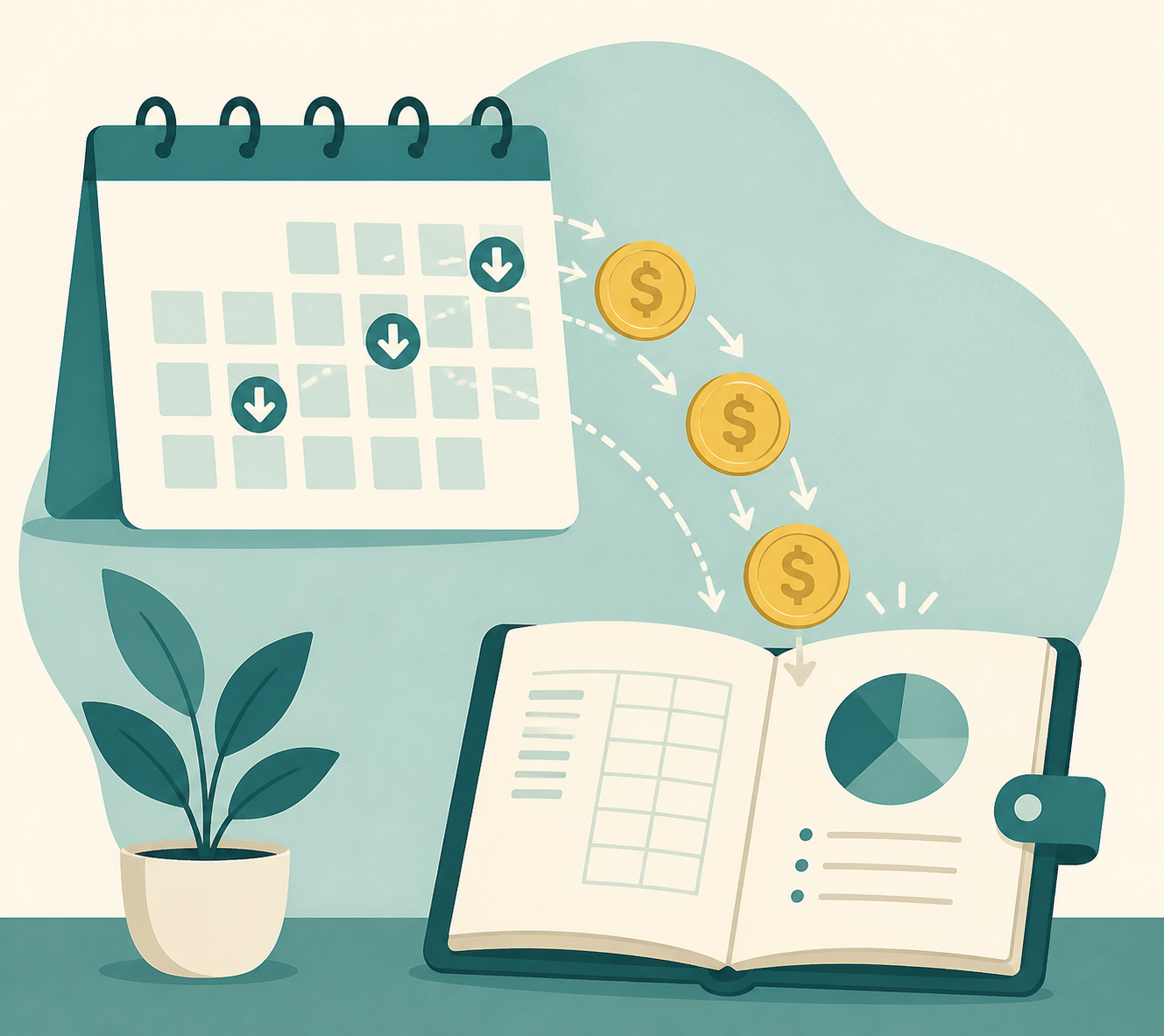
The most underrated effect of this rule has nothing to do with the tax rate and everything to do with timing. Before August 1, a seller who owed income tax on marketplace sales generally paid it in a lump sum or periodic filing, on a schedule the seller controlled. Now, a small deduction happens on every single transaction, automatically, the moment a customer pays.
That shift matters for working capital. A seller who was used to seeing 100% of a sale land in their account, then setting aside tax money separately at their own pace, will now see a slightly smaller number every time, with no separate action required — and no separate reminder either. For a business restocking inventory weekly or paying suppliers on tight terms, a half-percent shaved off every transaction adds up differently than the same amount paid once a quarter.
The practical fix is not complicated: update your pricing model or margin targets to already assume the 0.5% is gone before it hits your account, the same way you already account for marketplace commission. Sellers who do this now avoid discovering the gap the hard way when a bank balance comes in lower than a spreadsheet expected.
✅ A short checklist before your next payout
- Confirm which of your marketplaces (Tokopedia, Shopee, Lazada, Blibli, and any others added later) has started withholding, and check whether the invoice documenting it actually reaches your seller dashboard.
- If your combined turnover across all marketplaces is at or below Rp500 million a year, locate and submit the surat pernyataan for the exemption — do not assume the platform already applied it.
- If you sell on more than one designated marketplace, confirm your NPWP or NIB is correctly and identically registered on each platform, since that is how DJP reconciles your cumulative turnover.
- Recalculate your margin on your top five best-selling listings assuming the 0.5% withholding is permanent, not a rounding error.
- Keep the withholding invoices the marketplace issues — they double as proof of tax already paid when you file your annual return.
📊 Where the four platforms stand, compared
Not every seller experiences this rollout the same way, because the four designated marketplaces differ in scale, seller base, and how visibly they have communicated the change inside their own seller dashboards. A rough comparison of what matters for a seller deciding where to focus attention first:
| Platform | Seller base profile | What to check first |
|---|---|---|
| Tokopedia | Broad mix of individual and registered-business sellers, strong presence among micro-retailers | Confirm the withholding invoice appears under your seller finance/tax menu, not just the payout summary |
| Shopee | Largest transaction volume among the four for many product categories, heavy promotional-price activity | Recalculate margin on flash-sale or heavily discounted listings, where the 0.5% on gross price bites hardest relative to net profit |
| Lazada | More concentrated among registered brands and larger sellers alongside individual merchants | Verify NPWP/NIB matches your other marketplace registrations exactly, since Lazada's seller base often already operates across platforms |
| Blibli | Smaller seller base than the other three, mixed direct-retail and marketplace model | Check whether Blibli's own first-party retail sales are treated differently from third-party marketplace sales in your dashboard |
This is not an official ranking and none of the four has published seller-facing guidance that differs meaningfully from the shared DJP framework — the point is that a seller's actual exposure depends more on their product category, discount strategy, and cross-platform footprint than on which single marketplace they favor.
🧮 A worked example: what 0.5% actually looks like on a real order
Numbers explain this faster than description. Take a seller with a Rp150,000 product, a 5% marketplace commission, and a Rp10,000 shipping subsidy contribution that many marketplaces already deduct from sellers in competitive shipping programs.
- Gross transaction value: Rp150,000
- PPh Pasal 22 withheld (0.5% of gross): Rp750
- Marketplace commission (5% of gross): Rp7,500
- Shipping subsidy contribution: Rp10,000
- Net payout before other costs: roughly Rp131,750
On a single order, Rp750 looks trivial — arguably it is. The complaint sellers have raised is not about a single transaction; it is about running that calculation across thousands of monthly orders on thin-margin categories, where the withheld amount compounds against commission and subsidy costs that were already tight before the new mechanism arrived. A seller moving 3,000 orders a month at this profile sees roughly Rp2.25 million withheld monthly that previously stayed in their account until they filed taxes on their own schedule. That is not new money owed to the state — it was always owed — but it is money that now leaves the account earlier and in smaller, harder-to-track increments than a single quarterly or annual tax payment.
🆚 Manual self-reporting versus automatic withholding
It helps to put the old and new systems side by side, because the practical differences are not really about the amount owed.
- Timing: Under self-reporting, a seller controlled when they set aside and paid income tax, often monthly or quarterly. Under withholding, the deduction happens on every transaction, immediately.
- Effort: Self-reporting required the seller to calculate turnover, apply the correct tax treatment, and file — a task many small sellers deprioritized or got wrong. Withholding removes that calculation step for the seller but adds the burden of monitoring that it happened correctly.
- Visibility: Self-reporting left tax obligations largely invisible to the state until a filing was made. Withholding gives DJP a continuous data stream from four major consumption points, which is precisely why data integration between platforms and the tax authority has become the visible friction point in these first weeks.
- Error recovery: A mistake in self-reporting was the seller's problem to fix, on their schedule. A mistake in platform withholding — for instance, a seller who qualifies for the exemption but has not filed the surat pernyataan — currently requires the seller to notice a smaller-than-expected payout and chase the correction themselves, since the system defaults to withholding unless told otherwise.
⚠️ What is still unsettled, and what to watch next
No policy this size lands perfectly on day one, and it is worth being honest about what remains unclear rather than presenting the rollout as fully resolved. Three open questions matter most for a small seller right now.
First, the exemption paperwork process itself is new, and neither DJP nor the platforms have published a large public track record of how quickly a submitted surat pernyataan actually stops withholding on a seller's account. Early adopters filing the statement in July and August are effectively the first real-world test of that turnaround time. If your marketplace withholds from you this month despite your submitted statement, that is a reporting-lag problem to escalate, not necessarily a sign the exemption does not apply to you.
Second, the four named platforms are the first wave, not necessarily the final list. DJP's framing — treating the withholding mechanism as closing a compliance gap for e-commerce broadly — leaves room for additional platforms to be designated later, including social-commerce channels, livestream shopping features, and smaller marketplaces that were not part of this initial rollout. A seller who diversifies beyond the big four should not assume other channels stay untouched indefinitely.
Third, the interaction between this withholding and other tax obligations a seller may already have — VAT registration for larger businesses, regional retail taxes in some jurisdictions, or income from non-marketplace channels — has not been extensively tested in practice yet. Sellers with more complex tax situations than a single small marketplace storefront should treat this article as a starting orientation, not a substitute for checking with a tax consultant or DJP's own official channels about their specific situation.
One more thing worth noting: DJP has repeatedly stressed in its public statements that this mechanism is not a new tax, only a simplified way of paying an obligation that predates the marketplace era. For sellers skeptical of the government's intent, the strongest evidence is not the official rhetoric but the numbers themselves: the Rp500 million threshold was kept, not lowered, and a seller trading across multiple platforms is counted once, not repeatedly.
🔎 What this means for a small business beyond the tax line
This policy is a small percentage on paper, but it is a signal of a larger direction: Indonesian tax authorities are moving toward collecting obligations at the platform layer wherever digital commerce concentrates, rather than relying on millions of individual sellers to self-report correctly. E-commerce platforms are becoming tax infrastructure whether they intended to be or not, and sellers who treat their marketplace dashboard as just a sales channel — rather than also a compliance record — will increasingly find themselves behind.
The near-term action for any small business selling online is not complicated, but it is not optional either: check your exemption eligibility, file the paperwork if you qualify, and rebuild your margin math around a world where the number that lands in your account is quietly smaller than the number the customer paid. The businesses that adjust their pricing and bookkeeping this month will barely notice the change by the end of the quarter. The ones that wait will find out the hard way when a payout does not match a spreadsheet.
This article was prepared by Eline for 1garis Studio based on official statements from Indonesia's Directorate General of Taxes and the media coverage listed in the sources below, as of August 18, 2026.