Instagram just made one of the most annoying parts of posting a Reel take about ten seconds instead of an hour. On Tuesday, August 25, 2026, the company's official creators account posted on Threads: "Introducing First draft, a new way to create a Reel within the Instagram app. Simply select your clips, and with one tap, it cuts the pauses and trims down your clips, so you have a starting point to build from in seconds."
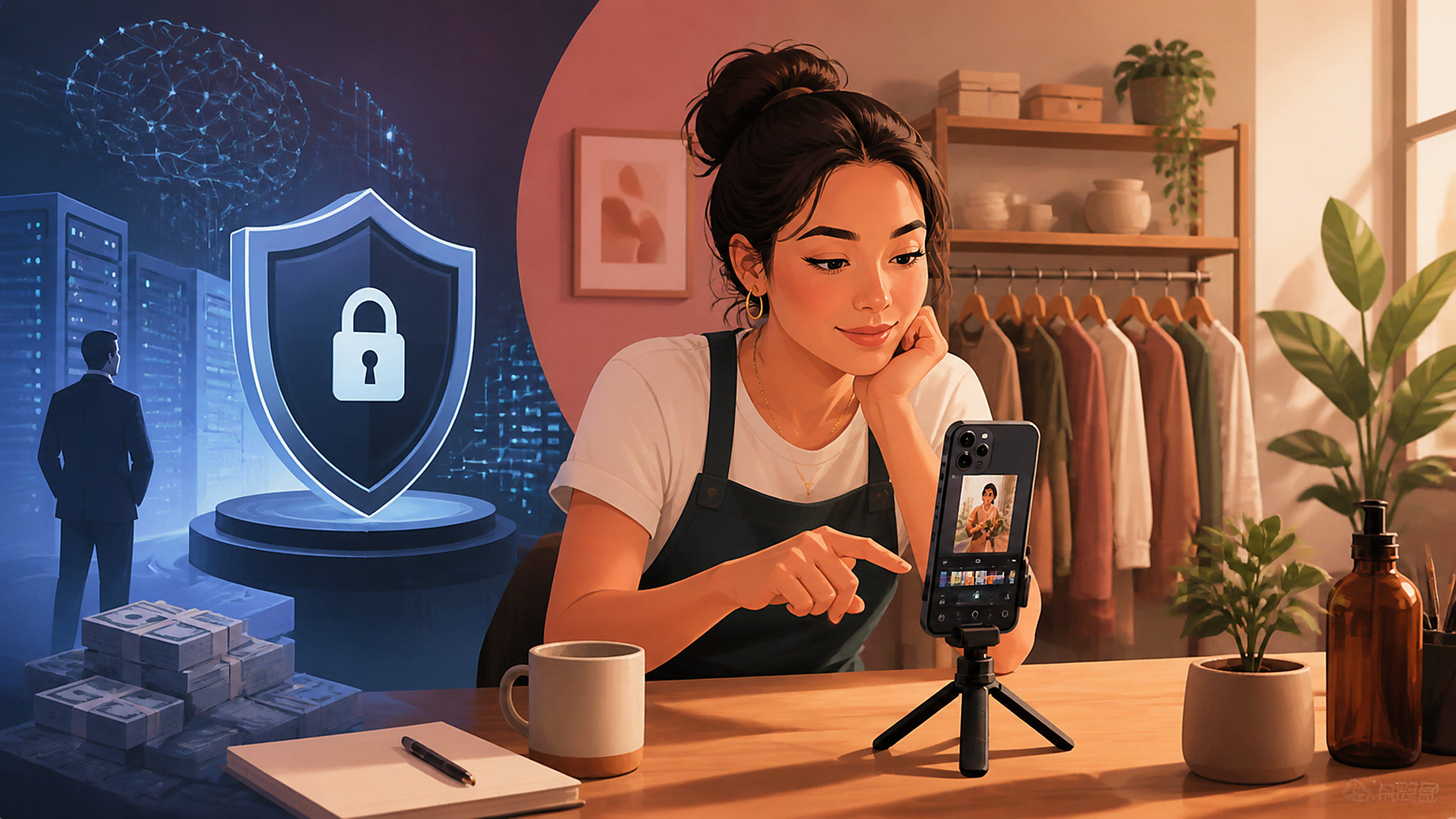
For a large creator with an editor on payroll, that is a nice quality-of-life update. For a small business owner who films a product demo between customers, cooks dinner for their own kids after closing, and only has twenty minutes left to post something before bed, it is closer to removing one real obstacle between having footage and having a published Reel.
This piece walks through what First Draft actually does, what Instagram itself says it does not do, how it compares to the editing tools small businesses already use, and where the real bottleneck for a small business's short-form video still sits, because it usually is not the editing step at all.
🎬 What First Draft Actually Does
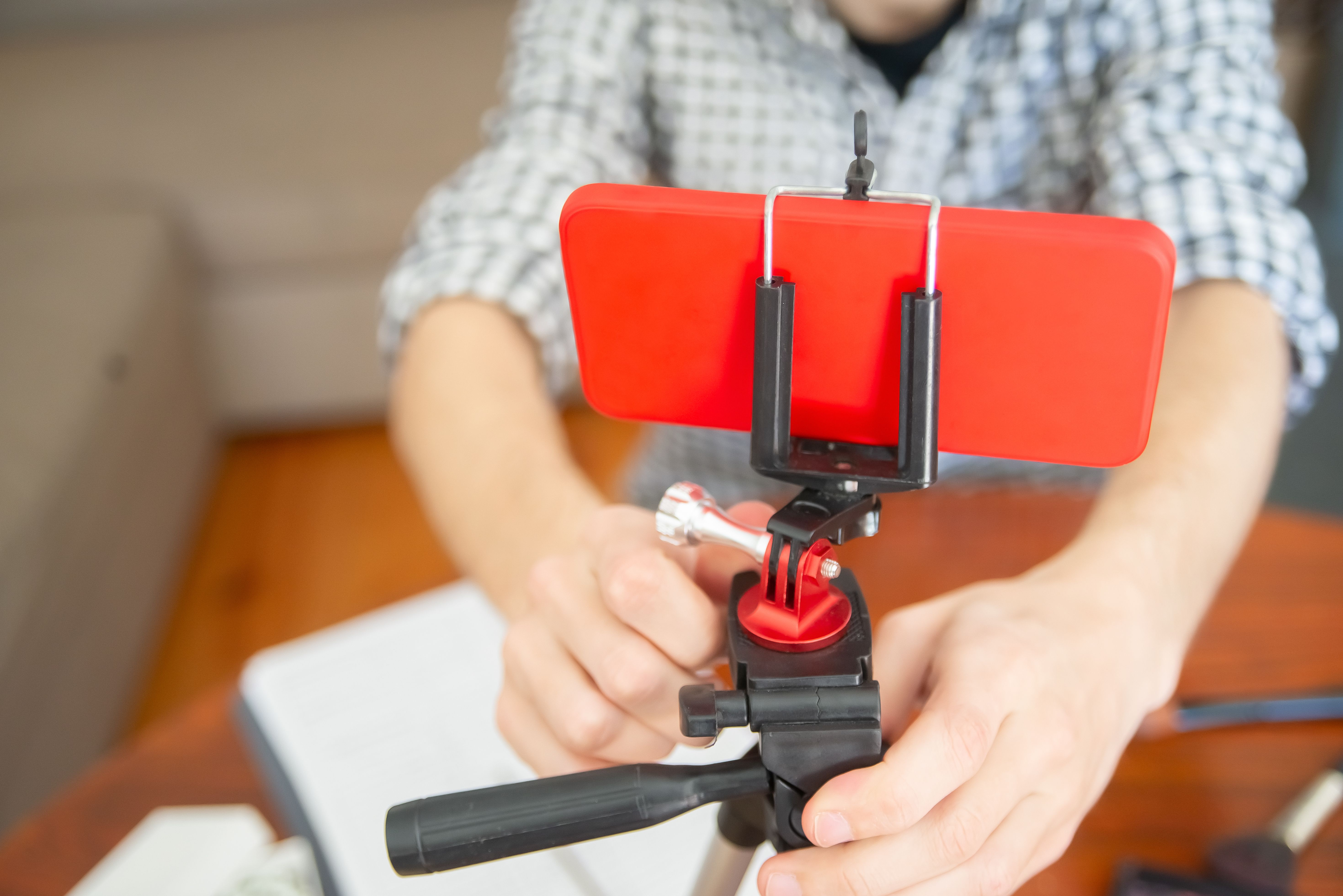
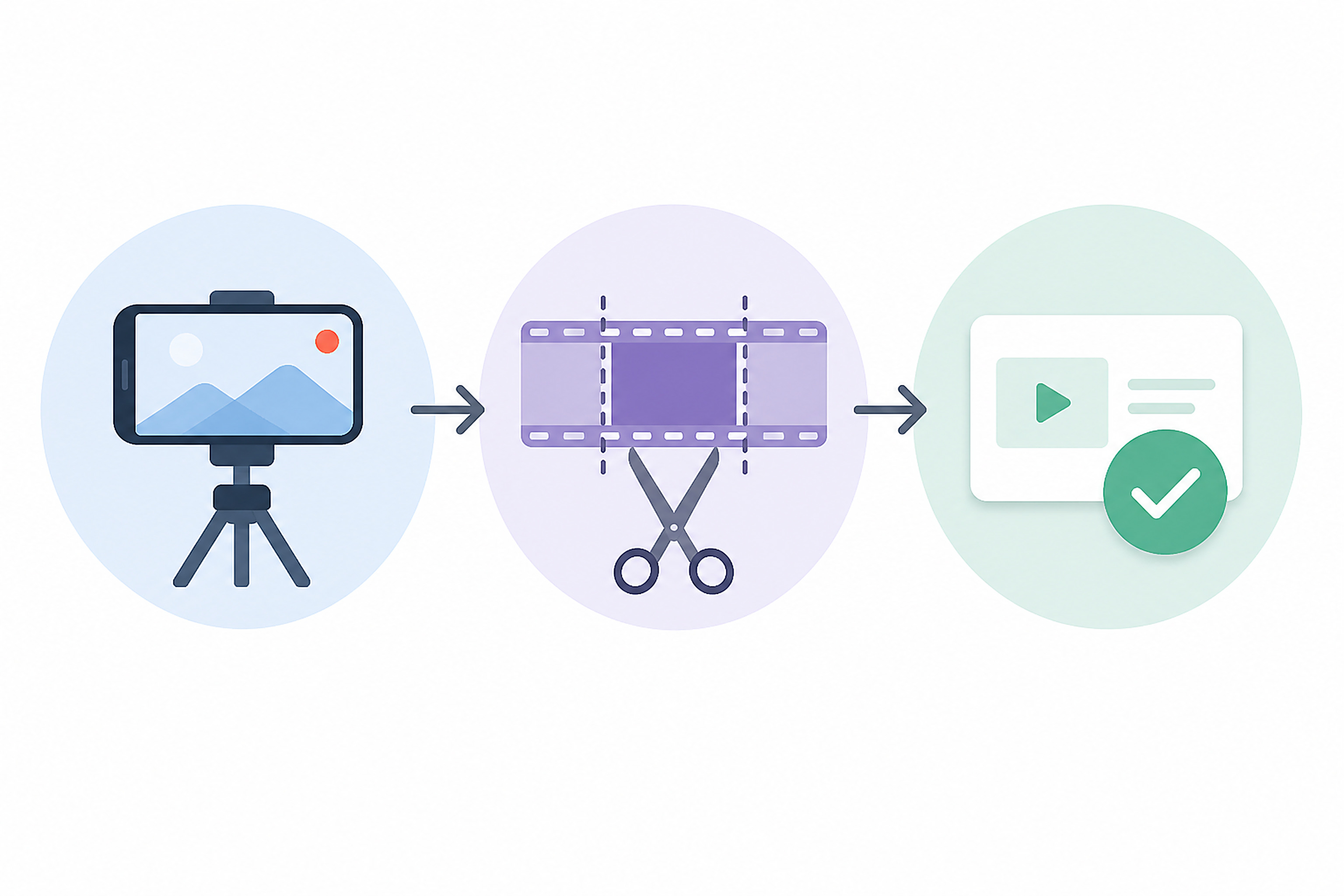
According to Instagram's own announcement and reporting from The Verge, TechCrunch, and Tubefilter, First Draft works like this: a user records or selects several video clips, each of which can run more than a minute long, then taps the "First Draft" button. Instagram's system analyzes the clips, trims out pauses and dead air, and stitches the remaining segments into a single rough cut. Instagram says the whole process can finish in under ten seconds. The result lands directly in the standard Reels editor, where a creator can reorder clips, delete a segment, change the length, add music, or throw the whole draft away and start over. Every automated decision is reversible.
The feature targets three specific formats by Instagram's own description: multi-clip montages, talking-head videos, and day-in-the-life content. Those three categories cover a large share of what a small local business actually films: a stylist walking through three finished haircuts back to back, a café owner talking straight to camera about a new menu item, or a full afternoon condensed into a quick vertical recap. First Draft is reachable from two places inside the Instagram app: the camera screen while recording, or the Reels gallery after selecting more than one existing clip from the camera roll.
The Verge, citing an Instagram spokesperson named Nicole Rechtszaid, reported an unusual detail on August 25: First Draft does not use artificial intelligence. Meta instead classifies the feature internally as "machine learning," a distinction the company appears keen to draw a line under given how much scrutiny Meta's AI products have drawn in 2026. Whatever the internal label, the visible effect for a user is the same: raw footage goes in, an editable first cut comes out, with none of the manual scrubbing through a timeline that usually precedes it.
📱 A Narrow but Deliberate Rollout
First Draft is currently only available on Instagram for iPhone. Instagram has not announced a date for Android availability, and the company has also not integrated the feature into Edits, its standalone video app that competes more directly with CapCut. That is a specific choice, not an oversight. Tubefilter's coverage on August 25 connects the decision to Instagram's broader push against reposted content: the platform has spent 2026 boosting original Reels in its recommendation system while suppressing reposts pulled in from other apps. Keeping First Draft inside the core Instagram app, rather than in a separate editor whose output could be exported anywhere, keeps that original-content workflow closer to a single loop that starts and ends on Instagram.
For a small business, the iOS-only limitation matters in one concrete way: whoever manages the account needs to check which phone actually shoots the footage. If the business runs its Instagram from an Android device, or if different staff members alternate phones for filming, First Draft simply will not be there yet. That is worth confirming before building a workflow around a feature that half the team cannot open.
⏱️ Why the Ten-Second Number Matters More Than It Sounds
Ten seconds is a marketing number, and it describes the automated trimming step only, not the whole process of planning, filming, captioning, and publishing a Reel. Still, the number points at something real. Manual clip trimming is one of the most commonly cited reasons small accounts stop posting video consistently. Instagram itself said as much in its own framing, describing manual editing as "tedious and frustrating" for creators, a phrase quoted by Mashable and echoed across nearly every outlet that covered the launch.
That framing lines up with what the data says about how much video posting actually matters for a small account's reach. According to Socialinsider's 2026 analysis of 140,000 Instagram Reels posted by business pages between January and June, Reels generate the highest reach rate of any format for accounts below 50,000 followers, topping out around 9.78 percent for accounts in the 1,000 to 5,000 follower range, compared with 8.80 percent for carousels and 7.00 percent for static images in the same tier. The same study found that Reels between 30 and 60 seconds produce the strongest reach, at 5.60 percent on average, while anything past two minutes drops to roughly 3.50 percent. Posting frequency also scales with account size: the smallest brands in the dataset averaged 8 Reels a month, rising to 20 a month for accounts above 100,000 followers.
None of those numbers change because of First Draft. What might change is whether a small account with limited staff time can actually hit even the lower end of that posting cadence. If the editing step used to consume forty minutes per Reel and now consumes five, a business that could only manage two Reels a week might realistically manage four or five. Socialinsider's data suggests that gap is not trivial: reach rate for the 1,000 to 5,000 follower tier is roughly forty percent higher than the 50,000 to 100,000 tier, meaning the accounts with the least production capacity are also the ones with the most reach to gain from posting more consistently, provided the content stays worth watching.
🎯 What First Draft Does Not Solve
Every report on First Draft, including Instagram's own Threads post, frames it as a starting point, not a finished product. That framing carries a real limitation for a small business: the tool trims footage that already exists. It does not decide what to film, does not write a hook, does not choose music, and does not know whether the finished Reel says anything a customer would care about. Retensis's 2026 Reels benchmarking data makes the size of that gap clear. On Reels under 15 seconds, a strong view-through rate is above 70 percent, meaning most of the audience that starts watching needs to stay through nearly the whole clip within the first few seconds or the algorithm and the viewer both move on. No automatic trimming tool decides whether the first three seconds of a business's Reel earns that attention. A business owner or whoever manages the account still has to decide that, every time.
This is where a genuine trap sits for small businesses adopting any new content tool: mistaking a production-speed improvement for a strategy improvement. A faster edit of a boring clip is still a boring clip, just published sooner. HiKit Studio's 2026 guide on short-form video for small business puts a number on the actual driver of performance: 71 percent of marketers surveyed rank short-form video as the highest-ROI content format, compared with 22 percent for long-form and 6 percent for live video, and the guide is explicit that consistency, not editing polish, is what separates accounts that grow from accounts that stall. A steady three-times-a-week schedule that never breaks reliably outperforms a burst of daily posting followed by two weeks of silence, because every platform's recommendation system rewards accounts that keep showing up on a predictable rhythm.
🔍 Reading the Fine Print: What "Reversible" Actually Guarantees
Instagram's Threads announcement makes a specific promise worth taking apart: "Everything First draft does is reversible, you can adjust or reorder anything before moving on." That sentence is doing real work. It means First Draft is not a black box that publishes on your behalf; it hands control back to the creator at the exact point where a human still needs to make judgment calls. For a small business, this distinction separates a genuinely useful tool from a risky one. An automated system that publishes without review could, in theory, cut a sentence mid-thought, remove a moment a client specifically asked to be included, or trim a demonstration in a way that makes a product look worse than it is. A reversible rough cut avoids that risk entirely, because nothing goes live until a person looks at it.
That said, "reversible" describes what happens inside the Reels editor after First Draft runs, not what happens to the original footage. Instagram has not published documentation clarifying whether the source clips used to build a First Draft are retained, cached, or processed off-device, and none of the outlets that covered the launch (The Verge, TechCrunch, Tubefilter, Mashable) reported technical detail on that point. A small business filming customer interactions, minors on premises, or proprietary product details should apply the same judgment to First Draft that it would to any other in-app processing feature: assume footage is analyzed by Instagram's systems, and avoid filming anything in a First Draft-eligible clip that would be a problem if it were reviewed by someone other than the intended audience.
🧾 The Accessibility Angle Instagram Is Not Emphasizing Loudly
Ground News and Mashable both picked up a detail worth surfacing here: Instagram told press that First Draft is designed partly with accessibility in mind, helping creators who find manual timeline-scrubbing physically or cognitively difficult. That framing rarely makes headlines next to the flashier "ten seconds" claim, but it matters for a segment of small business owners who run their own accounts single-handedly, often after a full day of unrelated physical work, with limited time or energy left for fine-motor editing tasks late at night. A tool that removes a repetitive, precise manual task lowers the bar for who can realistically keep a Reels schedule going, not just how fast an experienced editor can work.
🧮 What the Reach Data Says About Consistency Over Cleverness
It is worth returning to the Socialinsider dataset in more detail, because it directly answers the question a small business owner actually cares about: does posting more Reels, faster, translate into more reach. The answer from the 140,000-post analysis is a qualified yes, with an important asterisk. Reach rate by account size shows a clear downward slope as follower count rises: 9.78 percent at 1,000 to 5,000 followers, 7.55 percent at 5,000 to 10,000, 7.10 percent at 10,000 to 50,000, and 5.60 percent at 50,000 to 100,000. That slope means smaller accounts are, proportionally, reaching a larger share of their existing audience per Reel than larger accounts do, which is the opposite of the assumption many small business owners carry that "nobody sees us because we are small." The bottleneck for a small account is rarely the algorithm actively suppressing it; it is usually the volume and consistency of what gets posted at all.
Skip rate tells a related story. Socialinsider found that skip rate is inversely related to account size: the smallest accounts (1,000 to 5,000 followers) saw a 65.50 percent skip rate on average, while the largest tracked tier (100,000 to 1 million) saw 60.50 percent. Larger accounts benefit from prior brand recognition that keeps a viewer watching a beat longer before scrolling past. A small account does not have that cushion yet, which makes the first three seconds of every Reel disproportionately important relative to a bigger competitor's account. No editing tool, automated or manual, changes what a viewer decides in the first three seconds. That decision is made by the idea, the framing, and the hook line, all of which happen before First Draft or any editor ever touches the footage.
🏪 A Concrete Example: How a Local Business Might Actually Use This
Consider a small café that wants to post a Reel about a new seasonal drink. Under the old workflow, the owner might film ten separate takes of themselves describing the drink, plus five clips of the preparation process, then spend thirty to forty minutes that evening scrubbing through all fifteen clips to find the three usable segments, trimming dead air between sentences, and stitching them together in a timeline editor before adding a caption and posting close to midnight, often skipping the post entirely on busier days.
With First Draft, the same owner could film the same fifteen clips, tap First Draft once, and receive a rough sequence in roughly the time it takes to make a cup of coffee. The owner would still need to watch the result, decide whether the sequence actually explains the drink in an order that makes sense, remove any clip that reads awkwardly out of context, and write a caption that gives a customer a reason to visit. That remaining work, arguably the most important part, takes ten to fifteen minutes rather than zero, which is the honest way to describe what First Draft saves: it removes the mechanical middle step, not the thinking on either side of it.
🧩 How First Draft Fits Against Other Editing Options
Instagram is not introducing something without precedent. The Verge and multiple outlets compared First Draft to Adobe Firefly's Quick Cut, which similarly assembles a rough edit from raw clips, though Adobe's tool works from a text prompt rather than a single tap and is explicitly marketed as AI-powered. CapCut, widely used by small businesses already, has offered auto-cut and template-based editing for longer, and remains available cross-platform on both iOS and Android, unlike First Draft's current iPhone-only release.
The practical comparison for a small business owner comes down to where the footage already lives and how much manual polish the final Reel needs. A business that shoots on iPhone, wants a fast rough cut, and plans to publish quickly with minimal extra editing gets real value from staying inside First Draft and the native Reels editor, since it removes an app-switching step entirely. A business that wants heavier branding, text overlays, or a specific look built from a template will likely still reach for CapCut or a similar dedicated editor regardless of what First Draft offers, because First Draft's stated job stops at the rough cut.

🗓️ Where First Draft Sits Among Instagram's 2026 Creator Tools
First Draft is not an isolated release. Ground News and Tubefilter both place it in a sequence of creator-facing updates Instagram has shipped through 2026, following a Replace Audio feature launched on July 21, 2026, that lets creators swap the music or sound on already-published feed posts and carousels without deleting and reuploading them, and a feature called Series still in testing, which lets creators group related Reels into a defined viewing order. Instagram has also been developing a separate AI assistant for its standalone Edits app, distinct from First Draft's non-AI trimming.
Notably, First Draft's announcement landed on the same day Instagram head Adam Mosseri was expected to testify in a high-profile social media addiction trial against Meta, according to TechCrunch's August 25 report. The lawsuit accuses Meta of designing Instagram and Facebook to encourage compulsive use among younger users, allegations Meta has rejected. The timing of the announcement, whether coincidental or not, does not change what the feature does or how a small business might use it, but it is a useful reminder that platform features and platform controversies move on separate, sometimes overlapping, tracks.
✅ A Practical Posting Plan for a Small Business Right Now
Given what First Draft is and is not, a workable approach for a small business team without a dedicated editor looks something like this:
- Treat filming, not editing, as the step that most determines whether a Reel performs. Spend planning time on what the first three seconds show and say, since that decision still belongs entirely to a human and nothing about First Draft changes it.
- If the account is run from an iPhone, film in short segments rather than one long unbroken take, since First Draft is built specifically to work across multiple clips rather than trimming a single continuous recording.
- Treat the First Draft output as a genuine rough cut, not a finished post. Watch it back before publishing, check that the trimmed sequence still tells a coherent story, and add a caption and any text overlay the automated trim cannot know to include.
- If the team runs on Android or needs heavier branding, keep using CapCut or a comparable app rather than waiting on a feature that is not confirmed for that platform.
- Measure against the actual reach data rather than gut feeling. Socialinsider's tier benchmarks put a small account's meaningful reach target above 8 percent engagement for under 1,000 followers, above 5 percent for the 1,000 to 10,000 range, and above 3 percent for 10,000 to 100,000, with view-through above 55 percent on clips under 15 seconds.
A tool that shortens editing time is only useful if that saved time gets reinvested into hitting those numbers more consistently, not simply into publishing more low-effort clips at the same rate as before.
💡 What This Means for the Reader
First Draft removes a real point of friction, and Instagram's own framing of the tool as a starting point rather than an answer is accurate. Editing speed was never the hardest part of building an audience on Reels; showing up consistently with something worth watching always was, and that has not changed. A small business that uses the extra time First Draft frees up to film one more idea a week, rather than to skip the review step before publishing, is the business likely to see the difference in its numbers over the next few months.

Sources: Instagram (@creators, Threads, August 25, 2026); The Verge; TechCrunch; Tubefilter; Mashable; Ground News; Telset.id; Socialinsider Instagram Reels Statistics 2026; HiKit Studio Short-Form Video Marketing for Small Business 2026; Wikimedia Commons.