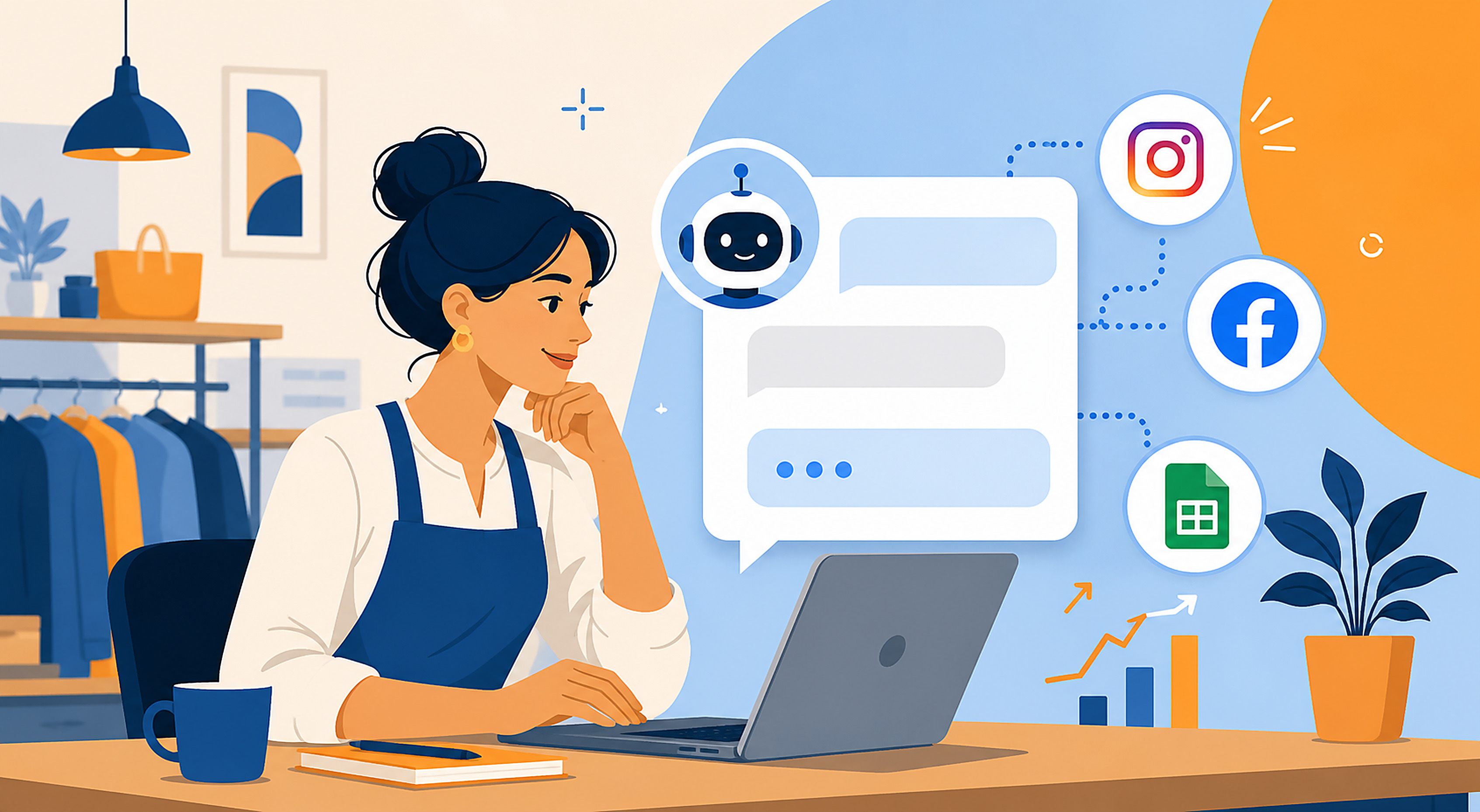
Meta AI can now read your Instagram engagement numbers, dig through your Meta ad campaigns, and open a Google Doc, all inside a single chat window. The company started rolling this out on August 20, 2026, and it changes what a one-person marketing team can reasonably do before breakfast.
The update matters most for businesses that never had a dedicated analyst. Until now, checking whether a Reel actually drove sales meant opening Meta Business Suite, exporting a spreadsheet, and squinting at numbers that rarely lined up with what showed in Google Analytics. Meta's pitch is that the assistant now sits across those systems and answers directly, in plain language, inside the same app people already use to post.
🔑 Key Takeaways Before the Details
- Meta AI can now connect to Instagram, Facebook, Meta Ads, and Google Workspace at once, and answer direct questions about what content and campaigns are working.
- The update, announced August 19-20, 2026, ships alongside a new Meta AI desktop app for Mac with system-wide dictation and screen-context awareness.
- Early business testers say the value is specificity: answers drawn from a business's own posts and ad history, not generic marketing advice.
- The free tier is explicitly described by Meta as a starting point; deeper usage will eventually sit behind a Meta One subscription.
- Meta AI is now advising businesses how to spend more efficiently on Meta's own ad platform, a structural conflict worth tracking against real profit, not just platform-reported metrics.
📣 What Meta Actually Announced
On August 20, 2026, Meta published "New Meta AI Features for Small Businesses" on its Meta for Business newsroom, confirming a staged rollout across meta.ai, the Meta AI mobile app, and a brand-new Meta AI desktop app for Mac. TechCrunch reporter Ivan Mehta covered the release the same day, describing it as part of a broader push that also introduced system-wide dictation on the new Mac app, comparable to tools like Wispr Flow and Superwhisper.
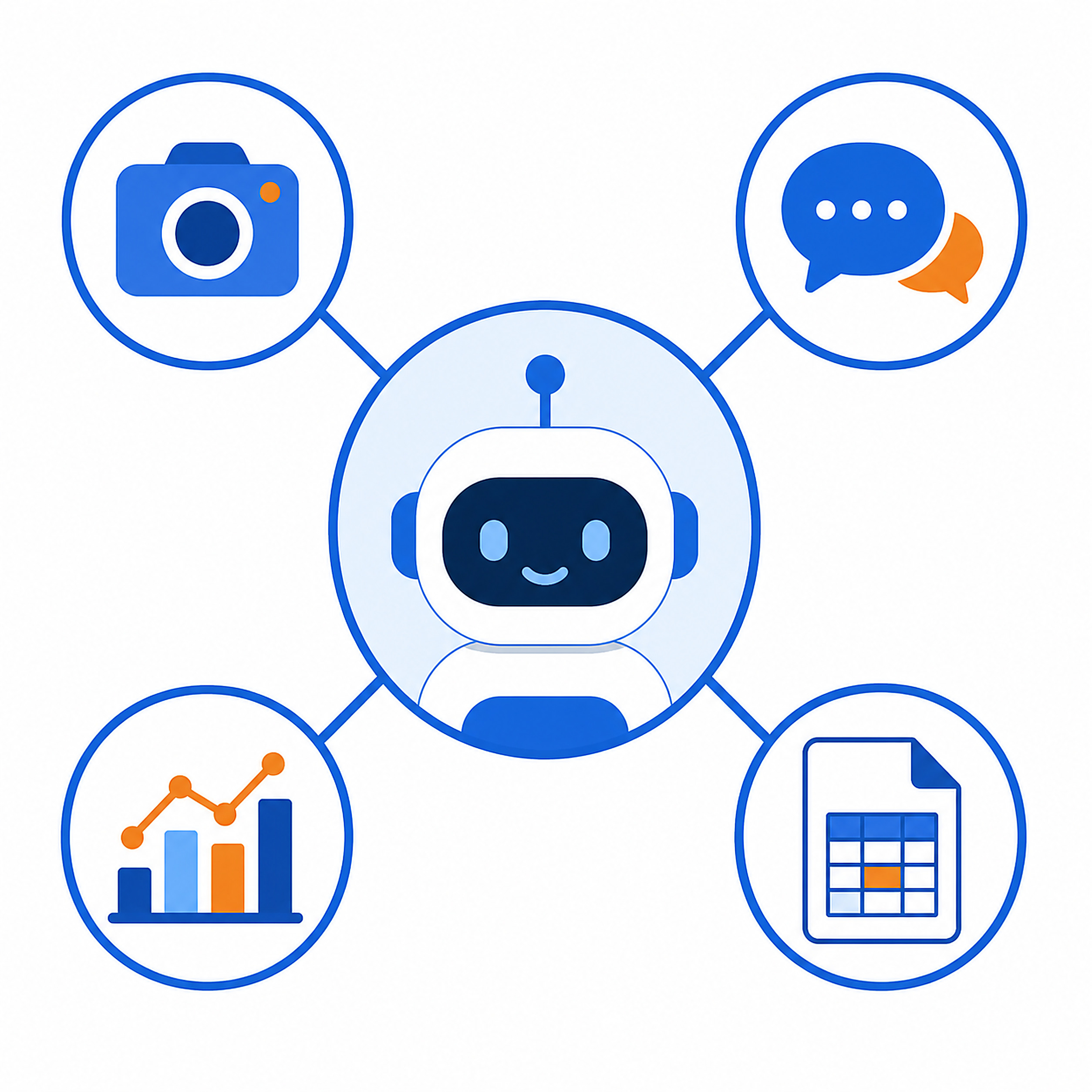
The headline capability is connection, not generation. Business owners can now link Meta AI to four sources at once: their Instagram and Facebook accounts, their Meta ad campaigns, and Google Workspace, covering Gmail, Docs, Sheets, and Slides. Once connected, the assistant can be asked direct questions such as which posts performed best last month, or which ad sets are quietly burning budget without returning results.
Search Engine Land's paid media coverage on August 20 called this "a new AI-powered tool for understanding performance and identifying potential campaign changes," while noting the obvious tension: Meta AI is now advising businesses on how to spend more efficiently on Meta's own ad inventory, which is also where Meta makes its money.
Multiple outlets confirmed the same rollout window independently. Dataconomy, PC-Tablet, and marketing trade publication Passionate in Marketing all published coverage on August 20, each quoting the identical Meta phrasing that the update is "just the beginning," which suggests Meta distributed a single press briefing rather than letting the story leak piecemeal.
🧮 Four Things The Assistant Can Actually Do
Meta's own documentation, corroborated by Search Engine Land's writeup, breaks the update into four practical capabilities rather than one vague "AI powered insights" claim.
- Organic content analysis. The assistant reviews reach, saves, shares, comments, and profile visits, then explains what is resonating and suggests what to try next. Meta's own example prompt is telling: "What types of content have worked best for my Instagram account over the last month? Send me a report every Monday."
- Competitive benchmarking. Business owners can ask Meta AI to compare their organic performance against five comparable brands using publicly available engagement data, and get a plain answer about whether they are ahead or behind.
- Ad campaign optimization. Meta AI reviews up to 90 days of ad performance, flags which audiences are delivering results, identifies creative that has stopped working, and points to where budget might be reallocated.
- Report generation. Any of the above can be turned into a deck, document, or spreadsheet automatically, which Meta frames as cutting the busywork of turning raw analysis into something a small team or a client can actually read.
Dataconomy's coverage on August 20 described the feature set plainly: an AI-powered assistant "aimed at small and medium-sized business owners, enabling them to integrate data from Facebook, Instagram analytics, Meta Ads, and Google Workspace into Meta AI."
🧑💻 Why the Desktop App Is Part of the Same Story
The Mac app is not a side release bundled in for headline count. Reporting from TechCrunch places it inside the same announcement, and for a reason that matters to how small teams actually work: it adds system-wide dictation across every application, and it can look at whatever window a user shares to give advice based on the actual screen content rather than a typed description of it.
That detail is easy to skip past, but it changes a real workflow. A shop owner reviewing a spreadsheet of weekly sales no longer has to describe the numbers to an assistant in a chat box; they can share the window and ask what stands out, in the same way a colleague looking over their shoulder would. Google made a similar move last month, adding system-wide dictation to its Gemini app on Mac, so this is now a competitive feature race between the two companies rather than a novelty either one can claim alone.
The practical effect for a small business owner without technical staff is a lower floor for asking a useful question. Instead of learning where a specific report lives inside Meta Business Suite, the owner can open the desktop app, share the screen, and ask what a number means. That shift, from navigating a dashboard to describing a problem in plain language, is the same trend visible across most consumer AI tools this year, just arriving later for small-business analytics than it did for writing or coding assistance.

💬 What Meta Says Small Businesses Told Them
Meta published early feedback from businesses that tested the features before the public rollout, and the quotes are worth reading closely rather than skimming as marketing filler. A growth marketing lead at a company called Repriced said the assistant "gave me a comprehensive breakdown of my ad performance in seconds," and that the output felt "data-driven, actionable, and surfaced insights that would've taken me much longer to pull together on my own."
A photography business owner, Sandy P. of Wild Prairie Photography, made a more specific claim worth sitting with: that other AI tools always produced advice that "felt like it was written for anyone," while Meta AI's answers referenced her actual clients and existing style because it could see her own content history. Katey H., CEO of skincare brand Nocturnal Skincare, framed the value differently, pointing at setup friction rather than output quality: "you'd be surprised how much time gets lost just getting AI tools ramped up on your business, downloading, converting, re-uploading, and they still miss things."
That distinction between generic advice and account-specific advice is the entire value proposition here. A small business does not need another chatbot that can explain what engagement rate means in the abstract. It needs one that already knows its own engagement rate, its own audience, and its own posting history well enough to say something specific about it.
🏪 What This Means for a Business Without a Marketing Team
Most small businesses running a Facebook Page or Instagram Shop do not have anyone whose job is purely to interpret analytics dashboards. The person managing the account is usually also managing inventory, answering customer messages, and running the register. That is precisely the gap Meta is aiming this feature at, and it lines up with a pattern Meta has followed for years: building tools that assume the business owner is doing five jobs at once, not one.
There are three ways this update is likely to matter in practice:
- It lowers the cost of finding out what content actually drives sales, replacing manual spreadsheet exports with a direct question inside the same app used to post.
- It gives non-specialist owners language they can use with an outside marketing contractor or agency, since the assistant already frames insights in plain business terms rather than raw metrics that need translation.
- It nudges more ad-spend decisions toward Meta's own recommendation engine, which is useful when the recommendations are accurate, and expensive when they are not independently checked against actual profit, not just platform-reported clicks or reach.

🌏 Why This Lands Differently for Indonesian UMKM
Indonesian small and medium businesses, commonly grouped under the UMKM label, are unusually dependent on exactly the platforms this update touches. Instagram Shop listings, Facebook Marketplace posts, and WhatsApp-based order taking already function as the primary storefront for a large share of home-based and micro-retail sellers, often standing in for a dedicated e-commerce website. A tool that reads Instagram and Facebook performance data and turns it into a plain-language answer is aimed squarely at that audience, even though Meta's announcement did not mention Indonesia specifically.
The timing also overlaps with Meta's separate WhatsApp Business Agent rollout, referenced in TechCrunch's coverage of the same announcement, which made automated customer-support agents for WhatsApp Business available globally earlier this year. Combined, the two moves point at the same strategic direction: Meta wants to be the operating layer for a business that primarily talks to customers over chat, not the one that maintains a standalone website and a separate analytics stack. For UMKM owners weighing where to invest limited time, that makes the platform-native option more convenient in the short term and more worth watching carefully in the long term, since convenience and independence are not the same thing.
A business that outsources its entire understanding of "what's working" to a single platform's AI assistant is also outsourcing its incentive structure to that platform. A website the business actually owns, with its own analytics and its own audience relationship, remains the one channel where a shift in Meta's algorithm, pricing, or product roadmap cannot quietly reset the business back to zero.
⚠️ The Limits Worth Naming
Meta is transparent about one thing in its own announcement: these features are being introduced gradually, described explicitly as "just the beginning," and the more advanced usage tier will eventually require a Meta One subscription, even though the initial rollout is free. Businesses should expect the free tier to be a preview of a paid product, not a permanent free upgrade, and should plan their workflow accordingly rather than building a process around a feature set that may shrink once the subscription wall goes up.
There is also a structural conflict of interest that neither Meta nor its early reviewers avoided naming outright. Search Engine Land's own framing put it plainly: Meta AI is advising businesses how to spend more efficiently on Meta's own advertising platform. A recommendation to increase ad budget on a particular audience segment benefits the advertiser only if it genuinely improves return on spend, and it benefits Meta either way, regardless of whether the advertiser's margin improves. Any business acting on these suggestions should still track real conversions and margin against a separate ledger, not just the metrics the assistant surfaces first inside its own report.
Google Workspace access also means granting a third-party AI assistant read access to business email, documents, and spreadsheets. That is a meaningful permission to hand over, and it deserves a deliberate decision about what specifically gets connected rather than a reflexive "allow all" click during onboarding. A business handling sensitive supplier pricing, customer personal data, or financial records inside Google Sheets should treat that connection request the same way it would treat handing a new employee full inbox access on day one: useful, but worth a conversation about scope first.
📊 A Quick Comparison: Before and After
Before this update, a small business owner trying to understand performance across channels typically had to move between three or four separate interfaces: Meta Business Suite for organic reach, Meta Ads Manager for campaign spend, a spreadsheet for tracking both over time, and a search engine or industry blog for competitive context. Each step introduced a chance to lose the thread, misread a metric, or simply run out of time before finishing the review.
After this update, in theory, all four steps collapse into one conversation. The owner asks a single question, and the assistant pulls organic metrics, ad metrics, competitor context, and turns the answer into a document if needed. Whether that theoretical simplification holds up in daily use depends on data accuracy the assistant has not yet been independently audited for outside of Meta's own early tester quotes, which is exactly why treating the tool as a starting point for a decision, rather than the final word on one, remains the responsible approach during this early rollout period.
🧭 How This Fits Meta's Wider AI Push in 2026
This announcement did not arrive in isolation. TechCrunch's coverage links it directly to two earlier 2026 moves: the global rollout of Meta's WhatsApp Business AI agent for automated customer support in June, and comments from Mark Zuckerberg during the company's Q2 2026 earnings call, where he described selling AI agents to businesses and automating work on their behalf as a major opportunity for Meta going forward. Read together, the pattern is a company building an entire operating layer around business messaging and business analytics, not a single isolated feature drop.
That context matters for judging how permanent this specific update is likely to be. Features Meta treats as strategic priorities tend to get expanded and defended even when early versions are rough. Features treated as one-off experiments tend to quietly disappear within a year. Given the explicit framing from Meta's own newsroom post, plus the corroborating detail from Zuckerberg's earnings call, this reads as the former: an early step in a multi-year plan rather than a novelty announcement timed for a slow news week.
🧾 Reading the Coverage Critically
It is worth noting what almost none of the initial coverage did: independently test the accuracy of Meta AI's analysis against a known dataset. Every outlet that reported on this update, including TechCrunch, Search Engine Land, and Dataconomy, relied on Meta's own announcement and Meta's own selected customer quotes rather than a hands-on benchmark against actual account data. That is a normal limitation of day-one tech reporting, not a criticism unique to this story, but it means the specific accuracy of the assistant's recommendations remains an open question that will only get answered once independent marketers and agencies spend real time testing it against accounts they already understand deeply.
For a business owner deciding whether to trust the tool immediately, that gap is the practical reason to treat the first few weeks as a trial period rather than a wholesale replacement for existing analytics habits. Keep whatever spreadsheet or dashboard review process already exists in place for at least a month while cross-checking it against what Meta AI reports for the same period.
🚀 What a Small Business Should Actually Do This Week
Businesses running active Instagram, Facebook, or Meta ad accounts do not need to adopt every feature at once. A reasonable first step is connecting only the organic content analytics, asking for one month of performance review, and comparing that answer against what the business owner already believes is working from lived experience running the account. If the assistant's read matches that experience, the ad-optimization and Google Workspace connections become worth testing next, one at a time rather than all together.
If it does not match, that mismatch is itself useful information about what the account's own analytics are actually measuring, and worth investigating before trusting a bigger decision, like a shifted ad budget, to the same source. An owner who notices the assistant consistently underweights word-of-mouth referrals, for instance, has learned something real about the limits of platform-only data, not just about the tool.
The bigger shift here is not the tool itself. It is that platform-native AI assistants are moving from generic content suggestions toward account-specific, cross-platform analysis delivered inside a single chat window. For a small business owner without a marketing department, that is a genuine reduction in the technical floor required to understand whether an online presence is working, even while the underlying incentive to spend more on Meta's own ads has not gone anywhere, and even while the platform dependency this creates is worth weighing against the long-term value of a business's own website and its own customer relationship. A business that owns its website, its email list, and its own analytics keeps a form of independence that no platform-native assistant, however accurate, is built to hand back.
Sumber: Meta for Business newsroom (August 19, 2026), TechCrunch (August 20, 2026), Search Engine Land (August 20, 2026), Dataconomy (August 20, 2026), dan PC-Tablet (August 20, 2026).