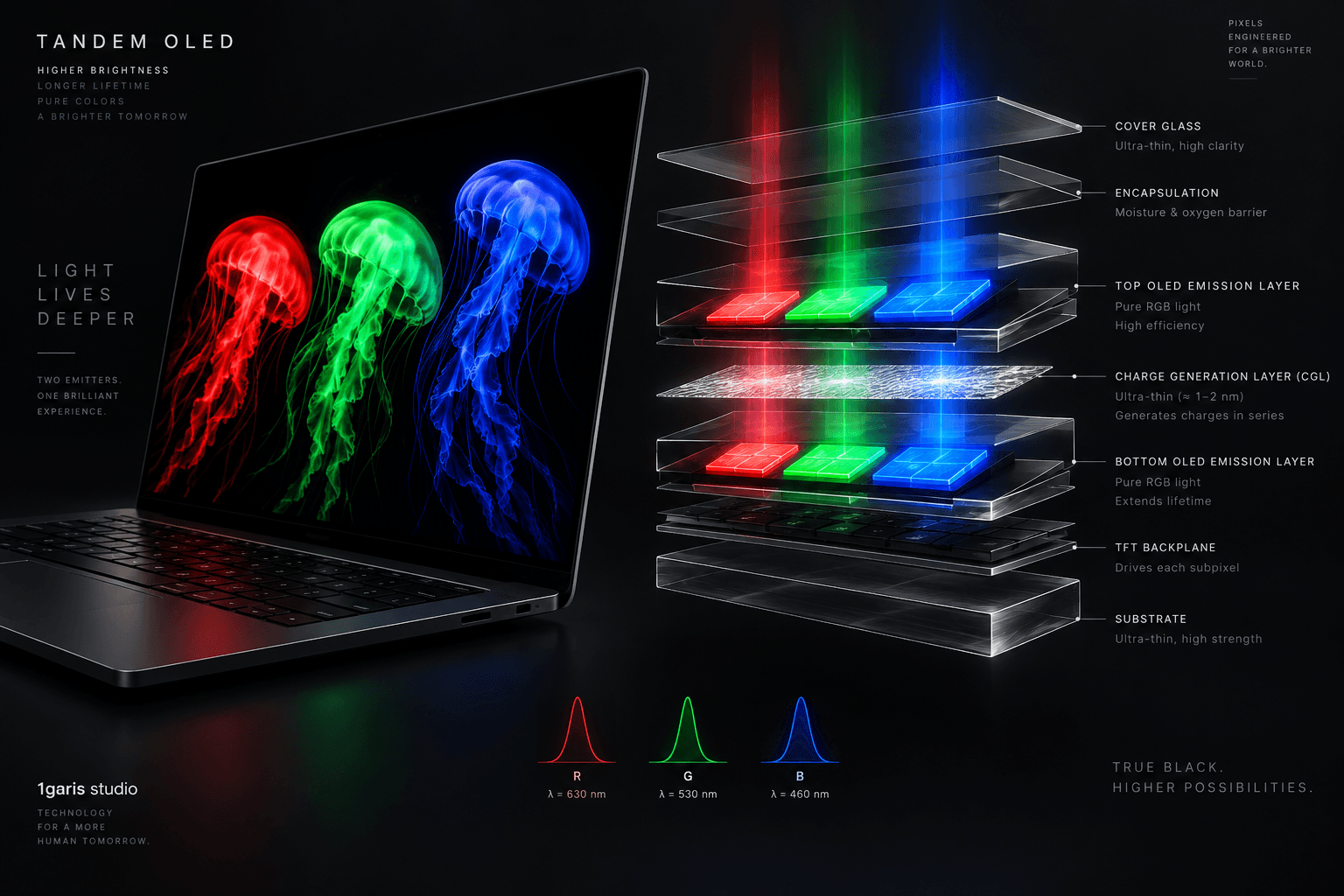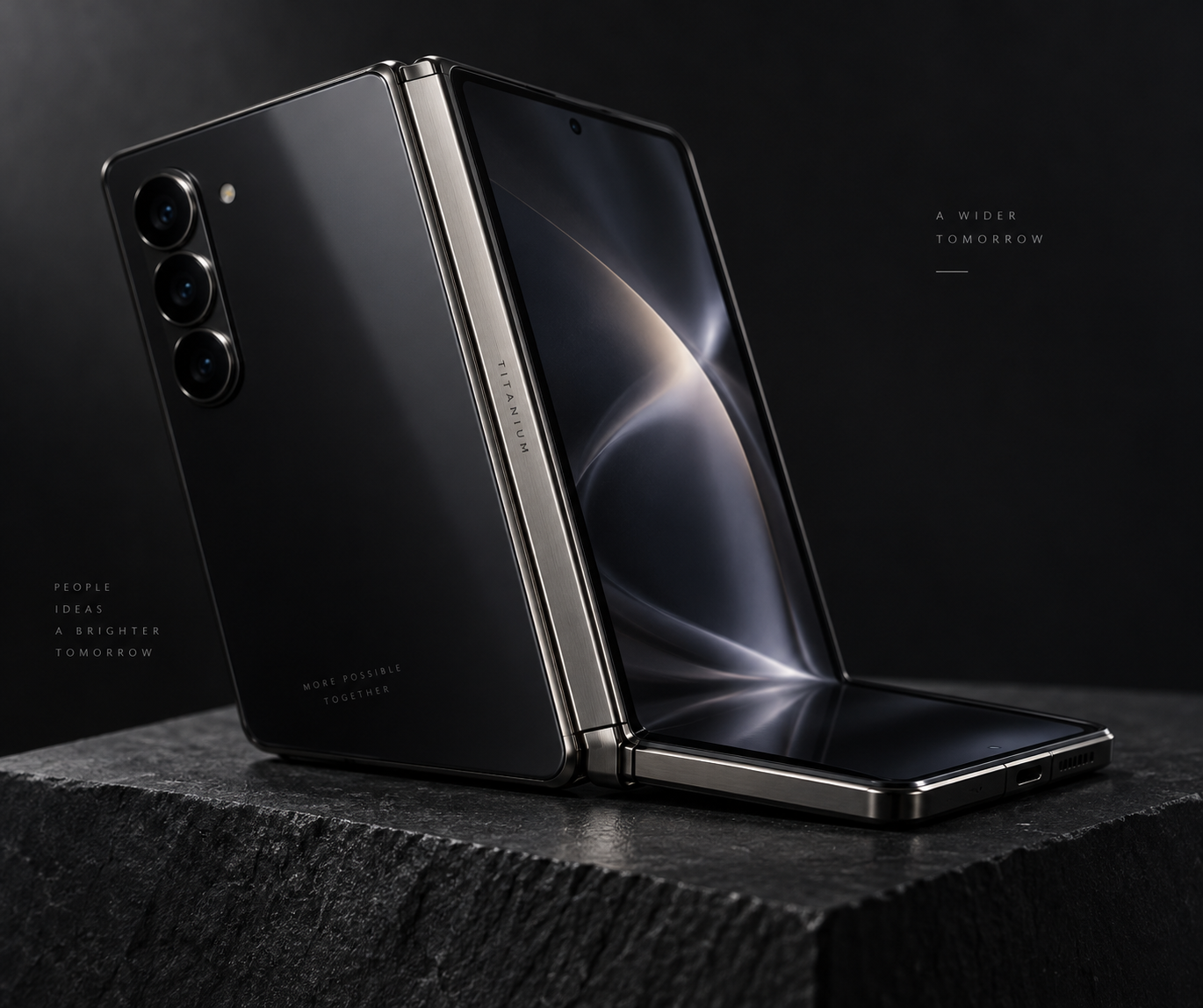
The iPhone Duo has a fingerprint sensor in its side button. That detail is easier to overlook than its folding 7.6-inch display, yet it says something useful about Apple's first foldable iPhone: a new form factor changes familiar habits, even at a starting price of $1,999. Bigger does not mean every interaction stays the same.
Apple announced the device on September 9, 2026, with pre-orders set for October 16 and availability beginning October 23. As of October 8, this is an analysis of the published design and specifications, not a long-term review. The interesting question before ordering is not whether Apple can make a phone fold. It is whether the additional screen will earn its place in your daily routine, alongside the different authentication gesture, display surface, camera arrangements, and care requirements.
📱 A folding iPhone asks for a different kind of purchase
A book-style foldable gives you two working sizes inside one device. In Apple's published design, the outer display measures 5.4 inches diagonally and the inner display measures 7.6 inches. Those numbers describe a physical opportunity, not a guaranteed improvement to every task. Reading a document beside a message could benefit from the larger view. Checking a bus arrival might not justify opening the device at all.
Apple says the outer display provides 90 percent of the screen area of the iPhone 18 Pro, while the inner display is 50 percent larger than the iPhone 18 Pro Max. Screen area matters more than diagonal length for comparing usable space, and a proportionally larger canvas can accommodate content differently. But those comparisons still cannot tell you how large a particular app's text will appear, how much its controls occupy, or whether its layout uses the extra room well.
The US starting price is $1,999 for 256GB. It is a price from Apple's US announcement, not an Indonesian retail quotation or an estimate of import costs. Availability, local taxes, service arrangements, and carrier support must be checked in the market where the phone will be purchased. A price converted with a random exchange rate would add apparent precision without answering those practical questions.
There are several ways to approach that purchase. An enthusiast may value trying a new interaction model. A frequent document reader may have a specific workflow in mind. Someone who wants the best camera for the money may care little about folding. None needs to pretend to be the other. The useful comparison is between devices that solve the same personal problem, rather than between price tags alone.
This article takes that consumer perspective. It does not claim that the Duo is a replacement for a laptop, that its internal design has been independently dismantled, or that Apple has eliminated long-term folding wear. Published descriptions can explain the design choices. Reliability needs observation over time, under conditions a press announcement cannot reproduce.
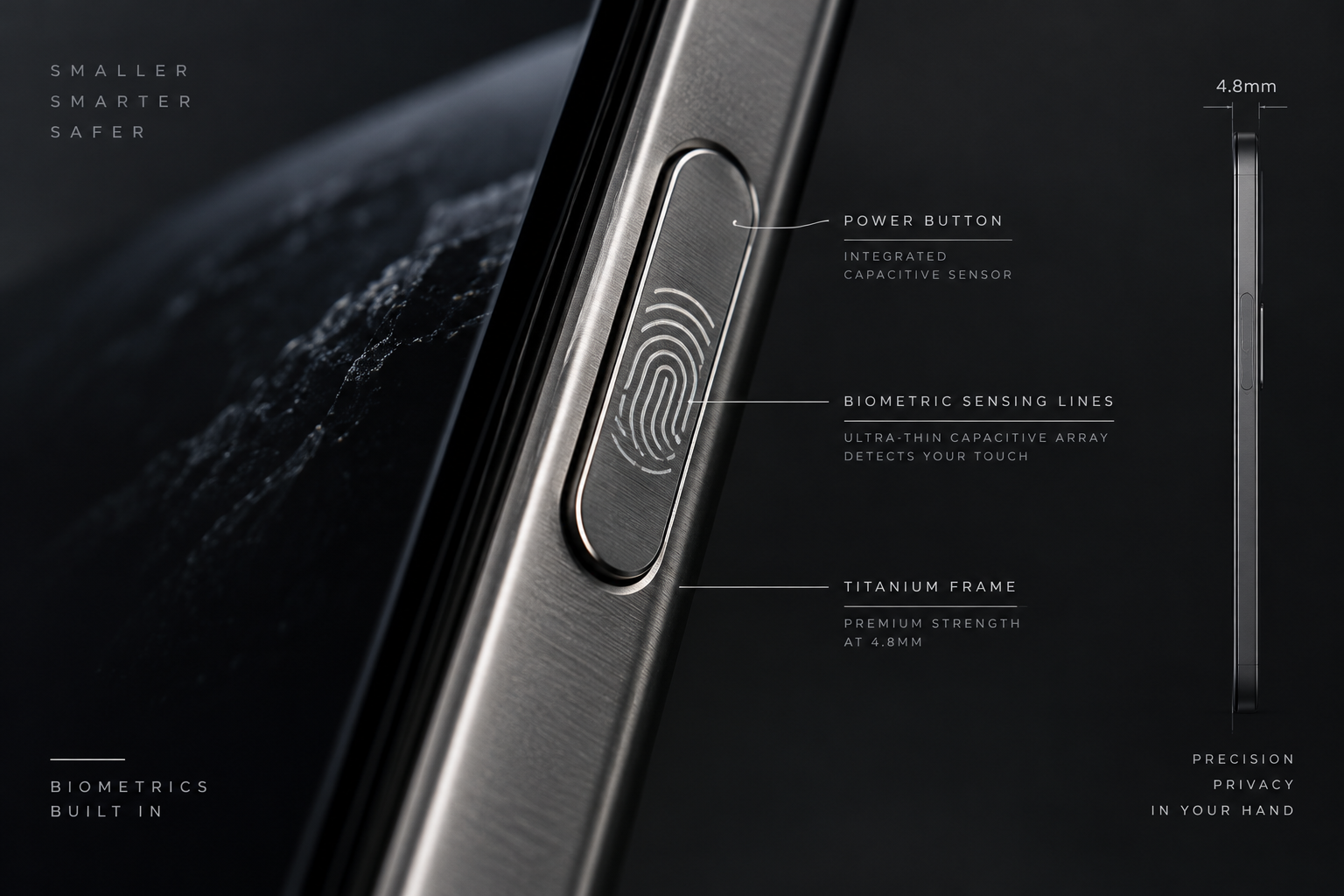
👆 Touch ID changes the gesture, not the need for a passcode
The official specification lists Touch ID built into the side button. Apple's announcement says it offers authentication whether the Duo is open or closed, and also mentions unlocking with an Apple Watch. This is a documented feature choice. Apple does not, in the sources used here, establish that a specific chassis thickness forced the removal of Face ID. Treating that plausible engineering explanation as a confirmed cause would overstate the evidence.
Apple's general Touch ID security documentation describes a capacitive sensor that reads fingerprint detail and creates a mathematical representation for comparison with enrolled data. It says that fingerprint images themselves are not stored. The representation is protected through the Secure Enclave and is not backed up to iCloud or stored on Apple servers. Those are descriptions of the Touch ID security architecture, not independent test results for an unreleased retail Duo.
Face ID uses a different arrangement. Apple's support page describes the TrueDepth system projecting and analyzing thousands of invisible dots, capturing an infrared image, and converting that information into a mathematical representation. A FaceTime camera is therefore not interchangeable with a TrueDepth authentication system simply because both look toward a face. The Duo's under-display FaceTime camera should not be described as hidden Face ID.
For an owner moving from a Face ID phone, the change is partly ergonomic. A glance and a finger contact ask for different motions. The side button may be within easy reach in one grip and awkward in another. Try both closed and open configurations, and try the hand you actually use while carrying a bag. A showroom demonstration performed with two free hands can miss the constraint that matters most outside the store.
A passcode remains necessary. Apple's Touch ID guidance identifies circumstances that require it, including after a restart and after repeated unsuccessful fingerprint attempts. Biometrics make routine access more convenient; they do not eliminate the fallback credential. Choose a passcode you can remember without relying on a predictable sequence, and understand recovery options before trading in the previous phone.
📐 Matching display proportions is a software decision too
Apple says the two displays share the same aspect ratio so content can scale proportionally. Ars Technica reports the shape as approximately 1:1.4 in the open and closed configurations. The official specification gives pixel dimensions of 1878 by 2670 inside and 1398 by 2034 outside. These are useful reference points, but physical shape, pixel dimensions, rounded corners, and an app's usable content region are not identical measurements.
The editorial value of this design lies in continuity. A phone that opens into a very different shape asks an app to reorganize its content more drastically. A related shape can make a transition feel less abrupt. That is a design interpretation, not proof that all apps preserve exactly the same page position or interface. Software behavior still depends on implementation, orientation, and the task in progress.
Consider reading a long article. A larger canvas might offer wider paragraphs, more text at the same size, or a different layout. Each is possible; none is automatically best. Lines that become too wide can be uncomfortable to follow. Extra margins may be useful rather than wasted. The app's typography and layout decisions determine whether the screen feels spacious or merely stretched.
Video has its own geometry. A screen cannot remove black bars from every source format without cropping or distortion. Ask which videos you actually watch, then look at those proportions. A larger display can produce a larger picture while still leaving unused space. A product image of an edge-to-edge film frame is not a promise about every streaming title.
Games and maps raise further questions. Does a game expose more of its scene or enlarge the same view? Does the map keep controls within reach? Are touch targets comfortable when the phone is held open? The display specification cannot answer these individually. The strongest buying test is a short list of personal tasks and the apps that perform them, not an abstract wish for more inches.
🧩 The hinge is a moving support structure
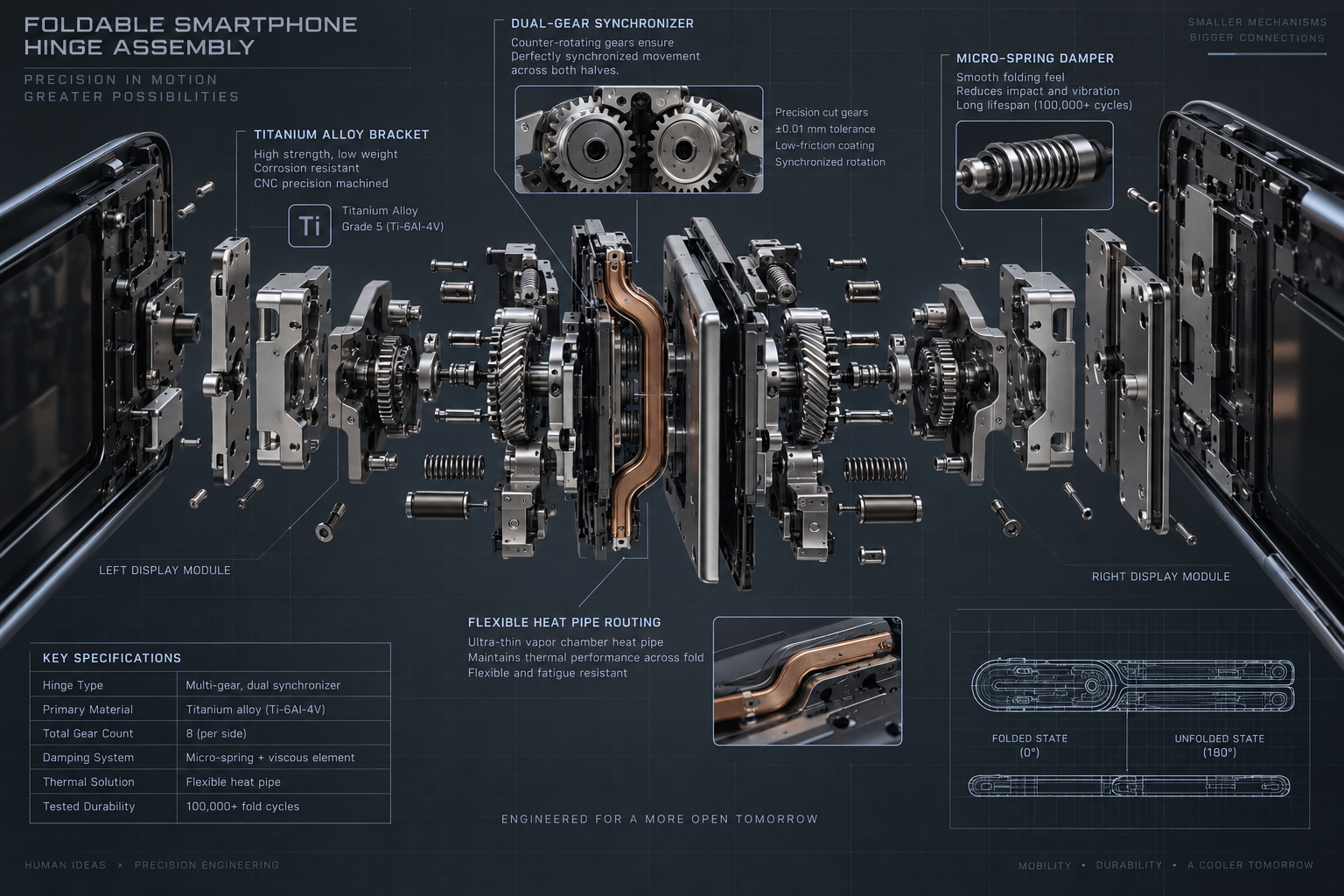
Apple describes a precision hinge made from more than 100 components. It says the hinge controls opening and closing, supports the center of the display, and works with a magnet array to produce a secure closure. The announcement also identifies a 3D-printed titanium hinge cover with a micro-blasted finish. These details deserve to be separated: the cover's manufacturing process does not establish that every internal component is 3D-printed titanium.
The hinge has several jobs beyond rotating two halves. It must permit movement while supporting the screen in the open state. It also contributes to the feel of partial positions and closure. Apple shows the phone seated at an angle for viewing and standing for other uses. The practical benefit depends on how stable those positions are on the surfaces where an owner will place it.
A count of components is not a durability score. More parts can support a carefully tuned mechanism, but the number alone tells us nothing decisive about tolerance, fatigue, contamination, repairability, or consistency between units. It would be equally misleading to call the hinge fragile solely because it is complex. The evidence supports complexity; it does not yet resolve its long-term consequence.
The same restraint applies to generated visuals. The illustration accompanying this section is a conceptual hinge assembly, not a teardown of the Duo. It helps explain that a folding joint is an engineered system of interacting parts. Any precise internal arrangement shown in it is illustrative, and must not be treated as a record of Apple's mechanism.
When handling a demonstration unit, open it slowly, close it normally, and observe whether the movement feels comfortable. Do not force it beyond its intended range or perform a destructive test in a shop. Feel is worth assessing because you will repeat that motion. It remains a separate question from service life, which needs repeatable testing and longer-term evidence.
🪟 A flexible screen is a stack of materials
Apple's description of the inner display is more informative than a promise that a crease has disappeared. It identifies a scratch-resistant coating, a nano-textured cover layer made from a custom polymer, high-strength glass above and below the folding panel, custom adhesives, and a titanium plate beneath the structure. The product page describes more than ten ultrathin layers. The surface you touch is therefore part of a layered assembly.
The announcement says the adhesives allow layers to glide relative to one another during folding, like pages of a book, relieving bend stress. That analogy is useful because sheets at different positions in a bend travel different distances. This article does not calculate the stresses in Apple's display: its material properties, layer thicknesses, and detailed geometry are not available in the cited specification.
Apple claims the custom polymer has up to 40 percent higher stiffness than other materials used in the industry. The comparison should retain its attribution and qualification. It is not an independent industry-wide ranking, and stiffness is not the same property as resistance to scratches, impact, or repeated bending. A reader should not turn one comparative material claim into a universal durability guarantee.
Nano-texture reduces glare and helps minimize the visibility of the crease, according to Apple. Visibility depends on illumination and viewing angle, so examine the screen with a white page, a darker image, and light arriving from different directions. Ars Technica reports that its staff could not spot a crease on demonstration units. That observation is valuable, but it is limited to those units and that occasion.
There is no contradiction in a surface appearing smooth while still being a moving multilayer structure. The question is how it looks and responds in use over time. Before purchase, read the specific care guidance supplied for the retail model. Do not assume that advice for a conventional glass-covered phone, a matte computer display, or another manufacturer's foldable applies unchanged.
🛡️ IP68 does not turn the phone into a stress-test prop
The Duo specification states an IP68 rating under IEC 60529, with a maximum depth of six meters for up to thirty minutes. Apple presents splash, water, and dust resistance as features of the design. Those published test conditions are a useful boundary. They are not an invitation to recreate the test at home, take the device swimming, or assume every liquid and exposure behaves alike.
Apple's general water-resistance support guidance says resistance is not permanent and may decrease with normal wear. It also warns that liquid damage is not covered under warranty, while noting that consumers may have rights under applicable law. That page covers listed iPhone models rather than serving as a Duo-specific warranty contract. Read the terms that apply to the actual product and purchase market.
For a folding phone, separate the enclosure rating from care of the display surface. A dust-resistance classification does not answer every question about pressure against the screen or an object caught between halves. Nor does a water-resistance number tell you whether a particular accessory is safe to use. These are distinct issues, and vague assurances of toughness combine them too casually.
Apple says the outer front uses Ceramic Shield 2 and the back uses Ceramic Shield. It claims three times better scratch resistance for the front material compared with the previous generation. That claim should not be transferred to the polymer-covered inner display. The two surfaces have different constructions. A comparison about one component is not a statement that every part of the phone has identical protection.
A sensible ownership plan includes the cost and availability of service. Ask which repairs can be performed locally, what accidental-damage coverage includes, and how a replacement device would be arranged. Without verified local prices, this article cannot assign a total repair budget. It can identify the missing information that should be obtained before committing to an expensive unfamiliar design.
🔋 Battery figures reveal the importance of screen choice
Apple specifies dual built-in rechargeable lithium-ion batteries and a custom vapor chamber for thermal management. The published battery figures distinguish between displays: up to forty-four hours of video playback using the outer display and up to thirty-one hours using the inner display. The specification also lists up to twenty-four hours of typical use. These are different test descriptions, not interchangeable promises.
The announcement's footnote says typical-use testing used preproduction units and software in August 2026, subscribed to LTE and 5G networks. It describes a representative mix of activities and equal use of the two displays. Results vary with use, configuration, cellular network, signal strength, and other factors. Someone who spends most of the day gaming on the inner screen does not reproduce that stated profile.
The useful inference is modest: display choice belongs in any assessment of battery experience. It would be a mistake to advertise the highest video-playback number as general endurance with the phone open. It would also be a mistake to promise the same difference between screens for every app. A video test does not directly predict navigation, photography, gaming, or weak-signal behavior.
A vapor chamber is part of managing heat, not a promise that heat disappears. Apple calls the A20 Pro vapor-cooled; the available documents do not establish sustained performance under every workload and ambient condition. Evaluate independent retail testing when it becomes available, especially if demanding games or long recording sessions are central to the purchase. Peak capability and sustained behavior answer different questions.
Charging has qualifications too. The specification gives approximately fifty percent charge in twenty minutes with a 60W-capable adapter or higher and a USB-C charging cable, and approximately thirty minutes with the specified wireless arrangement. Apple's footnote identifies testing with the device open. Check the required adapter, cable, and conditions instead of assuming any charger with a USB-C connector reproduces the result.
🎮 The extra screen must earn its opening motion
The published iOS 27 experience includes two apps side by side, with an example of dragging a photo from Photos into Mail. Apple also shows hands-free calls, adjustable viewing positions, and StandBy. These are tangible use cases. They offer a better starting point for evaluating a foldable than a claim that it makes everyone productive, because each describes a task a buyer can actually recognize.
Build a small trial around your own behavior. Read a document while replying to a message. Compare two details without repeatedly switching windows. Try the keyboard with the device open. Watch a video in a partially folded position on a table. If your essential app does not support the interaction as expected, a larger screen cannot compensate merely by existing.
The camera features likewise make use of the two-sided layout. Apple describes Duo Preview, which lets the person being photographed see a live preview on the outer screen, and Kid Cue, which displays animations to attract a child's attention. These are design possibilities rather than guaranteed improvements to every photograph. A preview can help framing, but a good picture still depends on scene, timing, and technique.
For camera specifications, the official source matters. Apple's technical page lists a 48MP Fusion Main and a 48MP Fusion Ultra Wide, with a 12MP optical-quality 2x telephoto mode enabled by the main camera. That mode should not be mistaken for a separate third rear lens. A secondary report describes the camera arrangement differently; this article follows the official specification rather than combining incompatible descriptions.
The inner FaceTime camera is listed at 1080p recording, while the outer Center Stage camera has different capabilities. Choose the view appropriate to the task, rather than assuming a camera hidden beneath the display must match every external camera. Apple also says Apple Pencil support is coming later in the year. A promised later feature should not be counted as an already demonstrated launch-day capability.
🕰️ Apple enters a category with a history
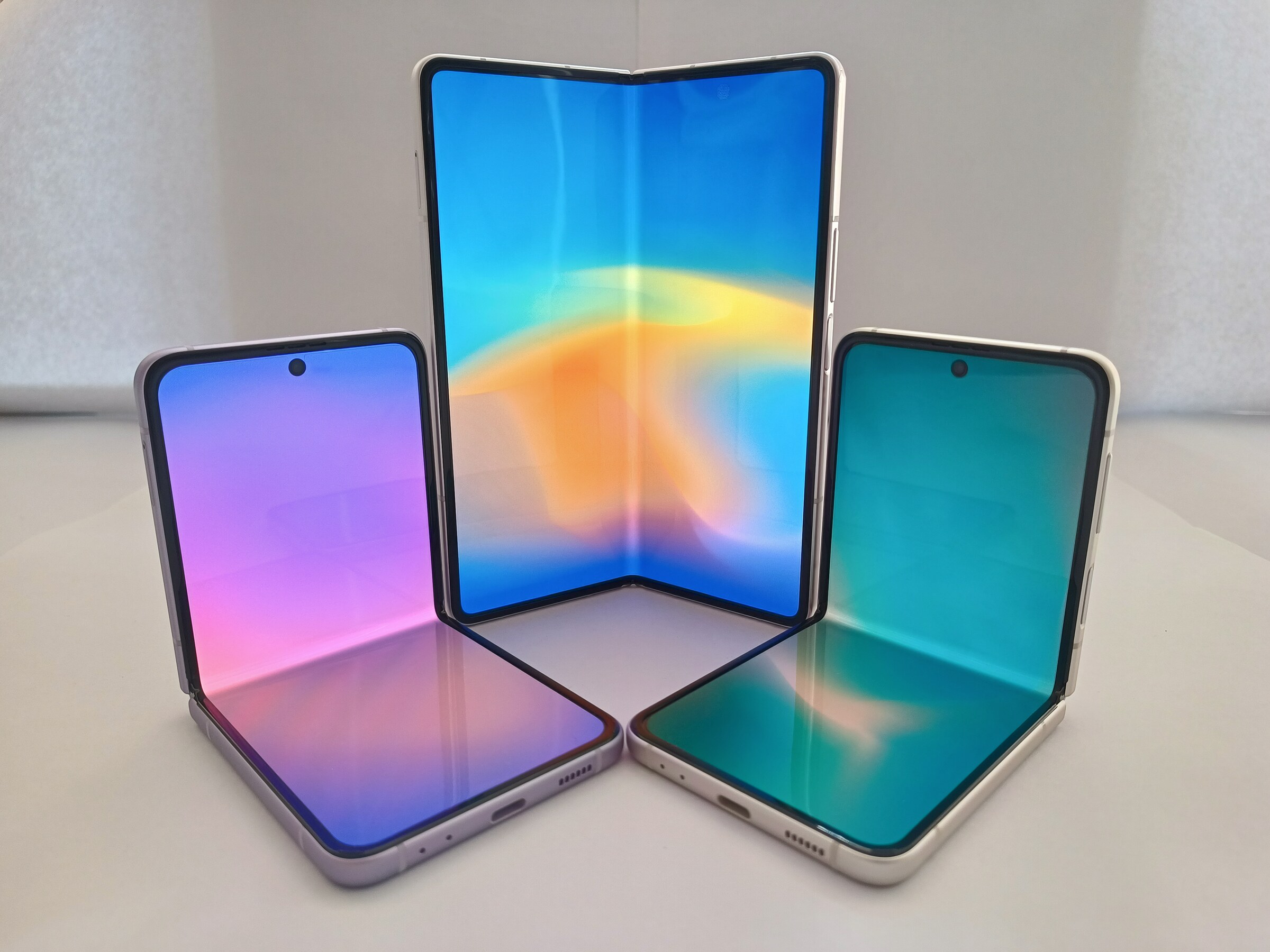
Foldable phones did not begin with the Duo announcement. The licensed photograph in this section shows Samsung Galaxy Z Fold and Z Flip devices from a 2021 Commons upload. It is historical context, not a picture of the Duo or a comparison of current flagship specifications. Its role is to make the category's previous existence visible without substituting older hardware for new evidence.
Ars Technica places Apple's price in the range of contemporary book-style foldables and discusses the wider, shorter shape of the Duo. That reporting helps situate the launch, but this article is not a comprehensive current-model comparison. Comparing competitors properly would require their official specifications, market-specific prices, service terms, and consistent testing. Brand familiarity is not a substitute for those inputs.
A late entry can benefit from a category's established ideas, but the public sources here do not tell us precisely which competitor decisions caused Apple's choices. We should avoid a story that Apple waited solely to solve every problem or that it copied one specific product in every detail. Such narratives are easy to write and difficult to prove. The published design is enough to discuss without inventing the company's internal deliberations.
For buyers, the history is a reminder that folding is an option with trade-offs, not a required next step in phone ownership. A conventional phone and a separate tablet might fit one routine. A single foldable might fit another. Compare what you carry, where you read, and how often switching between devices creates friction. The answer may be unglamorous, and still correct for you.
The photograph is credited to Ka Kit Pang via Wikimedia Commons. Its source page contains multiple licensing notices, including separate notices concerning on-screen material. Attribution and a link to the applicable license must remain attached to the final published image. Licensing is a publishing responsibility, not a decorative line that can be discarded once a file has been downloaded.
🛍️ Wait for the questions a launch cannot answer
There is enough verified information to understand the Duo's proposition: a 7.6-inch folding inner display, a usable outer display, side-button Touch ID, a multilayer screen, a precision hinge, dual batteries, and software interactions organized around the device's positions. There is not enough in these sources to establish years of reliability, every third-party app's behavior, or an Indonesian service experience.
Before ordering, separate three kinds of evidence. Published specifications tell you what Apple says the device includes. Hands-on reporting describes what a reviewer observed at a particular time. Long-term tests and ownership records can address wear, consistency, and service outcomes. None should silently replace the others. An impressive demonstration is neither worthless nor equivalent to a year of daily use.
A practical checklist can be short:
- Try authentication in both configurations and with your usual grip.
- Test the apps that make a larger display valuable to you.
- Examine the inner surface under more than one lighting angle.
- Read local warranty, service, and accidental-damage terms.
- Compare charger requirements with the equipment you already own.
- Check which features are available now and which are promised later.
If those answers are incomplete, waiting is a useful purchasing decision. The preorder date is not a deadline to decide whether a phone deserves your money. The Duo's design invites a genuine experiment in everyday computing, and its return to fingerprint authentication makes the change unusually visible. Buy the screen and interactions you will use, not the certainty a launch presentation cannot supply.
Sources: Apple Newsroom announcement dated September 9, 2026; Apple iPhone Duo product page and technical specifications; Apple Support documentation on Touch ID, Face ID, and water resistance; Ars Technica's launch reporting; Wikimedia Commons source page for the historical foldable photograph. Product claims remain attributed to their publishers; the ownership advice is 1garis editorial analysis.