NVIDIA’s August 10 announcement is not a new chatbot, a new GPU, or a consumer app. It is a plan to create financing platforms that could mobilize more than $500 billion of third-party capital for AI infrastructure over time. For a small business, the immediate effect is not a bill or a button to click. The important shift is farther upstream: the hardware that produces AI tokens is being treated as financeable infrastructure.
NVIDIA named Apollo, BlackRock, Blackstone, Brookfield, Goldman Sachs, and KKR as partners in memorandums of understanding. The final agreements have not been executed. That distinction matters. This is a framework to create dedicated pools of capital, not $500 billion already wired into data centers.
🔑 The short version
- NVIDIA says the proposed platforms could mobilize over $500 billion of third-party capital over time.
- The six named institutions are Apollo, BlackRock, Blackstone, Brookfield, Goldman Sachs, and KKR.
- The intended customers include frontier AI labs, enterprises, and AI cloud providers, rather than ordinary small businesses.
- The agreements are memorandums of understanding and remain subject to final agreements.
- A small business should read this as a signal about future AI supply, pricing, vendor concentration, and contract terms. It is not a reason to rush into an infrastructure commitment.
🏦 What NVIDIA actually announced, and why compute is the centre of the deal
NVIDIA’s newsroom said it will work with the six financial institutions to establish independent compute-financing platforms. The company describes the purpose as broadening access to AI factories and creating long-duration, usage-linked revenue. In plain language, the partners want to make it easier for customers to obtain large amounts of AI computing capacity without paying the full cost up front.
The release is careful about scale. It says the platforms aim to mobilize more than $500 billion of third-party capital over time. It does not say every dollar is committed today, nor does it publish a universal interest rate, customer eligibility rule, or financing contract. Reuters, CNBC, The Guardian, and Fortune each reported the announcement on August 10 and 11, framing it as an effort to finance the next wave of data centers and AI hardware.
An AI model uses computing resources when it is trained, when it answers a prompt, and when an agent runs a longer task. NVIDIA argues that its compute is broadly adopted, transferable across customers and operators, and improved by CUDA software over time. That is the case it makes for lenders to regard the equipment and its revenue stream as financeable infrastructure.
Jensen Huang, NVIDIA’s founder and chief executive, put it directly in the company’s August 10 release: “In AI, compute is revenue.” It is a company claim, not a guarantee of returns. The usefulness of the equipment, electricity costs, demand for AI services, model competition, and a customer’s ability to pay will still determine whether a given project works.
🧱 The assets behind the headline
The word “AI” can hide a long physical chain. A working AI service needs chips, servers, networking, data-centre space, power, cooling, software, and people to operate it. Financing may cover different parts of that chain depending on the eventual platform structure. NVIDIA’s statement describes full-stack AI infrastructure, while reports about the deal focus on computing capacity and data-centre expansion.
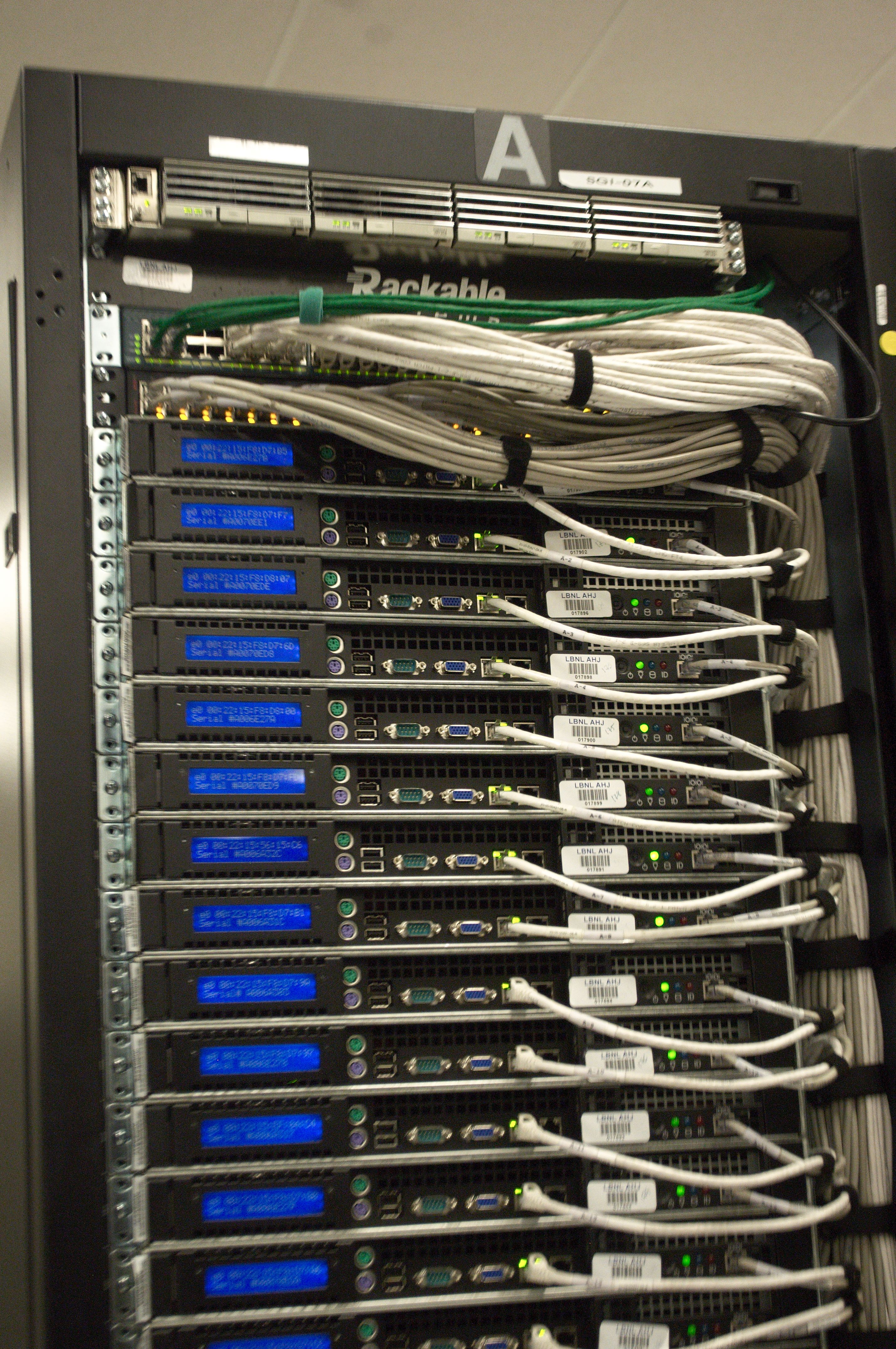
For a business buying a software subscription, that physical chain usually remains invisible. A monthly invoice may simply say that a plan has a certain number of users, messages, tokens, or credits. Yet the supplier’s cost of supplying those credits is connected to the capacity behind them. Large infrastructure financing can increase capacity, but it can also reinforce the position of vendors able to buy and operate at scale.
📜 An MOU is not a finished loan programme
This is the most useful caveat in the news. NVIDIA announced memorandums of understanding. Its release says the partnerships remain subject to execution of final agreements. An MOU can establish intent and a direction of work, but it is not the same as a completed loan, a published loan book, or a promise that any particular company will be funded.
That means readers should avoid turning the number into a completed transaction. The correct description is that NVIDIA and six named institutions announced a plan to establish financing platforms intended to mobilize more than $500 billion over time. It is also too early to infer the pricing, collateral requirements, risk allocation, or availability outside the companies the platforms eventually serve.
A local retailer, clinic, agency, or online shop will probably not become a direct customer of these platforms. Its exposure is indirect. If more capacity comes online, cloud providers and AI vendors may have more room to serve customers. If capital becomes cheaper for some operators, they may compete on price, product capability, or contract length. None of those outcomes is guaranteed by the announcement.
The more immediate task is practical: understand how your current AI tools charge. Is your price per seat, per message, per token, per image, per API call, or tied to a third-party cloud account? Is there a budget cap? Can an automated workflow run indefinitely? Can you export your data and prompts if the vendor changes terms? A big financing headline is a reminder to inspect those basics, not an instruction to forecast GPU markets.
⚖️ The concentration question, and why electricity still sets the pace
The partners named in the release are among the world’s largest capital providers. NVIDIA is also a central supplier of accelerated computing. That combination may help speed large projects, but it also concentrates a substantial part of the AI buildout around a small set of companies and institutions.
For smaller buyers, concentration changes the buying posture. Do not assume every provider will remain interchangeable. Keep copies of your content, customer data, product catalogue, and workflow logic. Avoid building a critical customer process around a single proprietary feature without a fallback. Ask an agency or vendor what happens if an API price changes, a model is retired, or a quota is reached.
Money is only one input, though. Data centres need land, power connections, cooling systems, equipment, permits, network links, and operators. NVIDIA’s partners can finance projects, but financing does not make those constraints disappear. The company itself refers to long-duration capacity and large-scale buildout; the operational work comes afterward.
That is why a headline figure should not be read as a timestamp for unlimited, cheap AI. Capacity takes time to install and connect. The final agreement terms will matter, as will local power and construction conditions. A product roadmap based on an assumed future fall in AI costs remains a bet, not a fact.
🛍️ A useful response for an Indonesian small business
A sensible response is modest and measurable. Choose one repeatable task where AI may save time: drafting product descriptions, sorting incoming enquiries, translating a catalogue, or preparing a first outline for a campaign. Set a monthly spend limit, a human review point, and a simple metric such as response time, error rate, or hours saved. Keep the original source material so a person can check the output.

Do not fund an expensive custom system merely because the infrastructure market is expanding. A small business gains more from knowing whether one workflow works than from owning a grand narrative about the AI race. The best deal is still the one whose cost, data handling, and fallback process you can explain.
🧾 Questions to ask an AI vendor this week
- What exactly causes our bill to rise: users, tokens, calls, storage, or compute time?
- Can we set a hard spending ceiling and an alert before we reach it?
- Which model or cloud provider sits underneath the service, and can that change without notice?
- Can we export our data, prompts, and generated work in a usable format?
- What happens when an API is unavailable, a quota is exhausted, or a model is discontinued?
- Which actions remain subject to human approval?
These questions work whether the vendor uses NVIDIA hardware, a competing platform, or its own data centre. They turn a distant capital-markets story into a purchasing discipline.
⚠️ The circular-financing warning, and why the buildout still reaches Indonesia
The NVIDIA announcement did not arrive in a vacuum. In its 2026 annual report, published in late June, the Bank for International Settlements named an AI capital-expenditure bust and the unwinding of circular financing arrangements among the top risks to global financial stability. The BIS argument is specific: when a chipmaker, a cloud provider, and an AI lab invest in, lend to, and buy from one another, it becomes harder for an outside observer to tell whether demand for AI infrastructure is organic or self-reinforcing.
That is not a claim that NVIDIA’s financing platforms are fraudulent or doomed. It is a reason to treat every large infrastructure number, including this one, with the same discipline a careful buyer would apply to any vendor’s growth story: ask who ultimately bears the risk if usage falls short of projections, and ask what happens to the underlying hardware’s value if a financed data centre later proves oversized for actual demand. BlackRock’s Larry Fink reportedly compared the structure to the creation of mortgage-backed securities in the 1970s, framing it as a new category of financial engineering rather than a settled, low-risk asset class. That comparison cuts two ways. Mortgage-backed securities did fund decades of housing growth before a subset of that market triggered a global financial crisis in 2008. Whether compute-backed financing follows the productive path or the fragile one is not something this announcement settles.
None of the six named financing partners operate primarily in Indonesia, and this specific $500 billion framework is aimed at the largest AI labs, hyperscale clouds, and enterprise buyers. But the broader data-centre buildout it belongs to is already visible here. Firmus signed an eight-year agreement with NVIDIA to build a 360-megawatt AI data centre tied to a reported $30 billion project, Edgnex has committed $2.3 billion to a 144-megawatt AI-focused facility in the region, and Danantara has said it is evaluating multiple data-centre investment opportunities across the country. INTI 2026, the technology expo that opened in Jakarta on August 11 with two ministerial keynotes, underscored how central AI infrastructure has become to the government’s own digital-economy agenda.
That local context matters for a small business owner reading a headline about Wall Street financing platforms. The capacity being financed globally will not sit unused; some share of it is already being built within reach of Indonesian cloud customers and local data-centre operators. A retailer or agency does not need to track NVIDIA’s balance sheet to benefit from that trend, but it is worth knowing that the AI tools a business already uses, translation services, chat automation, image generation, inventory forecasting, sit on top of exactly this kind of infrastructure investment cycle. When capacity expands locally, latency can improve and some services may become more competitively priced; when a financing structure wobbles, the practical risk shows up later as a price increase, a service discontinuation, or a sudden change in a vendor’s terms, not as a headline a small business owner is likely to see coming.
📈 A short history lesson, and what determines whether a data centre pays for itself
This is not the first time an industry has turned physical infrastructure into a financeable asset class. Toll roads, airports, fibre-optic networks, and cell towers all went through a similar transition decades ago: an asset that used to sit on a single company’s balance sheet became something institutional investors could buy debt or equity exposure to directly. Each of those transitions expanded the pace of buildout because it opened access to a much larger pool of capital than any single operator could raise on its own.
The pattern also carries a consistent risk. Whenever an asset class is new, the market has to work out pricing, default rates, and recovery value without decades of historical data to lean on. Telecom debt from the fibre buildout of the late 1990s and early 2000s is a well-documented example: some of that financing performed well over time, and some of it was written down sharply when demand did not arrive on the timeline lenders had assumed. NVIDIA and its six partners are, in effect, proposing to run that same experiment with AI compute as the underlying asset. The technology is different, but the financial question, whether usage will justify the capital committed, is the same one every previous infrastructure financing cycle has had to answer.
A financed data centre generates revenue only if someone actually rents the compute inside it, consistently, for years, at a price that covers the loan, the electricity bill, the staff, and the eventual cost of replacing ageing hardware. That is a longer list of conditions than the phrase “AI is growing fast” usually implies. A few of those conditions are worth naming plainly, because they are the ones that will decide whether this financing push looks smart or overextended a few years from now: whether AI model providers keep growing their own usage at the pace investors currently expect; whether enough enterprise customers convert from pilot projects into sustained, revenue-generating deployments; whether electricity supply and grid capacity keep pace with new data-centre construction in the regions where it is being built; and whether a newer, more efficient generation of chips makes today’s financed hardware obsolete faster than its loan term assumes.
None of those questions has a confirmed answer yet. NVIDIA’s own framing, that compute is “broadly adopted, flexible across models and workloads, fungible and transferable across customers and operators,” is an argument that its hardware carries less obsolescence risk than a narrower, single-purpose asset would. That argument may prove correct. It is also precisely the kind of claim that only gets tested once usage patterns play out over the multi-year life of a financing agreement, not on the day the memorandum of understanding is signed.
🧑💼 A grounded checklist before spending on AI infrastructure
None of this changes what a sensible small business should actually do this month, but it does change the tone of urgency around AI infrastructure headlines specifically. A useful discipline is to separate what a business controls from what it does not. A business does not control NVIDIA’s financing terms, the pace of Indonesian data-centre construction, or global electricity prices. A business does control which AI vendor it signs a contract with, how it reads a pricing page, and whether it keeps a workable fallback if a tool disappears or its price triples.
- Keep AI tool spending inside a monthly budget line you review, the same way you would review any recurring software subscription.
- Prefer vendors that publish clear per-unit pricing over ones that require a sales call to understand what a typical month will cost.
- Ask what happens to your data, your prompts, and your generated content if you cancel or if the vendor shuts the product down.
- Treat any AI feature that is free today as a feature that may not stay free once the infrastructure behind it is fully financed and expected to generate a return.
- Revisit the vendor relationship every quarter rather than assuming the terms you signed up under will hold indefinitely.
None of these five habits require a background in finance or infrastructure. They are the same discipline a careful shopkeeper already applies to a supplier contract, an electricity bill, or a lease, extended to a new category of vendor whose underlying costs happen to be shaped by a $500 billion financing story unfolding on the other side of the world.
📺 The announcement in context
CNBC carried a discussion with NVIDIA CEO Jensen Huang and partners including Brookfield CEO Bruce Flatt following the announcement. The video is useful as a primary contemporaneous record of how the companies presented the financing push, though readers should still distinguish executive arguments from independently verified outcomes.
🧭 What to watch next
The next meaningful updates will not be more interpretations of the $500 billion headline. Watch for final agreements, the first disclosed financing structures, eligible customer categories, actual capacity projects, and the terms passed through to AI service buyers. Watch also for whether the promised capacity becomes operational rather than merely announced.
NVIDIA’s announcement is a major signal because it joins an AI hardware supplier with six large pools of capital. For ordinary businesses, its value lies in what it reveals: AI is increasingly a supply-chain and contract problem, not only a software choice. Keep your AI spending capped, your data portable, and a person responsible for the work that matters.
Sources: NVIDIA Newsroom, “NVIDIA Partners With Apollo, BlackRock, Blackstone, Brookfield, Goldman Sachs and KKR...” (August 10, 2026); Reuters (August 10, 2026); CNBC (August 10, 2026); The Guardian (August 11, 2026); Fortune (August 11, 2026).