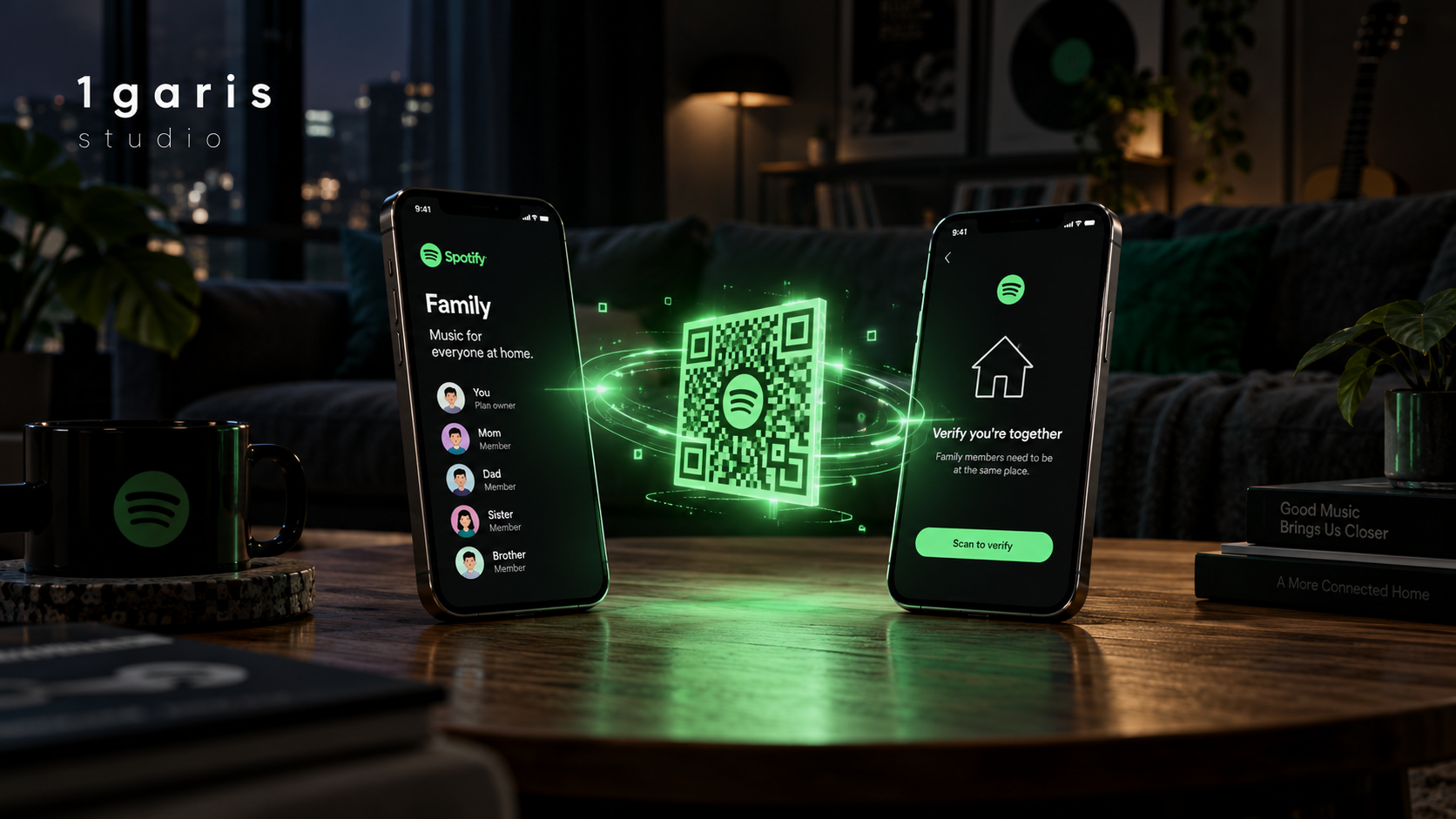
For almost a decade, the digital music subscription family plan functioned on an unspoken social truce. Streaming platforms like Spotify, Apple Music, and YouTube Music advertised discounted group bundles designed for people living under the same roof. In practice, however, the enforcement mechanism was little more than an honor system wrapped in a text input box. A college student living three states away, former roommates scattered across different apartments, or siblings who had not shared a kitchen in years simply copied and pasted the primary account holder's postal address into a verification form and enjoyed uninterrupted, ad-free listening for a tiny fraction of the standard individual monthly fee.
That era of corporate indifference has abruptly reached its end. In late October 2026, Spotify began quietly activating a verification framework that swaps passive address confirmations for an unyielding physical presence test. Under the new protocol, select Premium Family members are notified that they must confirm their shared household status by scanning a dynamic QR code directly from the smartphone screen of the primary account manager. Because the QR code is generated inside the mobile application and refreshes every few seconds like a two-factor authentication token, static screenshots sent via messaging apps are rendered instantly useless. Both smartphones must be physically co-located in the same room.
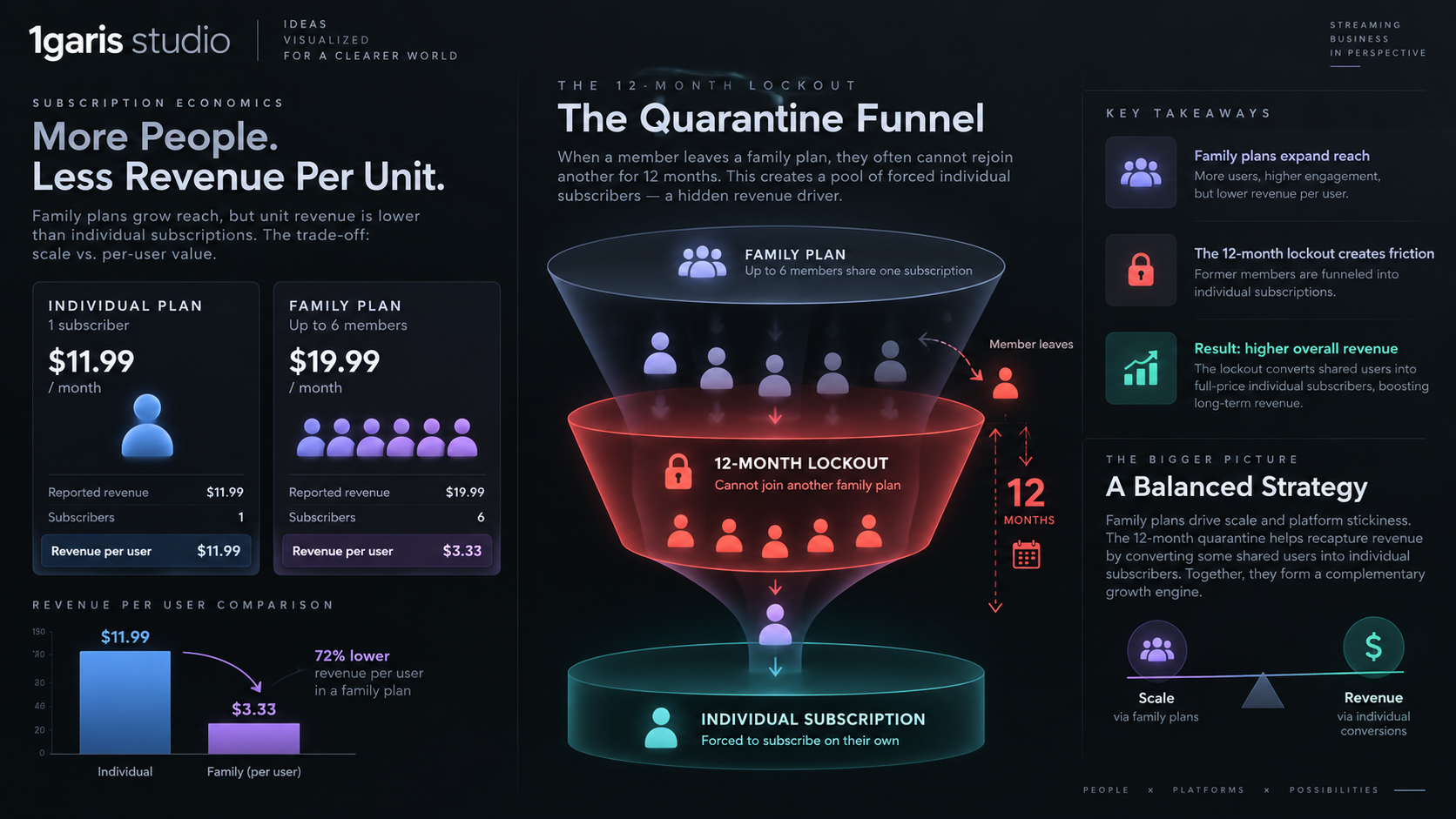
The stakes of failing this physical proximity test are unexpectedly severe. Subscribers who miss the seven-day verification window, or cannot physically meet their account manager to complete the scan, are demoted to the ad-supported tier. Spotify's updated policy imposes a mandatory 12-month ban barring the evicted account from joining any other Family or Duo plan across the entire platform for 365 days. If those listeners wish to continue streaming without commercial interruptions, their only permitted recourse is to purchase a full-price Individual subscription.
This shift marks a decisive turning point in the consumer subscription economy. Following the aggressive password-sharing crackdowns pioneered by video streaming giants Netflix and Disney+, the audio streaming sector is now deploying cryptographic co-presence checks to plug revenue leaks. By demanding physical proximity to prove domestic legitimacy, Spotify has ignited a fierce debate over platform power, surveillance mechanics, and the messy reality of modern family life.
📱 The Vanishing Grace Period for Shared Passwords and Shared Soundtracks
The initial business model of music streaming was predicated on frictionless user acquisition. In the mid-2010s, as the record industry emerged from the wreckage of piracy, Spotify and its rivals competed fiercely for raw market share. The primary objective was convincing consumers who had grown accustomed to free MP3s to establish recurring payment relationships. Discounted tiers became the Trojan horse of platform expansion. Student discounts slashed prices in half, while the Family plan allowed up to six independent profiles to access the entire library under a single master billing account.
For consumers, the economics of the family plan were irresistible. At its inception, sharing a family plan among six friends or extended family members reduced the per-person monthly expenditure to roughly the cost of a single takeout coffee. Even as platform subscription prices climbed steadily upward, the family plan remained the most cost-effective way to consume licensed streaming audio. Millions of user networks organized themselves around a single reliable payer, creating informal cooperatives of music lovers who viewed their shared subscription as a permanent digital utility.
Platform executives were well aware that millions of family plan beneficiaries did not reside under the same roof. Industry insiders routinely referred to this lenient enforcement as deliberate customer acquisition spend. As long as overall subscriber numbers were expanding at double-digit percentages each quarter, Wall Street rewarded user growth far more generously than margin perfection. Tolerating distributed households kept younger listeners locked within the platform's proprietary algorithms and playlist ecosystems, boxing out competitors.
That permissive phase of tech capitalism is now officially closed. The global streaming market has entered maturity, where nearly every smartphone owner in high-revenue territories already subscribes to a streaming service. With user acquisition slowing to a crawl and royalty costs owed to major record labels remaining stubbornly fixed as a percentage of gross revenues, platforms can no longer afford to ignore hundreds of millions of dollars in potential subscription revenue slipping through shared accounts.
The transition from benign neglect to algorithmic policing did not occur in a vacuum. It was paved by the entertainment industry's broader war on credential sharing. When Netflix announced its paid sharing initiative in 2023, requiring devices to connect to an account holder's home Wi-Fi network every 31 days, critics predicted massive subscriber cancellations. Instead, Netflix added tens of millions of paying subscribers, proving that consumers grumble but ultimately pay when their digital habits are held hostage. Spotify's rotating QR code is the audio industry's direct answer to that economic reality.
🔄 How the Five-Second Rotating QR Code Actually Works
Understanding why the new verification protocol is causing widespread panic among subscribers requires examining its underlying technical mechanics. For several years, Spotify relied on an address autocomplete system powered by the Google Maps API. When a user accepted an invitation to join a family plan, they were prompted to type in their home address. If the text matched the residential address entered by the plan manager, the system marked the account as verified. This barrier was purely symbolic; account managers simply pasted their street address into family group chats, and invited members copied it into the form.
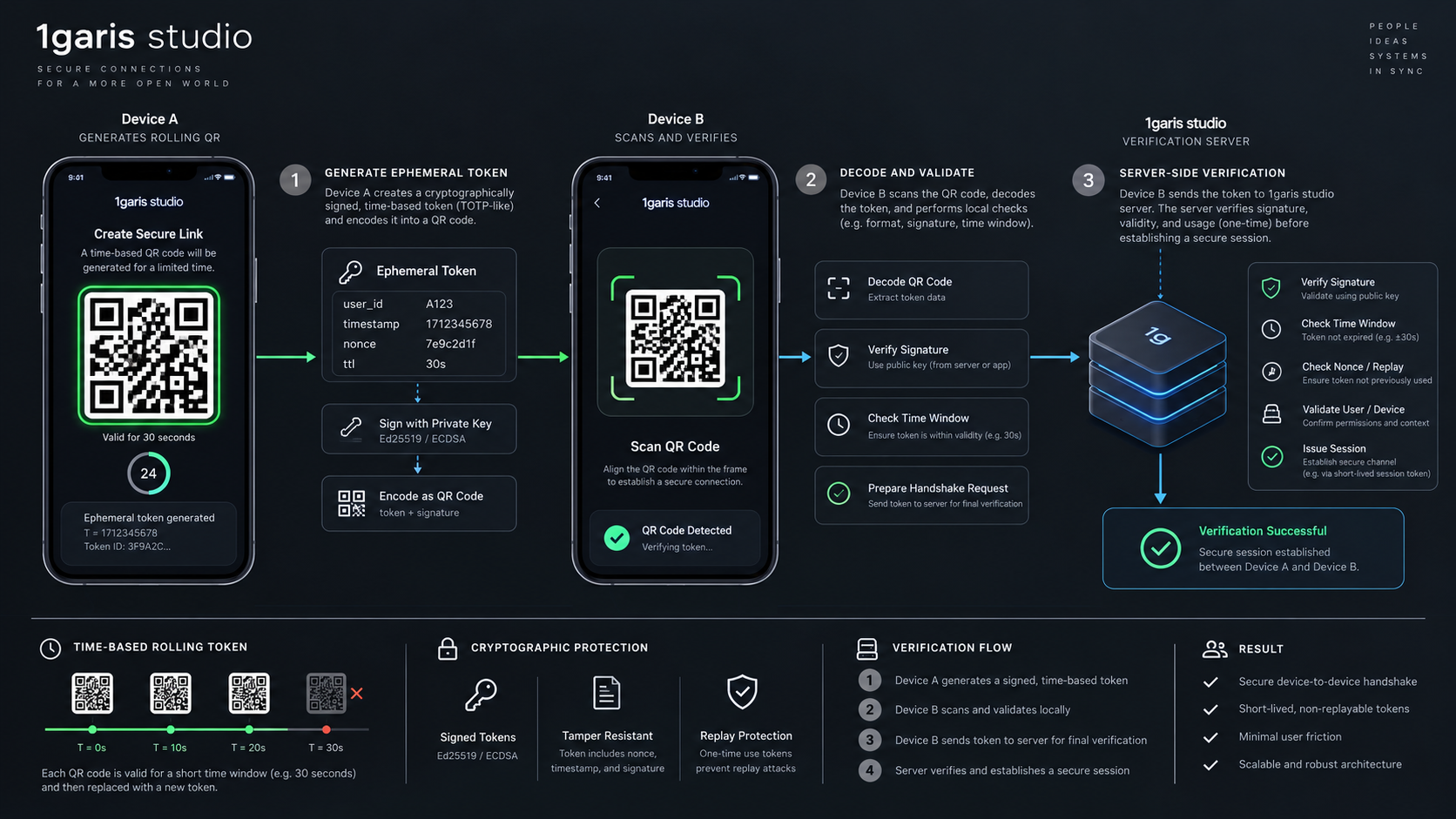
The new protocol completely dismantles this text-based workaround. According to Spotify's updated technical support documentation, the verification flow operates through a time-synchronized, mobile-only challenge-response handshake:
- Triggering the Verification Event: The platform's automated compliance backend flags an account for household verification. This trigger can be initiated at random intervals, upon the addition of a new member to an existing plan, or when backend telemetry suggests that streaming activity is originating from geographically divergent network locations over an extended period.
- Generating the Rotating Secret: The primary account manager opens the Spotify mobile application on their smartphone, navigates through their profile icon to
Your Premium, and tapsManage. The application contacts Spotify's verification servers to generate a short-lived cryptographic token rendered on the screen as a high-density QR code matrix. - Time-Based Token Invalidation: Crucially, this QR code is not a static web link or fixed identifier. It incorporates a time-based rolling secret that expires and regenerates every few seconds. If an account manager captures a screenshot of the QR code and attempts to send it via messaging apps, the token is invalid by the time the recipient opens the image on their own device.
- Local Hardware Scanning: The invited family member must open their own smartphone's native camera or the Spotify scanning utility and point the physical lens directly at the manager's physical screen.
- Atomic Verification Confirmation: Upon reading the active, non-expired token, the member's application submits the cryptographic proof back to Spotify's servers. The server validates that the scan occurred within the permissible time drift and immediately confirms the household bond.
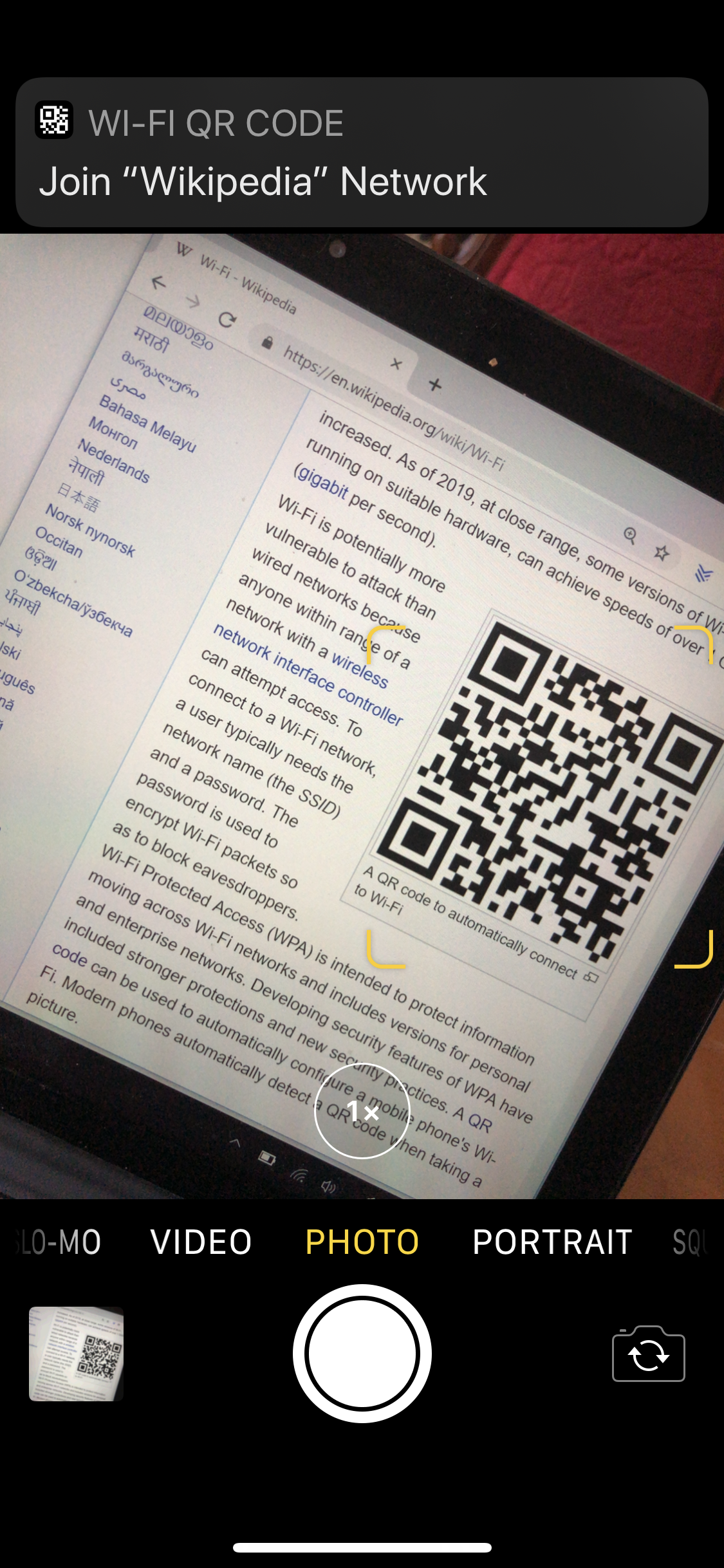
This architecture is functionally identical to the Time-based One-Time Password (TOTP) algorithms used in enterprise multi-factor authentication systems like Google Authenticator. By enforcing an extraordinarily tight time window between token generation on screen A and token ingestion by camera B, Spotify creates a mathematical barrier that strongly presupposes physical proximity. The system does not attempt to verify where you are in the world; it verifies whether your physical device is occupying the exact same optical space as the primary subscriber's physical device.
Furthermore, Spotify has deliberately restricted this workflow to native mobile operating systems. The QR code cannot be viewed, generated, or scanned through a desktop web browser, a tablet interface, or an emulated desktop client. Both participants must possess modern smartphones running the latest iteration of the Spotify mobile app, with system clocks calibrated accurately via Network Time Protocol (NTP). A discrepancy of even a few seconds on an improperly synchronized system clock can cause the verification handshake to fail repeatedly.
📍 From GPS Pushback to the In-Person Co-Presence Handshake
The road to the rotating QR code was paved with previous public relations disasters. Spotify's quest to verify household cohabitation represents the third distinct iteration of an enforcement strategy that dates back nearly a decade. Examining how the company arrived at this optical handshake reveals the complex tension between platform fraud prevention and user privacy boundaries.
In late 2018 and again in the autumn of 2019, Spotify quietly initiated pilot tests in select international markets that required family plan members to provide precise GPS location coordinates. Users opening the app were confronted with an unskippable prompt demanding access to their device's location services. The system intended to compare the longitudinal and latitudinal coordinates of every member's smartphone to verify that they regularly congregated at the same physical residence.
The backlash was swift, severe, and catastrophic for Spotify's brand reputation. Privacy advocates, civil liberties organizations, and cybersecurity researchers sounded immediate alarms. Critics pointed out that continuous or periodic GPS tracking of consumers simply to maintain a music discount represented a gross overreach of corporate surveillance. Why should an entertainment provider possess real-time or historical telemetry revealing where its users sleep, work, and travel? Questions also arose regarding domestic abuse victims, whose physical whereabouts could potentially be exposed to abusive family plan managers through shared account telemetry.
Faced with threats of regulatory investigation under Europe's General Data Protection Regulation (GDPR) and an avalanche of user cancellations, Spotify beat a hasty retreat. The company issued statements assuring the public that GPS coordinates were only checked once for verification and never persistently stored, but the damage was done. Spotify abandoned automated satellite tracking and defaulted to the typed address form, adding explicit disclaimers stating: "We do not track your location. We only check your address to verify."
Yet corporate patience with the honor system was always destined to wear thin. The rotating QR code represents Spotify's attempt to achieve the enforcement rigor of GPS tracking without triggering the regulatory liabilities of location data collection. By requiring an optical exchange between two screens, Spotify can truthfully claim to regulators and privacy advocates that it is not logging GPS coordinates, tracking cell tower pings, or retaining geographical history.
In the eyes of privacy engineers, however, this distinction is largely semantic. While the platform may not record the physical coordinates of the household, it is enforcing a physical proximity proof that achieves the exact same operational outcome: policing the spatial movements of human beings as a condition of service delivery. The technical burden of proof has simply been offloaded from the server's GPS receiver onto the consumer's optical camera.
🚫 The 365-Day Lockout Penalty That Forces an Individual Subscription
While the technical mechanics of the QR code have captured the attention of software engineers, it is the punitive legal framework surrounding failed verifications that has generated widespread consumer outrage. In traditional digital service agreements, failing an identity or entitlement check typically results in a gentle downgrade to a basic tier, leaving the door open for immediate correction. Spotify's terms, however, introduce an extraordinarily punitive contractual lock: the 12-month quarantine.
According to the official contractual terms governing Spotify Premium Family and Spotify Premium Duo, the verification lifecycle follows a strict, non-negotiable timeline:
- The Seven-Day Countdown: From the exact moment the verification notice is dispatched via email and in-app notification, the plan member has precisely seven calendar days (168 hours) to locate the plan manager and execute the physical scan.
- Immediate Demotion: If the clock expires without a successful handshake, or if the user attempts the scan and fails repeatedly, the account is instantly severed from the family group and reverted to Spotify Free. All offline cached audio files are wiped from the device, commercial advertisements are reinstated, track skipping is capped at six songs per hour on mobile, and on-demand album playback is disabled in favor of forced shuffle.
- The One-Year Blacklist: The most consequential clause resides in Spotify's address verification guidelines: any member who fails verification or misses the seven-day window is legally and technologically barred from joining any other Family or Duo plan across the entire global platform for a period of 12 consecutive months.
Consider the practical implications of this 365-day lockout. If an individual is temporarily traveling for business, studying abroad during a college semester, or hospitalized when the verification prompt arrives, their inability to scan the manager's phone within seven days effectively exiles them from shared streaming for an entire year. Even if they move into a new apartment with roommates who maintain an active family plan, or marry a partner with a Duo subscription, their personal Spotify account cannot be added to those subscriptions until 365 days have elapsed from the date of the failed verification.
The commercial intent behind this penalty is unmistakable. By locking exiled users out of all shared discount tiers for an entire year, Spotify creates an intense economic squeeze. Consumers who have spent a decade curating personalized libraries, training recommendation algorithms, and assembling hundreds of customized playlists are deeply reluctant to abandon their accounts or switch to competitor platforms. Faced with the choice between enduring intrusive audio advertisements for a year or paying $12.99 per month for an Individual Premium subscription, the vast majority capitulate and purchase the solo plan.
This is subscription optimization in its purest form. The platform transforms an administrative verification failure into an immediate revenue multiplier. What appeared to be a customer compliance check functions in practice as an aggressive churn-to-upsell funnel, systematically converting low-margin shared listeners into high-margin individual subscribers.
📊 The Math Behind Platform ARPU and Streaming’s Maturing Curve
To understand why Spotify is willing to risk user alienation and negative press coverage over rotating QR codes, one must look at the cold mathematical realities of the streaming industry's balance sheet. In financial disclosures to Wall Street investors, no metric is scrutinized more intensely than Average Revenue Per User (ARPU).
For years, the streaming music industry suffered from a chronic, self-inflicted ARPU erosion. Throughout the late 2010s, even as Spotify's total premium subscriber count surged from 50 million to over 200 million, its global ARPU steadily declined quarter after quarter. This paradox was driven entirely by the explosive popularity of discounted tiers, particularly the Family plan and student bundles, alongside rapid expansion into lower-income international markets where subscriptions are priced significantly lower than in North America or Western Europe.
The disparity in unit economics between individual and shared accounts is staggering:
- Individual Plan: A single subscriber pays $12.99 per month in the United States. Spotify captures $12.99 in gross monthly revenue from that single user.
- Family Plan: Up to six independent listeners access the service under a single master subscription priced at $19.99 per month. If the plan is fully utilized by six people, Spotify captures approximately $3.33 in gross monthly revenue per active listener.
From the platform's perspective, an unauthorized family plan shared among six independent adults living in separate households represents an ongoing monthly revenue leak of nearly $58. Across Spotify's global base of more than 250 million paying subscribers, if even 15 percent of family plan members reside outside the primary household, the cumulative revenue lost to shared accounts exceeds hundreds of millions of dollars annually.
Furthermore, the macro-environment of the audio streaming sector has changed dramatically. The era of ultra-cheap venture capital and growth-at-all-costs valuation is over. Institutional investors now demand expanding operating margins, free cash flow generation, and disciplined monetization. Unlike video streaming platforms like Netflix, which own proprietary studio intellectual property and can scale without linear content costs, music streaming services must pay roughly 70 percent of every earned dollar back to rights holders—major record labels such as Universal, Sony, and Warner, alongside music publishers—in the form of copyright royalties.
Because Spotify cannot unilaterally slash the royalty percentages demanded by the major music conglomerates, the company has only three fundamental levers to expand its profitability: direct price hikes across all tiers, operational cost cuts, and closing account-sharing arbitrage to force listeners onto full-price individual tiers. The rotating QR code is the mechanical execution of that third lever. For Spotify's financial planners, if the friction of physical QR verification causes 10 percent of family plan users to cancel, but converts 30 percent of illicit shared users into paying Individual subscribers, the net financial impact on platform revenue is overwhelmingly positive.
🏠 The Fiction of the Single Household in a Hyper-Mobile Society
Beyond the corporate balance sheets and technical protocols lies a deeper sociological problem: what exactly constitutes a family or a household in the modern world? Spotify's legal terms define eligibility strictly around cohabitation, stating unambiguously that all members of a Family or Duo plan must reside at the same physical address. Yet this rigid, mid-twentieth-century definition of the nuclear family cohabiting under one roof bears little resemblance to how modern families actually live.
Consider the diverse real-world living arrangements that are immediately disrupted by a mandatory in-person scanning check:
- College Students and Young Adults: Millions of young people leave their family homes to attend university, living in campus dormitories or shared student apartments for eight to nine months of the year. While their parents continue to provide financial support and consider them integral members of the family unit, they cannot physically scan a smartphone screen located in their parents' living room 500 miles away.
- Divorced and Blended Families: Children of divorced parents routinely alternate their residency between two different homes on a weekly or bi-weekly schedule. If a parent manages a family plan at Residence A, a child staying at Residence B when the seven-day verification clock strikes risks losing access to their personal music collection entirely.
- Elderly Parents and Caretakers: Adult children frequently purchase family plans to provide digital entertainment for aging parents who live in retirement communities, assisted living facilities, or separate apartments in other cities. Requiring an elderly parent to navigate a time-sensitive optical handshake across two modern smartphones is an exercise in profound user alienation.
- Couples in Long-Distance Relationships: Couples living in different cities due to work assignments or educational commitments naturally pool their digital expenses via Duo or Family plans. Under Spotify's strict physical co-presence regime, a delayed visit results in a 12-month ban from shared listening.

By enforcing physical co-presence as the sole arbiter of domestic legitimacy, digital platforms impose a synthetic corporate taxonomy on human relationships. In the eyes of Spotify's compliance algorithms, a group of four unrelated software developers living together in a high-rent city loft qualifies as a legitimate family, while an impoverished mother paying for her college freshman's music subscription across state lines constitutes a contract-breaching violator worthy of a one-year platform ban.
This tension highlights the growing disconnect between digital licensing models and contemporary social mobility. We live in a society characterized by flexible remote work, transnational families, and fluid domestic structures. When platforms demand that our digital lives remain tethered to a single, static geographic footprint, they expose the fundamental friction between consumer expectations of digital portability and corporate imperatives of revenue extraction.
🛡️ Privacy Boundaries: Why a Proximity Proof Is Still a Location Probe
When Spotify abandoned its controversial GPS tracking experiments in 2019, company spokespeople framed the retreat as a triumph for consumer privacy. In their updated help center literature, Spotify continues to assure subscribers that it does not track location coordinates and only checks addresses to verify eligibility. By substituting an optical QR handshake for satellite geolocation coordinates, the platform seeks to insulate itself from accusations of intrusive tracking.
However, privacy researchers and digital rights advocates argue that this defense relies on a hollow technical loophole. A proximity proof that requires two devices to be in the same room is, by its very nature, an indirect location probe. While the server may not record the specific latitude and longitude coordinates of the meeting place, it asserts absolute regulatory control over the spatial proximity of the participants.
In an era where technology companies are scrutinized for data harvesting practices, using cryptographic proximity handshakes to police household discounts sets an uneasy precedent. The boundary between identity verification and ambient domestic surveillance continues to erode.
🛠️ Workarounds, Screen Sharing, and the Limits of Digital Cat-and-Mouse
Whenever a technology platform erects a digital wall, the internet immediately mobilizes to engineer a ladder. Within hours of Spotify's rolling QR code deployment surfacing across community forums like Reddit and Discord, subscribers began experimenting with technical workarounds designed to bypass the physical co-presence requirement.
The most widely discussed circumvention strategy exploits real-time video conferencing tools:
- The Live Screen Share Gambit: The primary account manager initiates a video call with the remote family member using platforms like Zoom, Discord, or FaceTime.
- Synchronized Display: The manager opens the Spotify app, navigates to the QR code screen, and shares their smartphone screen directly into the video feed, or points their laptop webcam at their phone.
- The Rapid Capture: The remote family member points their second smartphone camera at the computer monitor displaying the incoming video feed, attempting to scan the QR code before the rolling secret expires.
On paper, this workaround appears viable. If the video streaming latency is low enough (typically under 500 milliseconds on a high-speed fiber connection) and the webcam resolution is sharp enough to resolve the high-density QR matrix, the optical handshake can theoretically succeed without the two human beings occupying the same room. Early reports from subscribers indicate that some users have successfully verified remote accounts using this exact method.
Yet relying on live video handshakes is an inherently fragile strategy. Spotify's engineers are fully aware of video relay attacks, and the platform has several countermeasures at its disposal:
- Tightening the Token TTL: The simplest technical countermeasure is reducing the Time-To-Live (TTL) of the dynamic QR code from several seconds down to 1.5 or 2 seconds. In a two-second window, any standard video conferencing pipeline—which incurs encoding, network packet transit, decoding, and optical recapture lag—will almost certainly fail to deliver the token before expiration.
- Correlating Network Telemetry: As noted previously, Spotify's verification servers can cross-reference the public IP addresses of both devices at the moment of scan submission. If the plan manager's device submits a token from an IP address in Chicago while the scanning member submits their response from an IP address in Berlin, the backend can immediately flag the transaction as a remote relay and invalidate the verification.
- OS-Level Screen Capture Restrictions: On modern Android and iOS devices, applications can declare sensitive interfaces as secure surfaces (such as
FLAG_SECUREon Android), which automatically blacks out the screen capture during screen sharing sessions or screenshot attempts.
This dynamic illustrates the inevitable cat-and-mouse cycle that accompanies corporate sharing crackdowns. For non-technical users, attempting to orchestrate high-speed, dual-device screen-sharing sessions with an elderly parent or an uncooperative sibling is a frustrating, error-prone ordeal. For the vast majority of consumers, the technical friction alone will accomplish Spotify's objective: it will simply be easier to abandon the arrangement or pay for an individual subscription than to engage in ongoing cryptographic subterfuge every few months.
💡 How to Protect Your Playlists and Library Before the Window Closes
For subscribers who find themselves trapped on the wrong side of Spotify's verification push, the most urgent priority is preserving their personal listening history and curated data. The terror of being abruptly kicked off a family plan is not merely the prospect of hearing advertisements; it is the fear of losing a decade's worth of carefully assembled playlists, algorithmic recommendations, liked songs, and social connections.
Fortunately, Spotify's underlying database architecture decouples subscription billing status from user profile data. Understanding what happens when an account is demoted is the first step toward effective mitigation:
- Playlists and Saved Music Remain Intact: When an account is removed from a Family plan, the user does not lose their playlists, their Saved Songs library, their followed artists, or their algorithmic history. The account simply reverts to the Free tier. The songs remain in the cloud database; you simply lose the ability to play them offline or select arbitrary tracks on mobile without advertisements.
- Offline Downloads Are Purged: The immediate casualty of demotion is local storage. Every song, album, and podcast cached on your smartphone or laptop for offline listening is instantly invalidated and deleted from the device storage. If you rely on offline audio for flights, subway commutes, or cellular data savings, your offline library will disappear the moment verification expires.
- The Export Strategy: To ensure you never lose your music curation regardless of platform decisions, power users should maintain independent backups of their playlist metadata. Tools and open-source utilities utilizing the Spotify Web API (such as Exportify, Soundiiz, or TuneMyMusic) allow listeners to export their entire library into standardized CSV or JSON formats. Having a local text record of every track in your playlists provides absolute insurance against account bans or unexpected library corruptions.
- The Alternative Account Pivot: If an account holder has already run afoul of the 12-month lockout penalty, their existing profile cannot join another Family or Duo plan until the 365-day timer runs out. However, if a group of roommates or family members insists on sharing a new plan immediately, the affected individual can create a brand new, secondary Spotify account using an alternative email address, transfer their playlists via public playlist sharing or migration utilities, and join the new family plan under the clean profile. While this requires rebuilding algorithmic recommendations from scratch, it completely bypasses the 12-month quarantine tied to the original account identifier.
- Evaluating Competing Ecosystems: Finally, Spotify's aggressive enforcement serves as an opportunity for consumers to reassess their platform loyalty. Rivals like Apple Music, YouTube Music, and Tidal also offer family bundles with varying degrees of household enforcement. Apple Music Family, for instance, links accounts through Apple's broader Family Sharing system, which shares purchase methods and iCloud storage but does not currently deploy rotating in-person QR handshakes for audio playback. For families scattered across different geographical regions, migrating to an alternative service may provide a more stable, friction-free long-term home.
The rotating QR code marks the end of streaming's golden age of casual, borderless sharing. As digital platforms tighten their grip on subscriber boundaries, consumers must recognize that the convenience of modern software is always conditional, perpetually renegotiated, and ultimately subordinate to the platform's balance sheet. Understanding the technical rules of engagement is no longer just for developers; it is the essential literacy required to navigate the modern digital living room.
Sources: Spotify Official Support: Address and verification for Family plan (Spotify AB, Oct 2026); Spotify Terms and Conditions for Premium Family Subscriptions; 9to5Google Investigation into Spotify QR Code Verification Rollout; TechSpot Comprehensive Report on Streaming Account Sharing Crackdowns; Mashable Analysis of Digital Household Verification Friction; PPC Land Regulatory and Subscription Economy Audit.