This week's technology stories moved beyond chatbots. AI gained physical controls, entered robot cages and film-production pipelines, reconstructed spaces from ordinary video, designed outfits, and began chasing flying insects.
The common thread is AI moving from answering questions to operating tools, machines, and production systems. That shift makes the week more interesting than another benchmark race. It also makes the details more important: autonomy has levels, prototypes are not products, and access still depends on hardware, pricing, and geography.
🎛️ 1. Codex Micro turns AI-agent supervision into a physical interface
OpenAI's Supply Co. and Work Louder introduced the kbd-1.0-codex-micro, a compact controller built around 13 mechanical switches, live RGB feedback, a joystick, and a rotary control. Technology publications list it at US$230.
The device is designed for a workflow in which several coding agents may be active at once. Its lights can expose status without forcing the developer to keep opening windows, while mapped controls can approve or reject requests, start tasks, trigger voice or skills, and adjust reasoning effort.
Why it matters: software agents are creating a new interface problem. Traditional keyboards were designed for people writing commands directly. A controller like Codex Micro assumes the user's job is increasingly to supervise parallel work, resolve exceptions, and decide how much compute a task deserves. It is an official OpenAI collaboration, though calling it a fully independent OpenAI hardware product would overstate the arrangement with Work Louder.
🥊 2. Shenzhen's robot league tests software under physical pressure
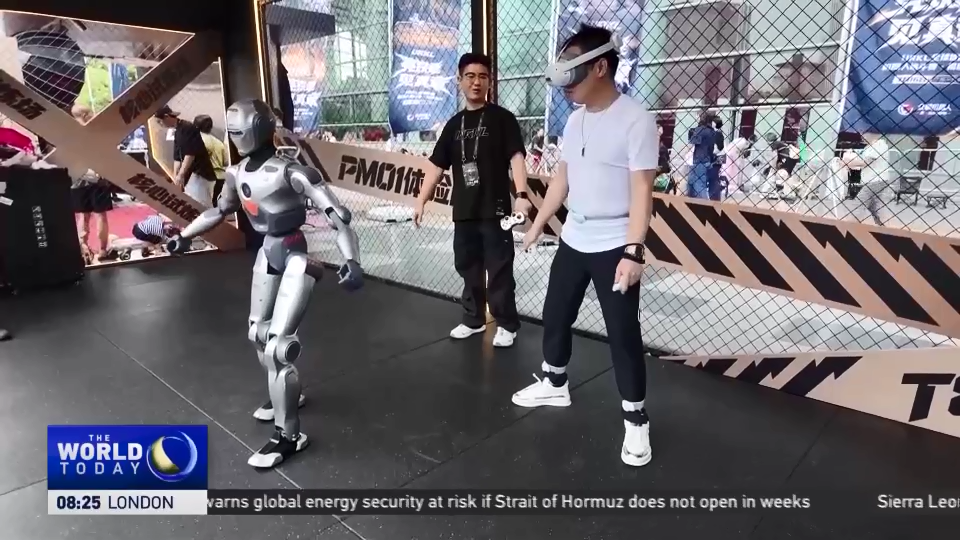
The Ultimate Robot Knock-out Legend opened in Shenzhen on July 16 after more than 200 teams entered qualifiers and 32 advanced. Teams competed on the same EngineAI T800 humanoid platform, a machine capable of punches, kicks, balance recovery, and other dynamic movements.
Standardizing the body changes the nature of the contest. Instead of winning by bringing the heaviest robot, teams compete through motion planning, control policies, tuning, operator strategy, and the ability to recover when the machine is hit or pushed outside its expected posture.
The viral moment, in which a kick left one robot's head hanging while it continued to fight, was spectacular. The deeper story is robustness. Physical AI needs to keep functioning when sensors are disrupted, joints are under load, and the environment refuses to behave like a clean laboratory. The tournament does not prove fully autonomous combat, but it creates a highly visible stress test for humanoid control systems.
🎬 3. Netflix says generative AI has entered roughly 300 productions
Netflix co-CEO Ted Sarandos said generative AI had been used across roughly 300 titles in 2026. The work spans multiple production stages, with particular attention on planning, visual effects, crowd work, and post-production.
That does not mean Netflix generated 300 films. In a production pipeline, AI can appear in narrow tasks such as concept exploration, previs, rotoscoping, clean-up, asset variations, or individual effects shots. The operational change is that generative tools are becoming one component inside established workflows rather than a separate experimental department.
The question now is not whether studios use AI, but where they place it and how they govern it. Cost and speed gains will attract producers, while creators will continue to ask how training data, consent, credit, jobs, and quality control are handled. Netflix's figure shows scale, but the company has not published a title-by-title breakdown of how deeply each production used the technology.
🏠 4. GPT-5.6 can build, inspect, and repair complete Blender scenes
A public image-to-Blender benchmark gave GPT-5.6 variants the same reference image and deliberately thin instruction. The agents then worked through Codex with shell and Blender access. All 15 runs produced editable .blend files and valid renders; the strongest configuration scored 92/100.
The important capability is not merely generating a long Blender script. Stronger runs could render a scene, inspect the visual result, notice clipped objects or broken geometry, patch the build, and render again. That feedback loop brings the model closer to using a creative application than simply emitting code for it.
Quality was not consistently proportional to reasoning effort, and several runs broke important roof geometry. The benchmark's author also notes that one run per configuration is not a reliability study. Even so, the experiment points toward a practical change: 3D artists may spend less time manually scaffolding every operation and more time setting direction, choosing references, and judging the result.
🗺️ 5. LingBot-Map reconstructs a moving 3D world from ordinary video
Robbyant's LingBot-Map is an open feed-forward model for streaming 3D reconstruction. It processes visual frames to estimate camera movement and dense scene geometry, building a spatial representation while the camera is still moving.
The project reports around 20 FPS at 518×378 resolution over sequences exceeding 10,000 frames. It does not require LiDAR input, which lowers the sensor barrier compared with systems that depend on dedicated depth hardware. Its architecture retains a structured geometric context rather than repeatedly optimizing the entire scene from scratch.
Why it matters: robots, AR devices, drones, and navigation systems need persistent spatial understanding, not isolated image recognition. A model that turns a monocular video stream into camera poses and geometry can make mapping cheaper and easier to deploy. The reported speed remains hardware- and resolution-dependent, so 20 FPS should be read as a tested configuration rather than a universal device guarantee.
🍎 6. Claude for Teachers brings premium AI access into US K–12 classrooms

Anthropic launched Claude for Teachers with one year of premium Claude access for verified K–12 educators in the United States. The program includes a library of teaching skills and connections to evidence-based curricula mapped to academic standards.
The education strategy is broader than giving teachers a chatbot. Reusable skills can guide tasks such as adapting lesson materials, preparing differentiated activities, checking alignment with standards, or developing classroom resources while retaining a repeatable method.
Adoption will still depend on school policy, privacy, accuracy, and teachers' ability to inspect outputs. The program is also geographically limited; it is not a worldwide offer for every teacher. Still, it shows AI providers competing through profession-specific workflows and training, not only model intelligence.
👕 7. An open wardrobe project turns a camera roll into a personal lookbook
The public Wardrobe project can extract clothing from local photos, organize individual items, generate modeled previews, propose combinations, and save complete outfit collections. It packages the process into two Codex skills: one for importing clothes and another for generating looks.
This is a useful example of an agentic application built around private personal data. The model is not simply answering “what should I wear?” It performs a sequence: locate source images, isolate items, write structured records, generate visuals, review outputs, and maintain a reusable local collection.
The repository currently lists gpt-5.4-mini for vision and gpt-image-2 for generation, so the viral attribution to GPT-5.6 is not supported by the current project configuration. The larger idea remains important: many future AI products may look less like chat and more like small, inspectable workflows attached to a user's own files.
🎥 8. George Lucas sees AI as the next production technology, not a passing trend
George Lucas said AI could make filmmaking easier and compared resisting it with choosing horses after automobiles arrived. The view fits a career built around pushing digital effects, nonlinear editing, and virtual production before those tools became standard.
His analogy frames AI as an inevitable production layer. That is useful for understanding why established filmmakers may embrace it: film has always combined art with new cameras, effects systems, editing tools, and distribution technologies.
But inevitability does not resolve governance. AI adds questions about training rights, consent, labor, credit, and the possibility of generating performances or styles at scale. Lucas's argument captures the momentum of adoption; it does not eliminate the industry's responsibility to set boundaries.
🧠 9. Kimi K3 pushes model scale to 2.8 trillion parameters
Moonshot AI introduced Kimi K3 with 2.8 trillion total parameters, native multimodality, and a one-million-token context window. It uses a mixture-of-experts design so only a subset of the network activates for each token rather than running every parameter on every step.
That architecture aims to combine enormous total capacity with manageable inference cost. The long context and native vision target extended coding, document work, research, and tasks that require a model to preserve state across many steps. K3 is already available through Kimi products and API.
Moonshot scheduled the full weight release for July 27, so during this July 21 update the model was usable but not yet fully available as open weights. The launch strengthens China's position in large and potentially open AI systems, but “erasing America's lead” is too simple. AI leadership also depends on chips, energy, research talent, distribution, developer adoption, capital, and independently reproduced performance.
📊 10. Claude Fable 5 becomes a permanent benefit on selected premium plans
Anthropic's help center says Fable 5 is now included as a standard part of Max plans and premium seats on Team and seat-based Enterprise plans. Users may spend up to 50% of their regular weekly usage limits on the model without an additional charge.
The structure reveals how providers are packaging expensive frontier models. Instead of promising unlimited access, Anthropic allocates a portion of an existing usage budget to Fable 5. Because the model consumes limits faster than lighter models, users still need to choose when its deeper analysis is worth the cost.
The 50% figure is a usage allocation, not a 50% price discount. Pro and standard Team users continue through usage credits. This model of access may become more common as providers balance predictable subscriptions against the much less predictable compute demand of long-running agentic work.
🌐 11. Xi Jinping places open source inside China's global AI strategy
At the 2026 World AI Conference on July 17, Xi Jinping called for “open source, openness, collaboration and sharing,” stronger international coordination, and support for developing countries. He also emphasized regulation, risk monitoring, emergency response, and keeping AI under human control.
The combination matters. Open models can widen access, reduce dependence on a small number of foreign vendors, and make Chinese technology easier to adopt in the Global South. Training programs, application centers, technical standards, and governance partnerships can then turn model availability into long-term influence.
This is a policy direction, not proof that China already leads every open-AI measure. But alongside releases such as Kimi K3 and LingBot-Map, the speech shows open source functioning as both an engineering model and an instrument of international technology strategy.
🦟 12. Tornyol wants autonomous micro-drones to replace chemical mosquito control
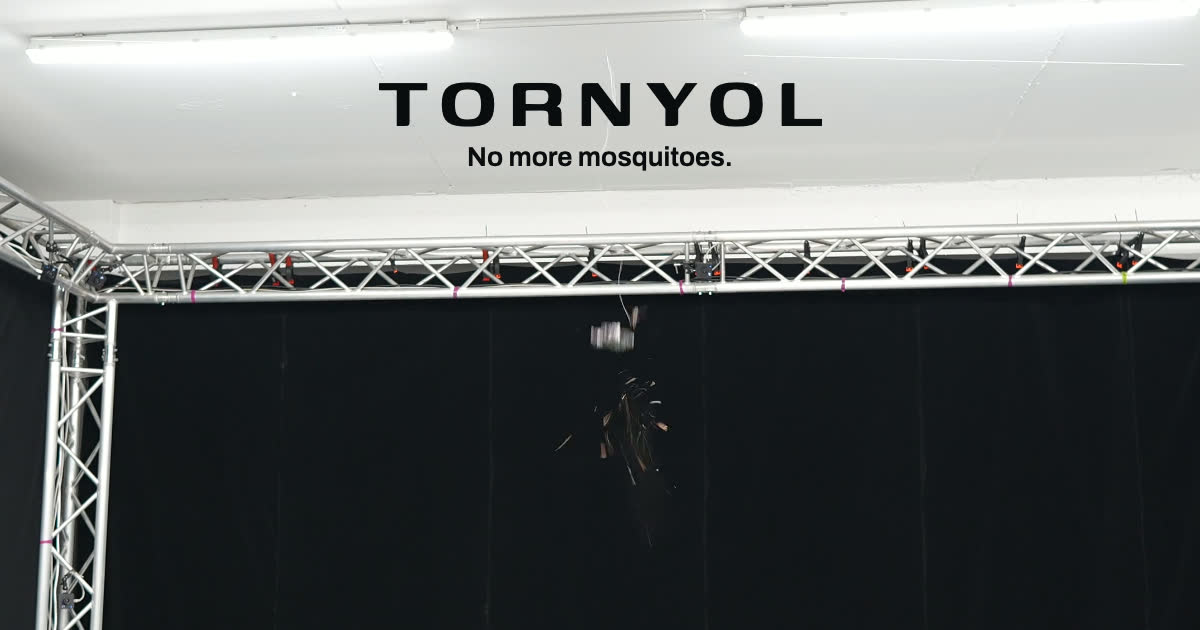
Tornyol is developing a 40-gram autonomous drone that combines microphones, ultrasonic phased-array sensing, signal processing, and flight control to locate and intercept flying insects. Its stated goal is continuous mosquito control without chemical spraying.
The technical challenge is unusually demanding. A mosquito is small, fast, and difficult to distinguish from background motion. The drone must detect a wingbeat, estimate a moving target's position, plan an intercept, avoid people and objects, manage propeller safety, and return for charging before its battery runs out.
The public milestone in July was an autonomous interception of a moth inside a controlled room. That is meaningful proof of tracking and physical interception, but it is still a prototype result. Reliable household use will require evidence on mosquito detection, false positives, noise, flight duration, recharge cycles, safety, and effectiveness in occupied spaces.
🔑 Key Takeaway
This week, AI escaped the chat window. It gained dedicated controls, moved through creative software, entered film pipelines, mapped physical spaces, competed through humanoid bodies, and started controlling small aircraft.
The opportunity is larger than faster content generation. AI is becoming an operating layer for tools and machines. The practical questions now are whether these systems can perceive reliably, recover from failure, expose their status to humans, respect the data they use, and deliver enough value to justify their compute and hardware costs.
FAQ
Which development has the broadest near-term impact?
AI inside existing production tools may spread fastest because teams can adopt it without replacing their whole workflow. Netflix's use across roughly 300 titles and the Blender benchmark both point in that direction.
Are the robot fighters fully autonomous?
The Shenzhen event demonstrates advanced humanoid control on a standardized platform, but public reporting does not establish that every fight action was selected and executed without human operation.
Can LingBot-Map replace LiDAR?
It can reconstruct geometry and camera poses from ordinary visual input without LiDAR, which is useful where cost and size matter. LiDAR may still offer advantages in measurement accuracy, darkness, range, or safety-critical applications.
Is Tornyol ready for household mosquito control?
Not yet based on the public evidence reviewed here. The project has demonstrated autonomous interception of a moth in a controlled room, while dependable mosquito detection and safe continuous home operation still require validation.