Five stories defined the technology week of July 13–19, 2026: Kimi went enormous, a Claude “50% discount” needed a fact-check, GitHub brought AI security findings into pull requests, Telegram turned chats into publishable communities, and AMD added more muscle for local AI.
The useful story this week was not that AI models got bigger again. It was that the surrounding infrastructure became easier to inspect, distribute, secure, and run closer to the user.
This roundup separates confirmed product details from launch-day claims. Prices, availability, dates, and limits below come from official announcements unless a secondary source is explicitly identified.
🧠 1. Kimi K3 arrives with 2.8 trillion parameters, but the weights are not out yet

Moonshot AI introduced Kimi K3 on July 16 as a 2.8-trillion-parameter mixture-of-experts model with native vision and a one-million-token context window. It activates 16 of 896 experts and is available through Kimi.com, Kimi Work, Kimi Code, and the Kimi API.
The API costs $0.30 per million cache-hit input tokens, $3 for cache-miss input, and $15 for output. Moonshot says full model weights will arrive by July 27. That distinction matters: K3 is usable today, but its promised open-weight release was still pending during this roundup period.
Moonshot also makes an unusually useful admission in its own launch post: K3's overall performance still trails Claude Fable 5 and GPT-5.6 Sol. Its benchmark tables and ambitious case studies remain vendor-reported results until independent testing catches up.
Independent developer Simon Willison did run the model through his long-running “pelican on a bicycle” test. The result confirmed valid SVG output and useful vision, but also exposed the cost of maximum reasoning: a deliberately simple prompt consumed more than 13,000 reasoning tokens. Bigger can be capable. Bigger can also be hungry.
🧾 2. Claude Fable 5 did not get a blanket 50% price discount
A number attached to Claude Fable 5 circulated without its unit. Anthropic's June 30 redeployment notice said Fable 5 would be included for up to 50% of weekly usage limits on Pro, Max, Team, and selected Enterprise plans through July 7, before moving to usage credits.
That was an access allocation, not a 50% API discount. Anthropic's current product page lists Fable 5 at $10 per million input tokens and $50 per million output tokens. The listed discount is 90% for cached input tokens through prompt caching.
This is a small wording difference with a large billing consequence. “50% of your weekly limit” describes how much access is included. “50% off” would describe the price. They are not interchangeable.
🛡️ 3. GitHub puts AI security detections where code is actually reviewed
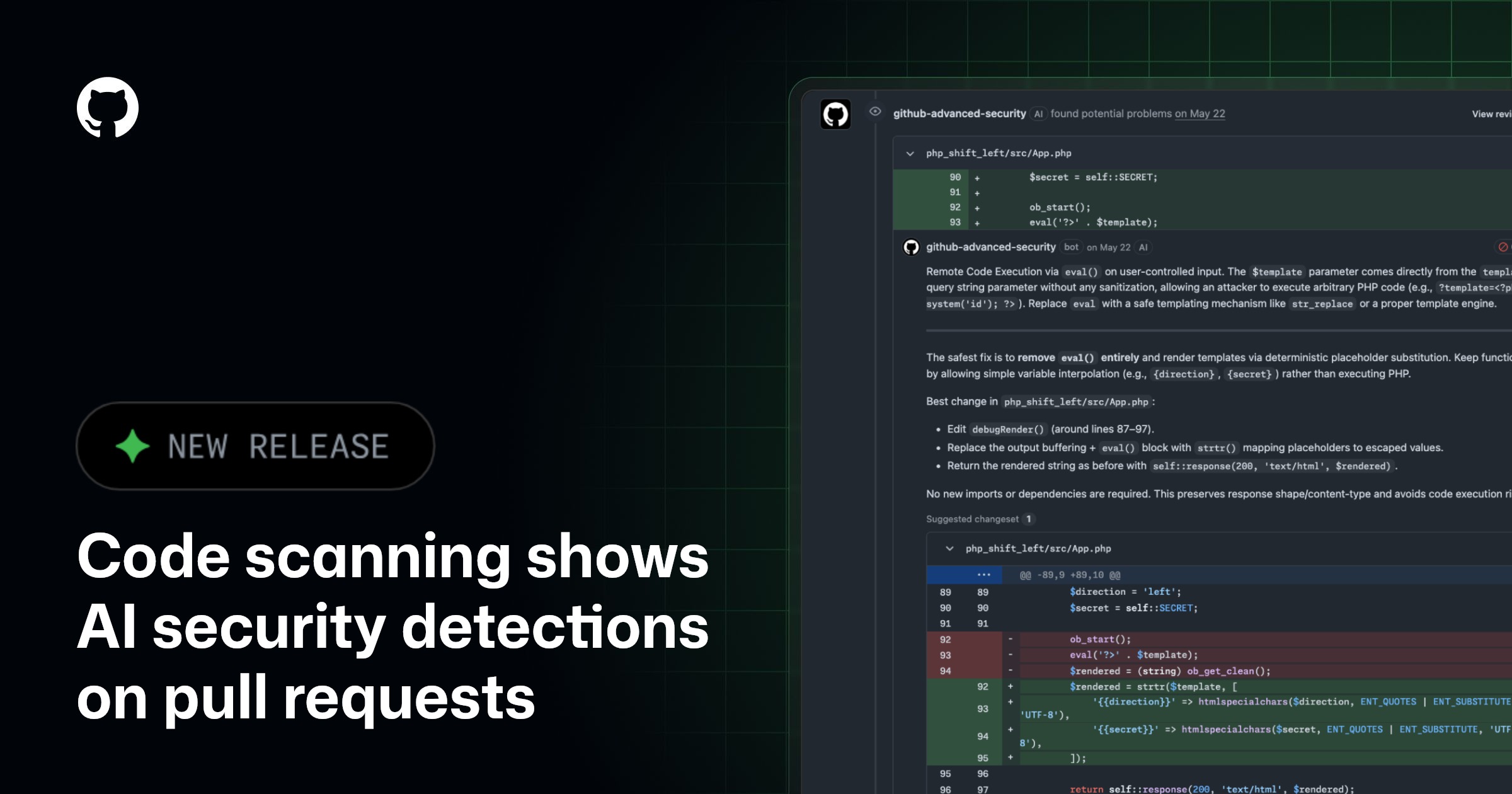
GitHub's July 14 update added AI-powered security detections directly to pull requests. The feature extends scanning to languages and frameworks outside CodeQL's built-in coverage, while labeling AI findings separately so reviewers can distinguish them from CodeQL results.
There are important limits. The findings are informational and do not block merges. The public preview requires GitHub Code Security, CodeQL default setup, an enabling enterprise policy, a Copilot license, and AI credits when detections run.
Three days later, GitHub made repository-level Copilot usage metrics generally available. New API endpoints report daily pull requests created or merged by the coding agent, plus code-review activity and suggestion counts. That turns an abstract “we use Copilot” claim into something teams can inspect repository by repository.
The pairing is more interesting than either update alone: one feature inserts AI into the review path, while the other makes its activity measurable.
💬 4. Telegram launches Communities, long-form editing, private bot replies, and 350 million GIFs

Telegram's July 14 update is unusually broad. Its new rich-text editor supports headings, tables, lists, quotes, code blocks, and inline photos or videos, with messages up to 32,768 characters. The editor is currently limited to Telegram Premium users.
Communities can link groups, channels, and bots under one shared topic. Members can discover visible chats without separate invite links, while admins can keep selected chats hidden or restrict who may add new ones.
Bots in groups can now send ephemeral messages visible only to one user. That is useful for confirmations, errors, menus, and AI summaries that would otherwise turn a group into a wall of machine chatter.
And yes, Telegram also expanded private GIF search to more than 350 million GIFs in 36 languages. The company says search runs against an offline index of widely shared public GIFs rather than sending queries to a third party.
🖥️ 5. FastFlowLM joins AMD as the local-AI software race heats up

AMD announced on July 17 that the FastFlowLM team had joined its Artificial Intelligence Group. FastFlowLM builds a lightweight inference flow for running large language and multimodal models on AMD-powered AI PCs and workstations.
The project grew from the open-source ecosystem around AMD's IRON NPU compiler and aligns with Lemonade, AMD's open-source inference initiative. AMD says the team will help improve its client and workstation AI software stack and support new models sooner.
This is less glamorous than a trillion-parameter launch, but probably more relevant to how many people will experience AI. Local inference affects latency, privacy, offline use, and the cost of repeatedly sending work to a cloud API.
🔑 Key Takeaway
This week's theme was operational visibility. Kimi published pricing and a clear date for its weights. Claude's confusing 50% figure becomes simple once the unit is restored. GitHub made AI security activity visible inside pull requests and measurable by repository. Telegram gave communities more structure without making every bot response public. AMD invested in the software needed to run models locally.
The sensible response is not to chase every launch. Check what is available now, what is only promised, how it is billed, where it runs, and whether its output can be reviewed. Those five questions cut through most release-day noise.
FAQ
Is Kimi K3 already fully open weight?
No. During July 13–19, Kimi K3 was available through Kimi products and API, while Moonshot said the full weights would be released by July 27, 2026.
Did Anthropic cut Claude Fable 5 pricing by 50%?
No blanket 50% API discount was announced in the cited sources. The 50% figure referred to how much of certain plans' weekly usage limits temporarily included Fable 5. Official API pricing was listed at $10 input and $50 output per million tokens, with a separate 90% cached-input discount.
Can GitHub's AI security detections block a pull request?
Not in the public preview described on July 14. GitHub says the findings are informational and do not block merges.