A question about Wikipedia AI copyright has reached a courtroom, but it also belongs on the screen where you read your next chatbot answer. On 30 October 2026, the Wikimedia Foundation announced an amicus brief in consolidated copyright litigation involving OpenAI and Microsoft. Its position makes an uncomfortable distinction: learning from human writing and retrieving that writing to answer a customer are different uses, and should not receive one automatic legal answer.
For readers, the distinction raises a simpler question. When an answer reaches us without the place that produced it, what have we lost? Sometimes almost nothing: a quick definition does its job. Sometimes we lose a correction, a reference, an unresolved disagreement, or the chance to become the person who improves the next version. Wikipedia's intervention is useful because it asks us to examine that relationship rather than choose a team in a contest between publishers and AI companies.
⚖️ A friend of the court is making a specific argument
The Foundation's 30 October announcement describes its filing in the Southern District Court of New York. The proceeding brings together 12 lawsuits; the best-known is the case brought by The New York Times against Microsoft and OpenAI. An amicus submission offers a court an interested outside party's arguments. It is not a judgment, a settlement, or a new rule that AI products already have to implement because Wikimedia requested it.
That procedural detail changes how the story should be read. Headlines can compress a filing into a victory or a confrontation. Here, the Foundation says it is defending open knowledge, and its longer explanation explicitly says it is not taking the side of either OpenAI or The New York Times. Readers should hold onto that sentence. Supporting an argument about one use of material does not endorse every practice of the company making that use.
Wikimedia argues that an excessively restrictive interpretation of fair use could impede open-source development. It also argues that a blanket exemption for AI could weaken the sources Wikipedia itself needs. Those are its assessments of possible consequences. They are not outcomes established by this filing, and they do not establish what the court will decide. The position is interesting precisely because it refuses to treat every stage of an AI product as the same activity.
For an Indonesian reader, there is another boundary. This is an argument in United States litigation, using a United States legal doctrine. It should not be presented as a universal declaration of what Indonesian copyright law permits. A product's international availability does not erase jurisdiction. The useful public question travels across borders; a particular legal exception does not automatically travel with it. This article explains the dispute and offers an editorial reading, not individual legal advice.
🧠 Learning patterns and fetching a passage are different acts
Training a model and answering a particular question happen at different stages. In its explanation, Wikimedia describes training as learning patterns from collections of material. The Foundation argues that using copyrighted works for training may qualify as fair use when the resulting model is something new and different from the works. That is a conditional legal position. It should not be shortened to a claim that everything available online is free training material everywhere.
Retrieval-augmented generation, usually shortened to RAG, introduces another step. A system finds outside material and uses it to construct an answer. The source may be consulted because it contains a useful passage or current information. Wikimedia argues that when products retrieve and reproduce copyrighted content this way, they should respect the source's licensing requirements rather than rely on a blanket fair-use claim. Its filing also discusses newer techniques serving a similar grounding purpose.
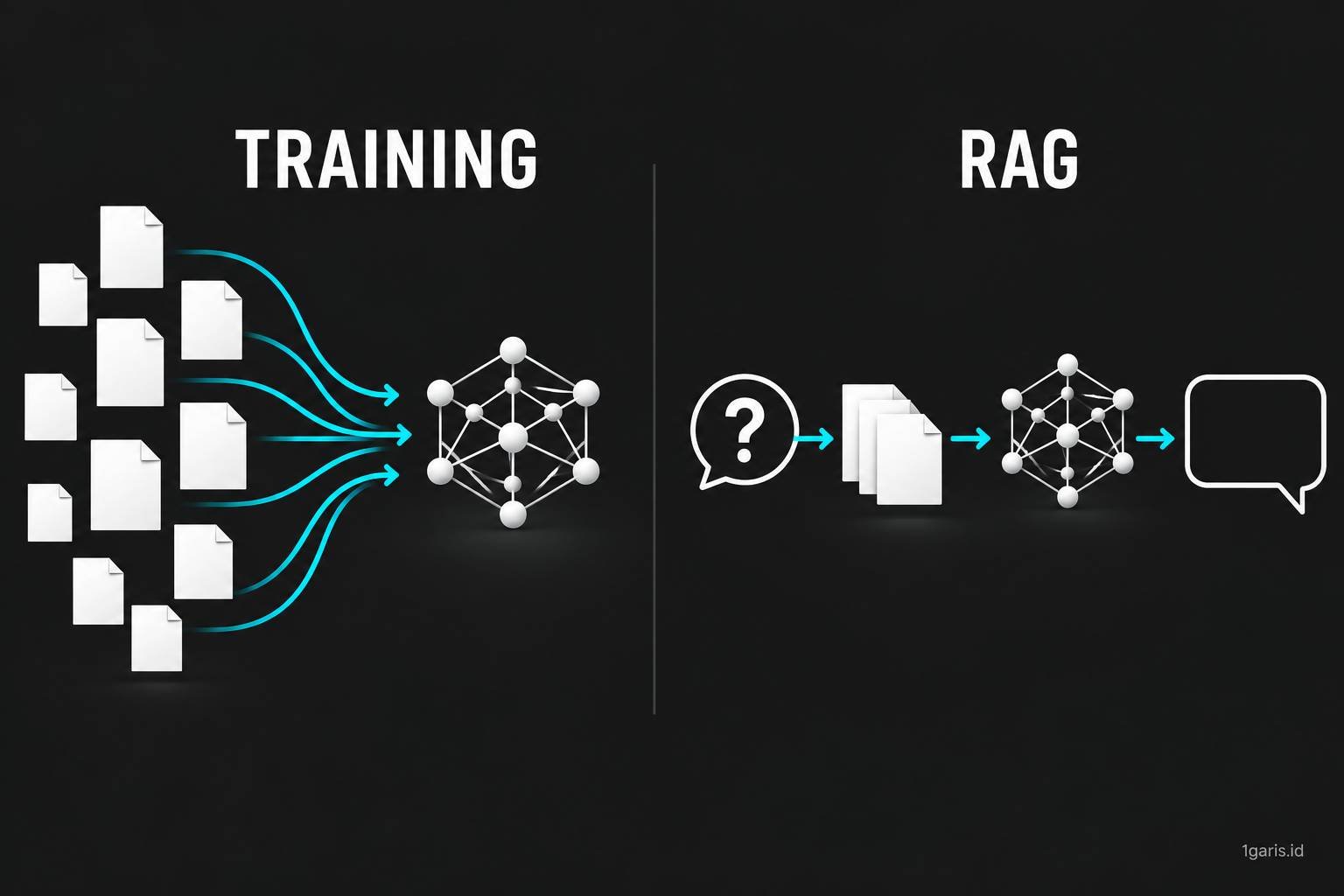
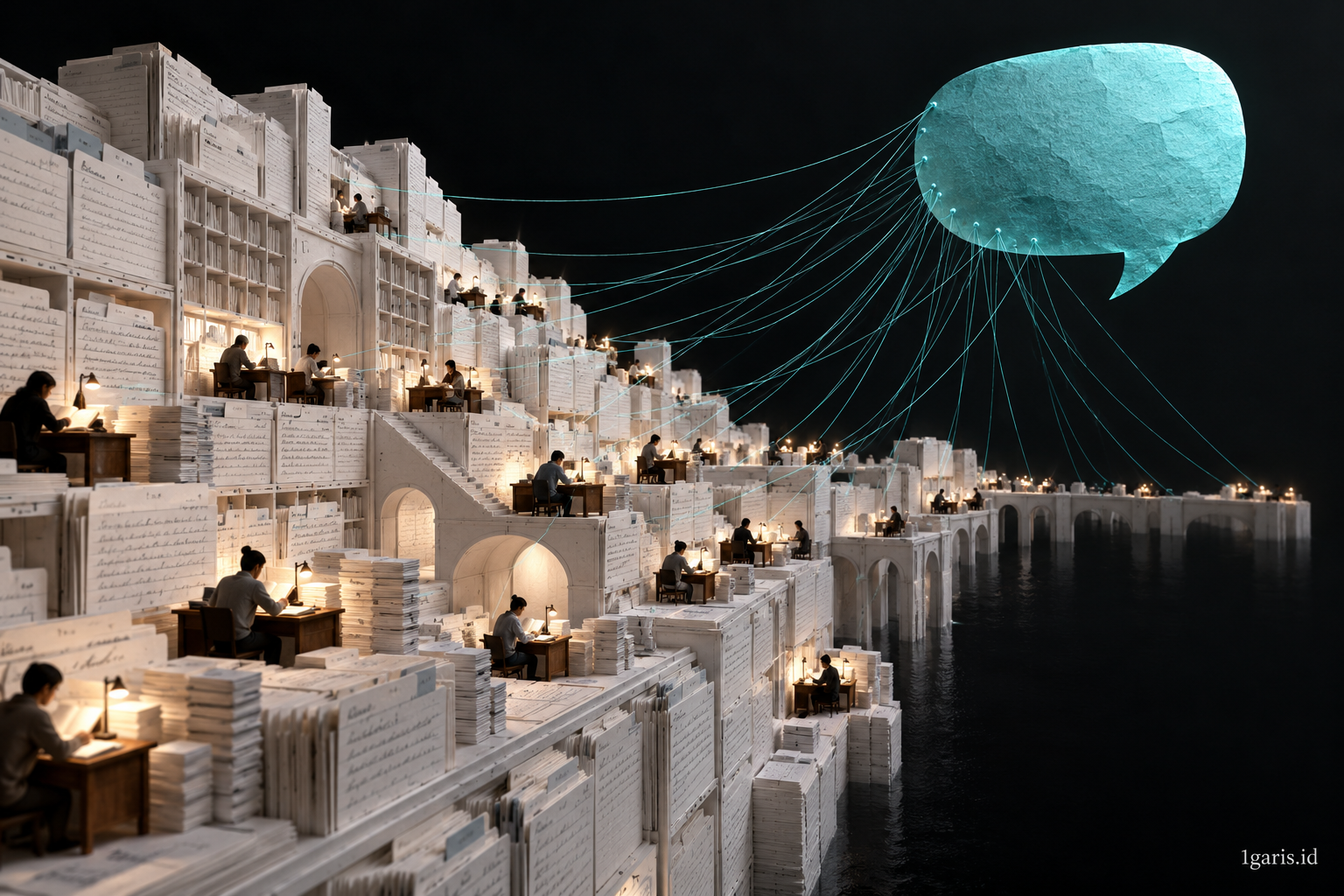
A practical comparison helps, provided we do not mistake the comparison for a legal test. Imagine a student studying a shelf of books, then separately opening one book to quote a passage in an assignment. Both acts involve reading, but the assignment creates a specific relationship between an output and a source. An AI model is not a student, and copyright analysis cannot be settled by an analogy. The comparison simply explains why the moment of use matters to Wikimedia's argument.
Nor should readers assume that a chatbot's confident sentence reveals which process produced it. The interface may show links, excerpts, or other indications, but the tone of the prose cannot tell you whether it came from model parameters, retrieved material, or a combination. For an important claim, the relevant test is whether you can find and inspect supporting evidence. Fluency describes the sentence. It does not establish the relationship between that sentence and the world.
This distinction lets us ask better questions of a product. Does it identify the page it consulted? Does the page support the particular claim, rather than merely discuss the same subject? Does the answer preserve a source's caution about dates, estimates, or competing interpretations? These are reader-facing questions, not a demand that every user become a machine-learning engineer. They turn an abstract argument about inputs into an observable standard for the answer on the screen.
👥 Wikipedia is a place where knowledge gets maintained
The Foundation reports that Wikipedia has more than 67 million articles across over 300 languages, and that nearly 250,000 volunteers contribute each month. Those figures, repeated in its September and October 2026 statements, describe the scale claimed by the organization. They should not be confused with a count of paid authors, a measure of the accuracy of every article, or evidence that every language edition has equal coverage.
The more important fact for this discussion is the work those contributors do. Wikipedia offers articles, references, revision histories, and places where editorial decisions can be discussed. A statement can be amended after a new source appears. A disputed description can be challenged. A reader can move from the finished paragraph to the evidence cited beneath it. These features do not make mistakes impossible. They give a reader routes for investigating and correcting them.
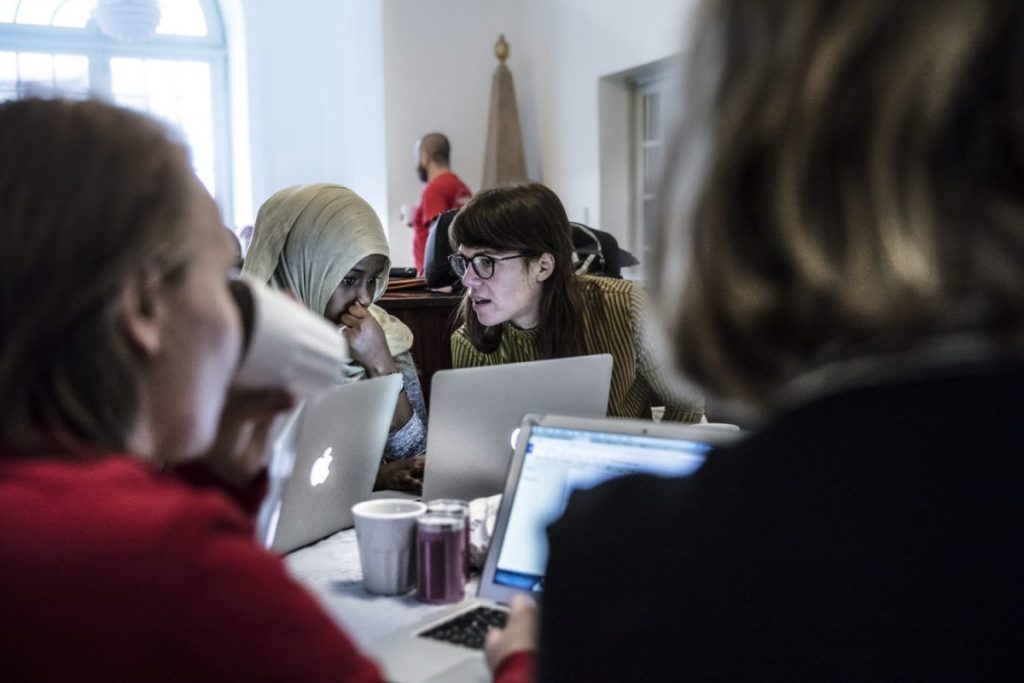
The historical photograph here shows the Art+Feminism Wikipedia edit-a-thon at the Royal Armoury in Stockholm on 8 March 2017. It is evidence of that documented gathering, not a picture of the October court filing or a claim about how all editing happens. Its value is modest and specific: knowledge that appears effortless on a screen can have a visible social setting, with people working together to improve it.
Wikimedia's November 2025 account of Wikipedia and AI describes volunteers as the people who write and control article content, while the Foundation provides technological and legal support. That distinction matters. A statement from the Foundation is a primary source for its institutional position. It should not automatically be treated as a declaration that every volunteer agrees, or that every Wikipedia article expresses the Foundation's opinion.
Consider a reader checking the history of a local institution. A concise answer may provide a date, but the underlying article could distinguish the founding of an organization from the opening of its current building. The point is hypothetical, not a reported error in a named AI product. It illustrates what maintenance contributes: categories, qualifications, and decisions about evidence that a short answer can hide even when its central fact is correct.
🔗 Credit should let a reader go somewhere
Attribution is easy to reduce to a name in small type. Wikimedia's argument gives it a more demanding role. Credit should preserve a connection between information and the people who made it available. For readers, that connection needs to be usable. A source name with no inspectable page may signal courtesy, but it gives little help when you need to establish exactly what supports a sentence.
The Creative Commons explanation of CC BY-SA 4.0 says users may share and adapt licensed material, including commercially, subject to conditions. These include appropriate credit, a link to the licence, and an indication of changes. Adaptations must be shared under the same licence. The deed also warns that it is a summary, not the legal text, and that other rights can still matter. Open licensing grants permissions; it does not mean the material has no author or conditions.
Wikimedia identifies CC BY-SA 4.0 as Wikipedia's licence in its filing announcement. That does not mean every image displayed on a Wikipedia page has that same licence. The photograph in this article, for example, has its own source page and CC BY-SA 3.0 attribution. Text, a photograph, a logo, and a quoted passage can carry different rights. Reading the page is the start of checking permission, not the end.
There is a practical design question here. If an answer combines several sources, the user should be able to understand which reference supports which claim. That is an editorial recommendation, not a claim that a particular arrangement alone satisfies copyright law. A decorative list of plausible links can still leave the reader unable to check the answer. Good attribution makes the route back visible enough to use without guessing.
It also avoids pretending the source endorses the output. A source may provide a fact without endorsing the chatbot's interpretation of it. A Creative Commons attribution should not suggest endorsement, and an editorial citation should not imply an interview that never happened. Giving credit accurately includes saying what kind of relationship exists. A retrieved document is a document consulted, not a person who reviewed the answer before publication.
📉 The traffic warning has a date and a measurement problem
A decline in visits is an appealing number for a story about AI. It is also where careless reporting can create a misleading claim. In its 17 October 2025 traffic update, Wikimedia described revising bot detection after unusual traffic that appeared human. Applying revised classification changed the picture for an earlier period. The update reported human pageviews roughly 8 percent lower than the same months in 2024.
That is a dated comparison, not a fresh measurement of November 2026 readership. It should not be recycled as an assertion that traffic fell another 8 percent this month. Wikimedia itself warned that changes in classification require care when interpreting data collected under different rules. A line on a chart depends on what is being counted. If automated visits are misidentified as human readers, the story told by the line changes.
The Foundation said it believed the decline reflected changes associated with generative AI and social media, including answers displayed directly in search. That is its interpretation of observed trends. The update is not an experiment isolating AI as the sole cause of every missing visit. An honest article can report the concern without converting that concern into a precise causal finding. This distinction is especially important when a dramatic number is likely to be repeated without its surrounding explanation.
There is still a plausible institutional risk worth discussing, and Wikimedia describes it directly. Fewer visits may mean fewer opportunities to attract contributors and individual donors. The word “may” does real work here. A visit does not automatically become a donation or an edit, and no source in this article gives a conversion rate that would justify calculating an exact loss. The concern is about keeping paths into participation open, rather than assigning an invented monetary value to each click.
Readers can apply the same discipline to the next claim that AI has destroyed or rescued a website. Ask which period is being compared, whether humans and bots are separated, whether the measurement changed, and who is interpreting the cause. A source can be authoritative about its own analytics while still needing caution about explanation. Precision protects an important argument from becoming a slogan that is easier to dismiss.
🏛️ A free resource still needs people and infrastructure
At the United Nations General Assembly events described on 30 September 2026, Wikimedia argued that AI policy must consider the institutions behind its inputs. Its account describes appearances at the UN, the Clinton Global Initiative, and Devex Impact House. These were advocacy engagements, not evidence that the UN adopted Wikimedia's proposed copyright position or that an international agreement had resolved the dispute.
The underlying question is plain enough. Readers can access Wikipedia without paying an entry fee, but serving pages, maintaining systems, and supporting a community require resources. Wikimedia says heavy scraping puts a burden on infrastructure. In its October filing announcement, it asks reusers to respect public API rate limits or use Enterprise API offerings. The relevant distinction is between public access and unlimited extraction without regard to the service supporting that access.
This is also why the story cannot be reduced to whether an ordinary reader should feel guilty for using a summary. The institutional choices involve product design, large-scale reuse, technical access, and financial support. A person checking a definition is not in the same position as an organization building a commercial service from repeated retrieval. Responsibility should be discussed at the scale where decisions can actually change resource use and the visibility of sources.
The Foundation's position has tensions worth keeping in view. It wants room for open-source innovation, conditions on reuse that reproduces source material, sustainable access, and a continuing flow of readers and contributors. Those goals may not always align neatly in a product or a court ruling. Naming the tensions is more useful than assuming that putting a citation button on an answer solves every legal, financial, and community problem at once.
The linked panel provides primary context for Wikimedia's advocacy during that week. It does not replace the filing or prove every institutional prediction. Long video discussions and written legal arguments serve different purposes. A reader following the copyright dispute should use the announcement and linked filing for the position, and the panel for the broader public argument about keeping human knowledge visible.
📖 Reading a summary without disappearing from the source
A practical habit can start with stakes. If you need a spelling, a quick orientation, or a reminder of a familiar term, a concise answer may be sufficient. If you are making a health decision, publishing an accusation, comparing legal obligations, or explaining a disputed event, an inspectable source matters much more. This is a recommendation about reading effort, not a claim that every low-stakes answer is correct or every linked answer is safe.
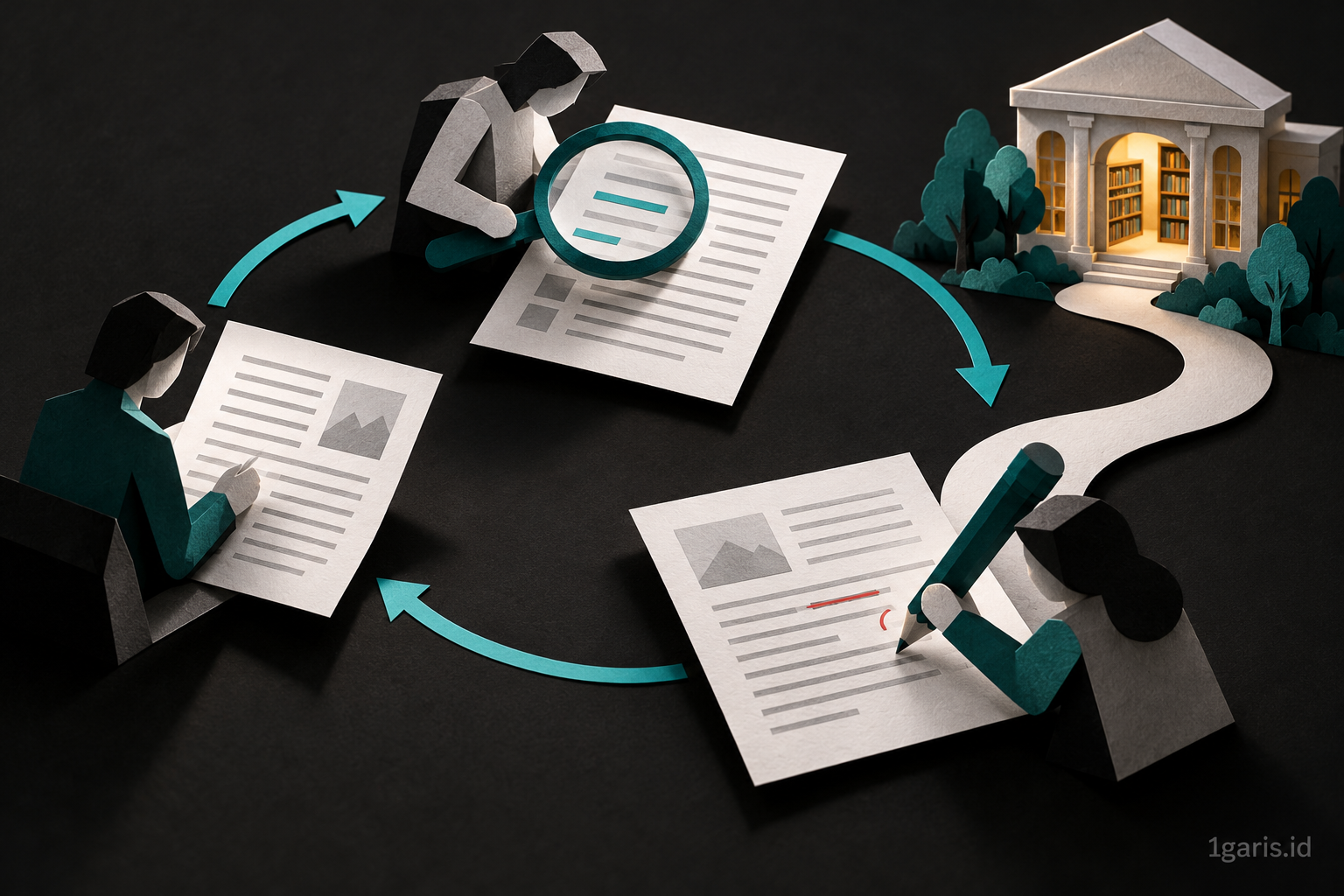
For a consequential claim, open the reference and find the passage that supports it. Check its date. Notice whether the author is reporting an event, offering an interpretation, announcing a plan, or describing a possibility. A filing and a judgment are different documents. So are a product preview and a feature available in your country. The Wikipedia copyright story is itself a useful practice exercise because those distinctions change its meaning immediately.
A small sequence is enough to make the habit concrete:
- Identify the one claim your decision depends on, rather than trying to verify every background sentence at once.
- Open the cited page and locate support for that claim. A shared subject or a familiar organization name is not enough.
- Preserve the original qualification when you repeat it. Keep a proposal as a proposal and an estimate as an estimate.
- Look for an additional authoritative source when the consequences are significant or the first source is advocating for its own interests.
None of this requires reading every reference in every Wikipedia article. It asks readers to retain the option of going deeper. A summary is most useful when it gives orientation while preserving that option. It becomes less useful when it closes the investigation prematurely, especially if its confident tone encourages you to treat a contested claim as settled. The question is whether the short answer leaves the longer conversation accessible.
There is a positive version of that relationship. An answer can introduce a subject that leads a reader to the article, its references, and eventually a correction or contribution. That is a possibility, not a measured outcome established here. It gives product designers a clear ambition: help people complete a quick task without making the underlying place of knowledge invisible to people who want to continue.
🌱 The next correction needs somewhere to arrive
The most persuasive part of Wikimedia's intervention is its insistence that knowledge has a continuing life after it becomes a useful answer. A date can change because new evidence appears. A familiar explanation can become inadequate. A neglected subject can gain a better source in a language that was previously poorly represented. None of those improvements happen simply because an old answer was delivered more elegantly.
That observation is an editorial position, not a forecast that Wikipedia will vanish or that AI will necessarily destroy its sources. The evidence supports a narrower account: Wikimedia sees risks to visibility, infrastructure, and participation, and has asked a court to distinguish between forms of AI reuse. The court's eventual response must be reported when it exists. The present filing cannot be made to answer a question it has only asked.
For readers, the immediate decision is smaller than the litigation. When an answer matters, keep its route back to human evidence intact. Visit the source, carry its qualifications forward, and distinguish the institution's argument from the facts on which it rests. For product makers, credit should make that route understandable and usable, while the larger questions of licensing and sustainable access receive their own attention.
Wikipedia does not need every reading session to become an act of volunteer service. But a public knowledge project needs people who can still find it, question it, and improve it. The October brief is worth reading because it gives that ordinary relationship a place in an argument often dominated by corporate rights and technical capability. The next correction needs a destination, and readers should be able to see where it belongs.
Sources: Wikimedia Foundation's 30 October 2026 filing announcement and Diff explanation; its 30 September 2026 UNGA account, 17 October 2025 traffic update, and 10 November 2025 AI essay; Creative Commons CC BY-SA 4.0 deed. Source links appear alongside the relevant claims; the 2017 photograph has its own Commons source and licence in its caption.