On June 20, 2026, an unoccupied Zoox robotaxi reached an active fire scene in Las Vegas where heavy smoke obscured the road. The area had not yet been cordoned off with traffic cones. The vehicle entered the smoke, braked hard while trying to steer away, and stopped.
A remote teleguidance tactician then guided it in reverse. First responders subsequently placed cones across two of the three lanes. No injuries were identified.
That single event led Zoox to recall software covering 105 autonomous vehicles operating on public roads. The number is modest by automotive standards. The lesson is not.
🔥 What happened at the fire scene?
The clearest account comes from Zoox's Part 573 safety recall report filed with the US National Highway Traffic Safety Administration. It describes an unusual but realistic combination of conditions: dense smoke, an active emergency scene, low visibility, and no physical lane closure yet.
The robotaxi did react. It attempted to steer away and braked. But the reaction came after it had already entered an area where the system's ability to understand the road was materially degraded.
This was not simply an obstacle-detection problem. Smoke can erase lane boundaries, hide people and vehicles, distort depth cues, and conceal the emergency itself. The safe decision may be to avoid the uncertainty rather than continue until a conventional obstacle becomes visible.
Zoox said its review found this was the only event of its kind and identified no injuries. The recall report nevertheless treats the behavior as a safety defect because the automated driving system could fail to detect heavy smoke and enter a low-visibility area—especially an active emergency scene.
🧭 The difficult part was deciding when not to proceed
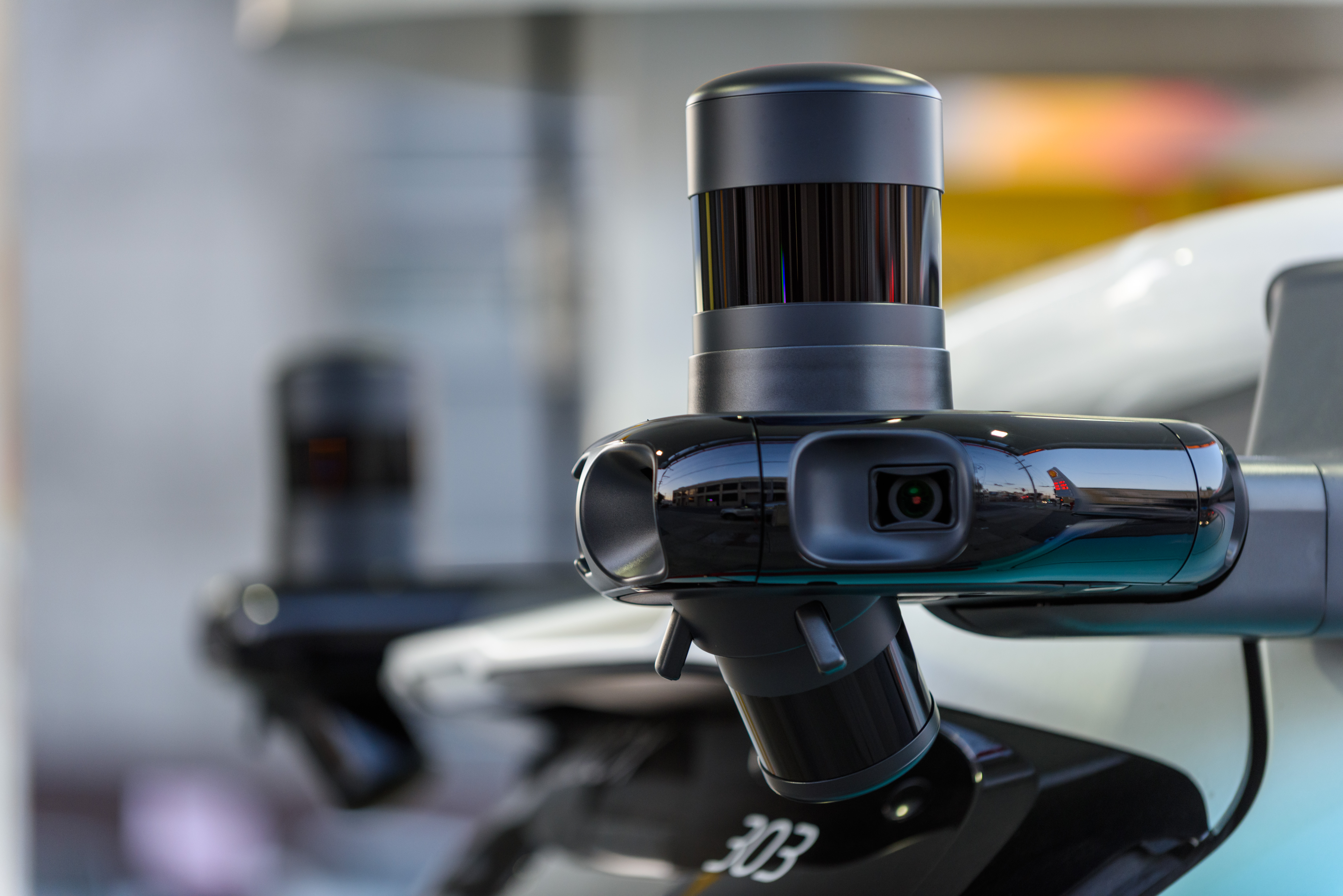
Autonomous vehicles combine cameras and other sensors with software that estimates what is around the vehicle and predicts what may happen next. Much of the public debate focuses on whether the system can recognize a pedestrian, cyclist, traffic light, or stopped car.
This recall points to a different requirement: recognizing when the environment has stopped being reliably observable.
A human driver approaching a wall of smoke can draw on broad context. Smoke often means fire, emergency vehicles, unpredictable people, debris, and rapidly changing visibility. A machine needs an operational rule that converts those weak signals into a conservative action before certainty disappears.
The incident also shows why cones cannot be the only trigger for emergency-scene behavior. First responders may not have secured every approach when a vehicle arrives. A robust system must treat smoke, flashing emergency lights, stopped traffic, responders, and sudden visibility loss as a combined risk—not wait for one perfect marker.
🛠️ Why a software update still counts as a recall
For software-defined vehicles, a recall does not always mean owners drive to a workshop or technicians replace a physical component. The defective component here was the automated-driving software, and the remedy was an updated software version designed to improve detection of and response to heavy smoke.
That distinction matters because over-the-air deployment can make the repair fast, but it does not make the original defect trivial. A recall is a formal safety process: the affected population is identified, the risk is documented, a remedy is deployed, and regulators retain a public record.
It also gives outsiders something more useful than a vague promise that the system is “always learning.” The public record states the scenario, the affected fleet, the observed behavior, and the corrective direction.
🚒 Emergency scenes are moving edge cases
Construction zones and emergency scenes are difficult for automated systems because they temporarily rewrite the road. A lane that is normally open may be blocked. A responder may direct traffic against ordinary signals. Smoke or dust may erase the visual structure used for navigation.
The June incident adds a particularly important detail: the emergency scene was active before it was fully marked. Safety cannot assume that cones, signs, or a clean detour will already be present.
Remote assistance helped resolve this event, but remote assistance is not a substitute for a safe first response. The vehicle still needs to slow or stop early enough to preserve options, avoid obstructing responders, and request help from a position that does not add another hazard.
📋 Three questions this recall puts on every autonomous fleet
1. What makes the vehicle declare low confidence?
The threshold should account for degraded visibility and conflicting context, not only missing map features or an unrecognized object.
2. What is the minimum-risk action?
Stopping is not automatically safe if it blocks an intersection, fire lane, or evacuation route. The system needs a hierarchy of safe places and maneuvers.
3. How quickly can one event protect the rest of the fleet?
Central software deployment is an advantage only when investigation, validation, rollout, and regulatory reporting are disciplined enough to prevent recurrence without creating a new failure mode.
🔑 Key Takeaway
The Zoox recall is a compact example of a large engineering truth: an autonomous system needs to know not only what it sees, but when it can no longer trust what it sees.
The vehicle avoided injury in this event, remote guidance helped it retreat, and the fleet received a software remedy. But the incident should not be reduced to “the car was confused by smoke.” The more useful lesson is that rare, messy conditions—before cones are placed and while responders are still controlling the scene—are exactly where conservative system behavior matters most.