
A restaurant in Denpasar publishes its menu, opening hours, and booking number because customers need them. Its chef’s private notes, supplier prices, staff roster, and wholesale agreement belong somewhere else. That distinction is obvious when a person visits the site. It becomes less obvious when an automated visitor arrives, copies pages at scale, stores them, and may later answer a customer without sending that customer back.
For a small Indonesian business, an AI crawler policy is not a technical fashion item. It is a short set of decisions about what the public site is for, which automated uses are acceptable, and what must stay behind a login, payment wall, or controlled API. Make those decisions before spending another month changing title tags, chasing keywords, or buying an SEO audit. SEO improves discovery. A crawler policy decides the terms under which discovery, reuse, and automated action happen.
Here is the working snapshot before a team opens its hosting dashboard:
- One public URL can serve several purposes. It may be found by search, quoted in an answer, used by a live agent, or collected for model training.
- A bot label alone is weak evidence. Cloudflare’s Verified bot standard requires honest, deterministic identification and non-abusive conduct, not merely a familiar user agent string.
- **
robots.txtis a request, not a gate.** RFC 9309 explicitly says Robots Exclusion Protocol rules are not access authorization. - Search visibility and AI reuse are different business decisions. Treating them as one switch creates avoidable trade-offs.
- Access controls protect sensitive material. Authentication, permissions, and server-side checks do the work that a crawl directive cannot.
🤖 The website visitor that does not browse like a person
A person usually arrives with a visible path. They tap a search result, share a link in WhatsApp, or type a domain. They load one or two pages, make a judgment, perhaps send a message. Analytics can be imperfect, but the visit has a recognisable shape.
An automated client can behave very differently. It may request hundreds of product pages overnight, fetch a page only when a user asks a question, render a browser to complete a form, or build a copy that survives long after the original page changes. Those are distinct operations, even if every request uses an ordinary HTTP connection and even if the visitor calls itself an AI assistant.
Cloudflare’s July 1, 2026 article offers a useful vocabulary. It separates three broad uses: Search, Agent, and Training. Search collects or indexes content so it can answer queries later. Agent traffic acts in real time on a person’s behalf, such as checking a current price, finding an address, or carrying out a task in a web application. Training traffic collects content to train or fine-tune a model, where the material becomes part of model capability rather than a fresh visit to the source.
The same article adds a second question: how much of the content is used? Its terms are immediate, reference, and full use. Immediate use is closer to an agent reading what it needs for a request now. Reference use keeps enough material or an index to return to later. Full use captures the content for broader retention or ingestion. These labels do not solve every edge case, but they force a conversation that “allow AI” never can.
A hotel’s public room availability page provides a practical example. Allowing a real-time agent to read today’s availability may help a guest make a booking. Allowing a search service to index the page may bring referral traffic. Allowing a system to retain the complete pricing archive can be a different commercial proposition, especially if the hotel changes rates frequently or sells through partners. The website owner does not need to reach the same answer for all three.

Small teams should also resist the idea that every bot is hostile. Payment providers need webhooks. A monitoring service checks whether a checkout page is available. A social platform fetches an image and description to create a link preview. An accessibility checker may inspect templates. A search engine crawler may remain an important source of local demand. A blanket block can quietly break these useful systems.
The better starting point is to identify behavior and consequence. Ask what the automated visitor is doing, whether it identifies itself reliably, what it retains, whether it sends people back, and what happens if it gets the answer wrong. A rate-limited request for the current address has a different risk from an opaque crawler retrieving every article and attachment.
That distinction matters particularly for Indonesian businesses that depend on a mix of Google Search, Maps, marketplace listings, Instagram, and direct WhatsApp enquiries. Their websites are often small but commercially dense: a single page can contain service scope, price ranges, registration details, and the relationship-building language that differentiates the business. The question is not whether automation exists. It is whether the site has deliberately decided which automation can use which part of that public work.
🧭 Start with a decision, not a bot list
A bot list feels concrete. It contains names, user agents, and allow or deny rules. It also goes stale. Providers rename products, route traffic through intermediaries, add new crawlers, and change documentation. A list is still useful as an implementation record, but it is a poor first policy.
Begin with four decisions that an owner, editor, developer, and customer-facing staff member can understand.
First, decide the purpose of each public content area. A service page may exist to generate enquiries. A documentation page may exist to reduce support tickets. A newsroom article may build authority and earn links. A client portal exists for authenticated clients, not for general discovery. The purpose tells you which kinds of automated access might support the business and which undermine it.
Second, decide the acceptable exchange. If a crawler indexes a guide and sends a reader to the original page, the team may accept that as discovery. If a live agent reads a published FAQ and sends the user to a booking form, the exchange may also be acceptable. If an operator stores full articles, returns complete answers elsewhere, and supplies no meaningful attribution or referral, the team may choose to decline. There is no universal correct setting. There is a decision that should be visible to the people maintaining the site.
Third, decide the red lines. Personal data, invoices, member records, internal PDFs, unpublished campaign pages, and administrative endpoints should not be treated as crawler-policy material at all. Remove accidental public exposure and enforce server-side access. A Disallow line is not a privacy program.
Fourth, decide what a request must prove before it receives an exception. For a customer support tool or a business partner’s automated service, a generic promise that it is “safe” is insufficient. Require documented identity, a stable technical method to verify it, a disclosed purpose, reasonable rate limits, and a contact route when behavior changes.
Write the result as plain-language policy before translating it into configuration. For example: “We permit documented search crawlers to index public service and editorial pages. We permit verified, real-time user-directed agents to read public booking and location information at normal browser-like rates. We do not permit automated collection of member content, checkout endpoints, internal documents, or complete archives for training without an agreement.” That statement gives a developer something coherent to implement and gives staff a reference when a vendor asks for access.
Do not pretend the policy is a contract merely because it is published. It communicates your preference and can support operational enforcement, vendor conversations, and incident review. Its value grows when it matches real controls and real page architecture.
A short decision record should name an owner and a review date. For a small business, quarterly is often enough, plus a review before launching a new portal, knowledge base, pricing model, or agentic booking flow. The document can fit on one page. The important part is that a future staff member can tell why a rule exists rather than deleting it because it looks unfamiliar.

📜 robots.txt still matters, but it is not a lock
robots.txt remains part of responsible web operations. Under RFC 9309, the Robots Exclusion Protocol file is served at the site’s /robots.txt path. It provides groups and rules that crawlers can use to determine where they are requested not to go. Keeping the file reachable, syntactically clear, and aligned with the site’s public architecture is basic housekeeping.
It is also easy to overstate what the file can do. RFC 9309 is direct: REP rules are not a form of access authorization. They do not authenticate a requester, encrypt a page, revoke a copied file, or force a malicious scraper to comply. A URL that returns content publicly still returns content publicly to any client that ignores the rule.
Google makes the operational limitation equally clear. Its documentation says robots.txt is mainly for managing crawler traffic and is not a mechanism for keeping a web page out of Google. A blocked web-page URL may still appear in search results if Google discovers it through links elsewhere, often without a description. Google recommends noindex, password protection, or removal when the goal is to keep a page out of Search, depending on the situation.
This is why a small business should use the right layer for the job:
- Use
robots.txtto state crawl preferences and reduce unwanted crawling of public paths. - Use
noindexwhere a page can be crawled but should not be indexed, while understanding that crawlers must be able to see the directive. - Use authentication and authorization for client portals, dashboards, records, downloads, and administration.
- Use server-side validation, CSRF protection, rate limits, and transaction controls for forms, checkout, and actions.
- Use removal or access restriction when material should not be public at all.
A practical robots file should be boring. Avoid a long museum of old crawler names copied from a forum. Keep rules grouped by purpose, add a comment only where it explains a business decision, and ensure the sitemap location is accurate if one is used. Test the live file after deployment. A misplaced directory rule can block valuable discovery; a forgotten staging path can invite pointless crawling.
When creating crawler-specific rules, check the crawler’s current official documentation and use the documented token. Do not assume a user agent string is genuine just because it says a well-known company name. Request headers can be forged. Where a provider publishes IP validation, reverse DNS validation, or cryptographic bot authentication, use the provider’s documented verification procedure rather than an informal string match.
Cloudflare’s Verified bots documentation describes that standard in useful operational terms. A verified bot or agent is transparent about who it is and what it does. It must meet two bars: honest self-identification and non-abusive behavior. The latter includes respecting robots.txt and crawl directives, maintaining reasonable request rates, and not evading site-owner preferences or attacking sites. Verification is a basis for more informed treatment, not a reason to give the visitor unrestricted access.
For example, a verified crawler may be allowed to fetch public articles at a controlled rate while an unverified client attempting the same pattern is challenged or limited. That is a proportionate response. It does not mean a verified client should reach a customer database, a preview URL, or an endpoint that performs an action. Identity changes the confidence in the request. It does not change the sensitivity of the destination.
🔎 Keep search discovery separate from AI reuse
Many website discussions collapse two questions into one: “Do we want AI traffic?” The first question should be, “Do we want people to discover this page through search?” The second should be, “What kinds of automated reuse do we accept once the page is public?” They often produce different answers.
Search discovery still matters for a local clinic, manufacturer, consultant, school, or restaurant. A specific, well-maintained page can match a customer’s problem at the moment they are looking for help. Blocking all crawlers in reaction to AI anxiety can remove a useful acquisition channel without protecting confidential material. The damage may only become visible months later as fewer enquiries arrive from non-brand searches.
At the same time, a search result that answers more on its own page changes the economics of publishing. If your business invests in original advice, local reporting, comparison tables, or specialist documentation, it is reasonable to ask whether automated systems return enough attribution, referral, or commercial value. The answer can differ between an address page, a public policy page, a long editorial guide, and a paid research report.
Cloudflare’s Search, Agent, and Training categories help prevent a crude response. Search may create an index for later answers. Training may permanently absorb material for model improvement. Agent traffic may retrieve a current detail in response to a person’s immediate instruction. The categories can overlap in practice, and one operator may run multiple services. Still, their different time horizons are meaningful.
Consider a furniture workshop in Java. It may welcome search indexing of public product categories because discovery produces enquiries. It may allow an agent to read current showroom hours or ask whether a listed item is available. It may reserve high-resolution production drawings, trade price lists, and detailed material specifications for approved buyers. It may also decide that its original project case studies should not be collected wholesale for model training absent a negotiated arrangement. That is not anti-technology. It is a decision about what the business is offering publicly and what it is selling.
Separate technical controls help preserve this distinction. Maintain a clean public sitemap for pages intended for discovery. Keep public pages stable and useful to human visitors. Put non-public materials behind authenticated routes rather than hiding their links in obscure folders. Where an AI or bot management platform can classify traffic by behavior, apply the policy by category rather than assuming all automation has one purpose.
Do not promise search visibility that your configuration cannot preserve. Google’s guidance is a reminder that blocking crawl access and preventing index appearance are different operations. If a page needs to remain findable, do not casually block the resources needed to render and understand it. If it must disappear from Search, use the appropriate indexing or access control method and check the result over time.
The commercial question is also broader than referral clicks. A public technical guide may reduce support workload even when readers do not visit every time. A current service page can prevent mistaken enquiries. A direct agent may help a legitimate customer complete a booking. Define the value you expect from each area before selecting a default. The policy should protect leverage without treating every helpful automated interaction as theft.
🧾 Decide page by page where the commercial boundary sits
Domain-wide rules are tempting because they are fast. They are also blunt. Most small sites contain several kinds of content with different risks, owners, and commercial roles. A page-level inventory is usually more valuable than a longer bot blocklist.
Start with five buckets. The names can change, but the separation should be clear.
Open public utility pages include addresses, opening hours, directions, contact methods, basic service descriptions, accessibility information, and public policies. These generally benefit from broad discovery and real-time retrieval. Accuracy matters more than exclusivity. Keep them current, readable without scripts where possible, and available to legitimate automated clients at reasonable rates.
Public marketing and editorial pages include articles, case studies, product explanations, and campaign landing pages. They may be appropriate for search indexing and controlled agent access, but they have more original effort embedded in them. Decide whether you accept reference or full collection, whether attribution is expected, and whether an operator needs a commercial agreement for broader reuse.
Transactional pages include carts, booking forms, quote requests, appointment systems, account recovery, and payment flows. Their information may be public, but their actions are sensitive. Do not rely on crawler policies to protect them. Require explicit user confirmation, validate every input server-side, control automation rates, and make sure an agent cannot silently create an order or disclose a customer’s details.
Customer and partner areas include portals, order histories, invoices, private documents, shared project spaces, and supplier resources. These require authentication and authorization. If a URL is accessible without a valid session, it is public in the security sense, whatever a robots rule says.
Internal and temporary material includes staging pages, draft reports, exported spreadsheets, test forms, old campaign assets, and administration interfaces. Remove accidental public hosting. Use separate environments and access controls. The aim is not to hide an exposed page from polite crawlers. The aim is to prevent exposure.
This inventory reveals awkward cases. A public price page may be discoverable but not suitable for indefinite full reuse if it includes a time-limited wholesale structure. A downloadable PDF might be publicly useful but difficult to update after it is copied. A newsroom article may be open to indexing but contain images licensed only for display in the original context, making bulk reuse a separate question. Mark these exceptions clearly instead of assuming one setting applies to the whole site.
The commercial boundary should be legible to customers too. If product data is available through an API for approved partners, publish the route to request access and the conditions. If content reuse needs permission, say what permission is required and whom to contact. If you welcome agents for a public task, make that task clear and keep the handoff safe. A hidden policy is harder to respect and harder to enforce consistently.
Avoid treating public copy as a substitute for legal advice. Copyright, contract terms, consumer protection, privacy obligations, and platform rules vary by circumstance and jurisdiction. A crawler policy can state operational preferences and support a commercial position; it does not by itself resolve ownership, licensing, or liability questions. For high-value archives, regulated sectors, or customer data, get advice tailored to the actual material and market.
🛠️ Build a small policy stack your team can maintain
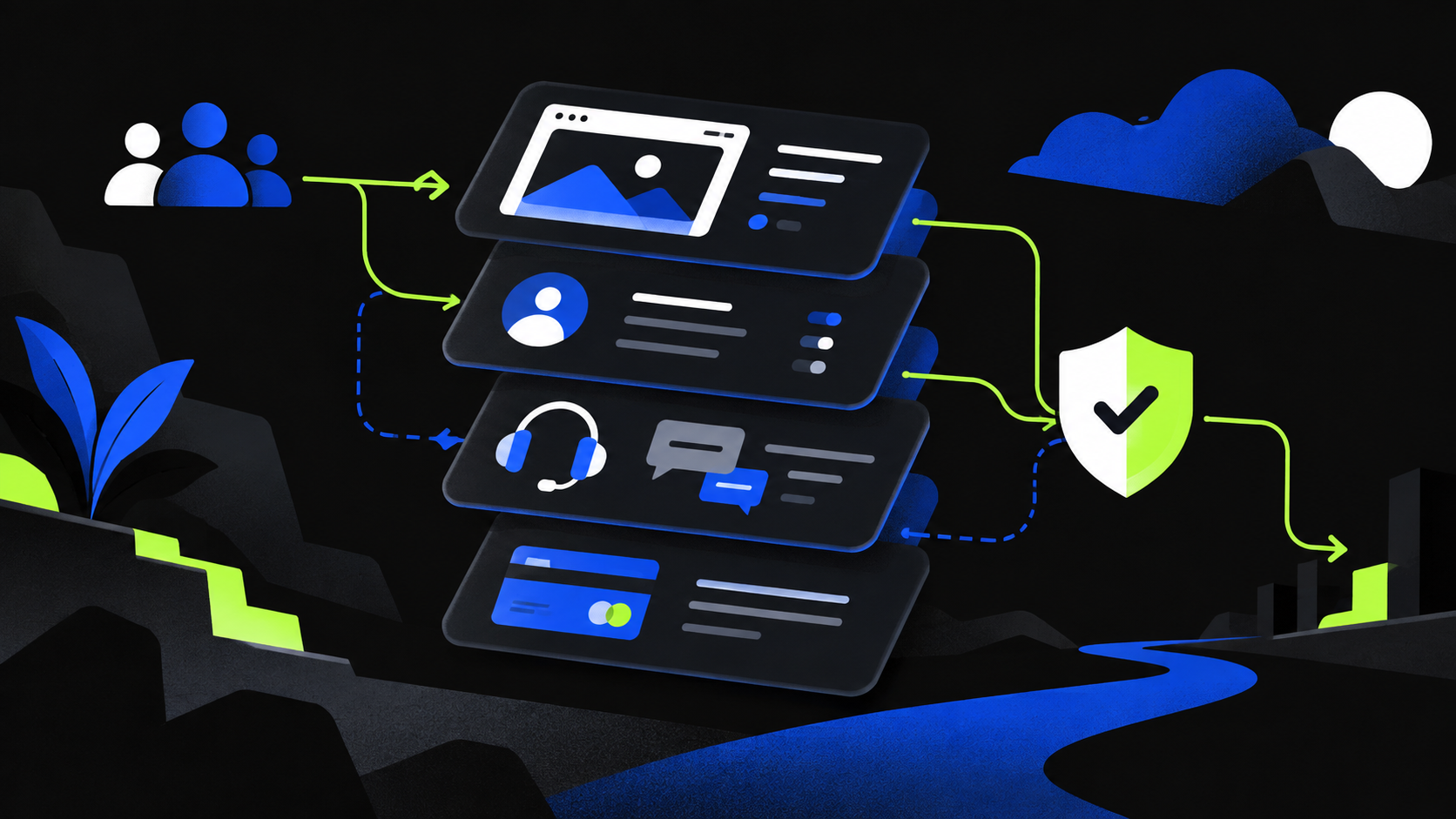
The useful result is not a 40-page governance deck. It is a small stack in which policy, site structure, and controls agree with one another. A modest WordPress, Shopify, custom Laravel, or static site can support this approach without pretending it has an enterprise security operations centre.
Layer one is the written decision record. Keep a table with page category, intended audience, permitted automated uses, prohibited uses, technical control, owner, and review date. Include a short change log. This becomes the source of truth when the marketing team asks for a new landing page or a vendor requests crawler access.
Layer two is public machine-readable guidance. This includes /robots.txt and any documented crawler directives the relevant provider supports. The file should identify the policy by intent, not merely by folklore. A rule that blocks an entire route should correspond to a real category in the inventory. Document the date and reason for unusual rules so a future redesign does not erase them blindly.
Layer three is traffic management. Use the controls available at the CDN, hosting provider, web application firewall, or application layer: rate limits, bot classification, verified-bot handling, request logging, and rules for suspicious patterns. Configure a safe default for unknown high-volume automation, then create narrow exceptions after verification. Watch for false positives before placing hard blocks on routes that customers need.
Layer four is access control. Private information belongs behind accounts, permissions, signed links with sensible expiry where appropriate, and server-side checks. Administrative functions need stronger protection. APIs should use authentication, scopes, quotas, and audit trails. This is the layer that protects a customer record when a client ignores your crawler preferences.
Layer five is content and transaction design. Publish accurate summaries for public discovery, but do not place confidential details in hidden tabs, front-end JavaScript payloads, or unprotected export endpoints. For actions, show the user what will happen, require confirmation for consequential steps, and provide a human recovery route.
A workable monthly review can take 30 minutes. Look at traffic spikes and top automated user agents. Check whether robots rules still match live routes. Review new vendors, scan for accidentally public files, test a private route while logged out, and confirm that a Search page still renders its important content. Record decisions that changed.
Keep the review tied to a named role, not a person who may leave. On a three-person team, the founder may own commercial decisions, the developer implementation, and customer service reports of friction.
If automation causes load, form spam, unexpected copying, or broken journeys, preserve logs, identify the route and behavior, apply the least disruptive control that stops the immediate harm, then review the policy. Do not rewrite the site’s whole access posture in a panic.
♿ Do not break the web for people while blocking machines
Automated traffic controls can damage human access in subtle ways. A challenge page that works with a mouse may be impossible with a keyboard or screen reader. A rate limit that treats a user’s assistive technology as suspicious can lock out the person you intended to protect. Blocking scripts or styles to reduce crawling can leave a public page unreadable to people and hard for search engines to interpret.
W3C’s WCAG overview is relevant here because WCAG applies to dynamic content, multimedia, web on mobile, and AI web interfaces. Accessibility is not a separate finishing task after the crawler decision. It belongs in the same release check. If a new bot rule changes how a page loads, challenges visitors, or routes a request, test the human experience.

Use a short accessibility check whenever you add bot mitigation or an agent-facing flow:
- Visit the affected page on a phone and on a desktop browser.
- Navigate with a keyboard only. Confirm that focus is visible and a challenge, form, or error message can be reached and understood.
- Check that essential text, prices, instructions, and contact details are present without a visual-only cue.
- Test the page with a screen reader where the team can, or arrange a specialist review for important customer flows.
- Ensure timeout, verification, or rate-limit messages explain what happened and provide a practical next step.
- Confirm that a person can contact the business when automated protection makes a legitimate task impossible.
Do not confuse CAPTCHA with accessibility. Some challenge mechanisms are inaccessible by design or are poorly implemented in a specific flow. If protection is necessary, provide an accessible alternative and monitor whether real customers are being blocked. For a local business, a phone number, email, or simple human support route can be the difference between a sensible safeguard and a lost customer.
AI interfaces introduce another concern. If an agent summarizes information or performs a step for a user, the site still needs clear labels, understandable forms, and predictable behavior. An agent should not be the only route to receive a price, submit a complaint, or complete an essential service. The original web interface remains responsible for people who do not use the agent, cannot use it, or need to verify its output.
This is also why semantic, well-structured public pages are a better investment than gimmicky “AI-ready” widgets. Clear headings, descriptive links, labelled controls, text alternatives, and server-rendered essential information help people first. They also reduce ambiguity for search tools and legitimate agents. Accessibility work does not automatically grant a crawler permission. It makes the public experience more reliable on its own terms.
⚖️ Limits, unknowns, and the choices no setting can make
No configuration can tell you exactly how every operator will use material after it leaves your server. A crawler can be misidentified. An intermediary can act for many end users with different intentions. A provider can change its product, documentation, or network behavior. A copied page may appear in an index despite a request not to crawl it. These are reasons to build a review process, not reasons to publish impossible guarantees.
Verification improves confidence but has boundaries. Cloudflare’s definition requires transparent identity and non-abusive behavior, and its classifications describe observed or documented behavior. That is useful operational information, not a universal statement that every downstream use is acceptable. Where an intermediary acts for many users, the operator and the person initiating a request are not necessarily the same.
Taxonomies also change. Cloudflare’s Search, Agent, and Training categories are a useful current framework, and its content-use labels of immediate, reference, and full make policy discussion more precise. They are not an international legal standard, and a single request can have characteristics of more than one category. Keep the policy anchored in a business outcome: referral, current customer assistance, controlled partner access, compensation, privacy, or protection of scarce original work.
robots.txt has a similar limit. It is a standardised communication mechanism at /robots.txt, not a security barrier. It can reduce polite crawler traffic and make your preferences legible, but cannot turn a public route into a private route. noindex does not repair an accidental leak. Confidential information must not be publicly served without the required authorization.
There are choices a setting cannot make for you. Should a public Indonesian-language guide be available to a system that may answer a user in another language without a click? Should an agent read stock status but not submit an order? Should original reporting be discoverable in search while archival reuse requires a licence? These are commercial and editorial decisions.
A responsible policy also avoids overclaiming. Do not say that a crawler has agreed to your terms unless it has actually done so. Do not say an automated service is verified based only on a user agent header. Do not say that robots.txt protects personal data. Staff should know the difference between a published preference, a technical restriction, and a signed commercial arrangement.
✅ The practical decision for a small website
A small website does not need to wait for perfect standards or a large security budget. It needs a clear first position and a way to revise it. Start by mapping the pages that matter, separating public information from private material, and writing down which automated uses support the business.
For many Indonesian small businesses, the sensible default is straightforward: keep public service, location, contact, and editorial pages available for legitimate search discovery; allow documented and verified real-time agents only where they help a customer use current public information; restrict high-volume or opaque collection until the operator and purpose are clear; and protect accounts, payments, documents, and customer data with actual access controls.
Then make the implementation match. Maintain /robots.txt for crawl preferences, but do not treat it as a lock. Use noindex or removal where Search visibility is the issue. Use authentication and authorization where confidentiality is the issue. Use rate limiting and bot controls where traffic behavior is the issue. Review the rules after site changes and test the customer path, including keyboard and mobile access, before calling the work finished.
The next SEO tactic can wait a week. A policy that distinguishes discovery, real-time assistance, long-term reuse, and private access will keep paying attention to the thing SEO cannot decide: who gets to use the work your website publishes, under what conditions, and at whose cost.
Sources: https://blog.cloudflare.com/content-independence-day-ai-options | https://developers.cloudflare.com/bots/concepts/bot/verified-bots/ | https://developers.google.com/search/docs/crawling-indexing/robots/intro | https://www.rfc-editor.org/rfc/rfc9309 | https://www.w3.org/WAI/standards-guidelines/wcag/